
Porcelain Veneers for Gaps, Chips, and Stains: The Ultimate Guide
If you have been living with gaps between your teeth, a noticeable chip, or deep stains that whitening cannot touch, porcelain veneers may be the single most effective solution available. Porcelain veneers are ultra-thin shells of medical-grade ceramic bonded to the front surfaces of your teeth, instantly transforming their color, shape, and alignment. At Smiles by Dr. P in Beverly Hills, Dr. Chirag Patel uses a conservative, detail-driven approach to deliver natural-looking results that complement each patient's unique facial aesthetics.
What Are Porcelain Veneers?
A porcelain veneer is a custom-fabricated shell, typically 0.3 to 0.5 mm thick, that is permanently bonded to the front surface of a tooth. The porcelain material closely mimics the translucency and light-reflecting properties of natural tooth enamel, which is why veneers look remarkably lifelike.
Because each veneer is individually designed in shape, shade, and contour, it can address multiple cosmetic concerns at once. According to the American Dental Association, modern dental ceramics are engineered for both strength and aesthetics, making porcelain the gold standard for cosmetic restorations.
How Porcelain Veneers Close Gaps Between Teeth
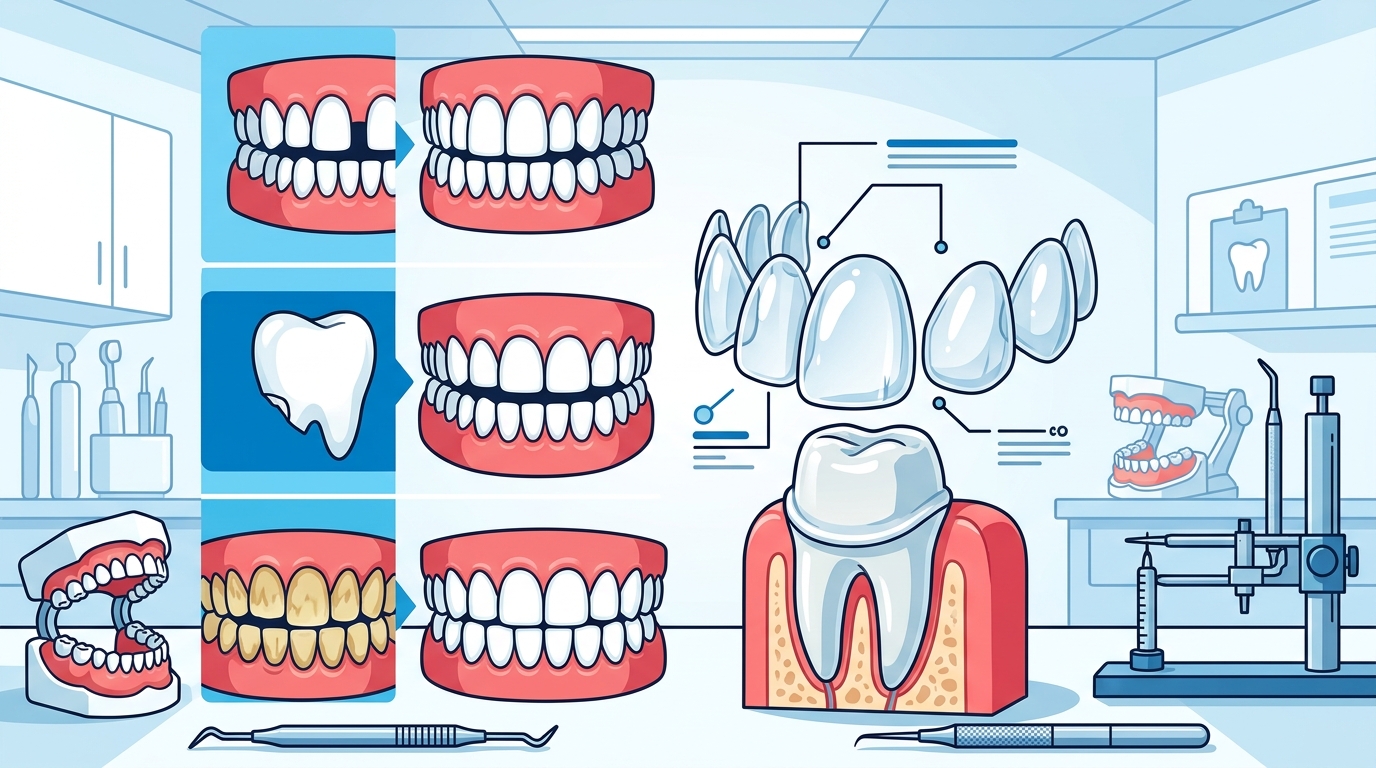
A diastema is a noticeable space between two teeth, most commonly the upper front teeth. While orthodontic treatment can close gaps, many patients prefer a faster cosmetic alternative. Porcelain veneers close small to moderate gaps by making each veneer slightly wider than the natural tooth, creating a seamless, symmetrical smile in just a few visits.
Why Patients Choose Veneers Over Braces for Gaps
Orthodontic treatment often requires 6 to 18 months. Veneers deliver results in as few as two appointments. Dr. Patel evaluates the size of the gap and the surrounding bite to determine whether veneers for closing gaps are the right fit, or whether clear aligners should be considered first.
How Veneers Fix Chipped or Worn Teeth
Chipped teeth can result from accidental trauma, teeth grinding (bruxism), or everyday wear. Even a small chip can make your smile look uneven. Porcelain veneers cover the damaged area and restore the tooth's natural length and contour, providing both aesthetic improvement and a protective layer against further damage.
Chips vs. Fractures: When Veneers Are Appropriate
Veneers are ideal for minor to moderate chips that affect the visible enamel. Larger fractures that extend into the tooth's structure may require a porcelain crown instead. During your consultation, Dr. Patel assesses the extent of damage and recommends the most conservative treatment possible. Learn more about how we handle veneers for chipped teeth.
How Veneers Cover Deep or Intrinsic Stains
Intrinsic staining is discoloration that originates within the tooth structure rather than on the surface. Common causes include tetracycline antibiotics taken during childhood, excessive fluoride exposure (fluorosis), and natural aging. These stains typically do not respond to traditional teeth whitening treatments.
Tetracycline and Fluorosis Stains
Porcelain veneers offer a permanent solution by completely covering the discolored enamel with a bright, stain-resistant surface. The porcelain itself is highly resistant to future staining from coffee, tea, wine, and tobacco. Dr. Patel has extensive experience treating both tetracycline stains and fluoride stains with custom-shaded veneers that blend naturally with surrounding teeth.
No-Prep and Minimal-Prep Veneers
A no-prep veneer is a porcelain veneer placed with little to no removal of existing tooth enamel. This conservative approach is one of Dr. Patel's specialties and is ideal for patients who want a reversible or minimally invasive option. Not every case qualifies for no-prep placement, but when it does, the results preserve maximum natural tooth structure.
Learn about candidacy criteria and what to expect on our no-prep veneers page.
The Veneer Process at Smiles by Dr. P
Dr. Patel follows a meticulous, multi-step process to ensure every veneer fits perfectly and looks natural. The journey typically includes:
- Smile analysis and digital diagnostics to map your ideal tooth proportions.
- Conservative tooth preparation (if needed) to create space for the veneer.
- Temporary veneers placed while your custom porcelain is being fabricated.
- Final bonding where each veneer is precisely positioned, checked for bite accuracy, and permanently cemented.
For a detailed walkthrough, visit our porcelain veneer process page.
Veneers vs. Other Cosmetic Treatments
| Treatment | Best For | Longevity | Visits Required |
|---|---|---|---|
| Porcelain Veneers | Gaps, chips, stains, shape correction | 10 to 15+ years | 2 to 3 |
| Composite Bonding | Minor chips, small gaps | 3 to 7 years | 1 |
| Teeth Whitening | Surface (extrinsic) stains | 6 to 12 months per session | 1 to 2 |
| Clear Aligners | Moderate to large gaps, alignment | Permanent (with retainer) | Multiple over 6 to 18 months |
| Porcelain Crowns | Severe chips, structural damage | 10 to 15+ years | 2 to 3 |
Porcelain veneers stand out because they address multiple cosmetic issues simultaneously in fewer appointments than most alternatives.
Key Takeaways
- Porcelain veneers can close small to moderate gaps without braces, often in just two visits.
- Chips and worn edges are concealed and reinforced by the strong porcelain layer.
- Deep stains from tetracycline, fluorosis, or aging are permanently masked by custom-shaded veneers.
- No-prep veneers preserve your natural enamel when your case qualifies.
- Porcelain resists staining from coffee, tea, and wine, helping your smile stay bright for years.
- With proper care, porcelain veneers can last 10 to 15 years or longer.
- Dr. Chirag Patel's conservative approach prioritizes natural aesthetics and long-term tooth health.
Frequently Asked Questions
Can porcelain veneers close large gaps between teeth?
Veneers are most effective for small to moderate gaps. For larger spaces, Dr. Patel may recommend clear aligners before or instead of veneers to achieve an optimal result.
Do veneers look natural on chipped teeth?
Yes. Each veneer is custom-shaped and shade-matched to blend with your surrounding teeth. Porcelain mimics natural enamel translucency, making the restoration virtually undetectable.
Will veneers work on tetracycline-stained teeth?
Absolutely. Porcelain veneers are one of the most reliable treatments for tetracycline stains, which do not respond to whitening. Dr. Patel carefully selects opacities and shades to fully mask discoloration.
How long do porcelain veneers last?
With proper oral hygiene and regular dental visits, porcelain veneers typically last 10 to 15 years. Many patients enjoy their veneers even longer when they follow proper aftercare guidelines.
Is the veneer procedure painful?
Most patients experience little to no discomfort. Dr. Patel uses a conservative preparation technique and offers sedation dentistry for patients who feel anxious.
What is the difference between no-prep and traditional veneers?
Traditional veneers require a thin layer of enamel removal. No-prep veneers are bonded directly to the tooth surface with minimal to no enamel reduction, preserving more natural tooth structure.
How much do porcelain veneers cost in Beverly Hills?
Cost varies based on the number of veneers and complexity of the case. Visit our veneers cost page for details and financing options.
Can I get veneers if I grind my teeth?
Yes, but a custom nightguard is usually recommended to protect the veneers from bruxism-related wear. Dr. Patel will discuss this during your consultation.
Ready to Transform Your Smile?
Whether you want to close a gap, repair a chip, or cover stubborn stains, Dr. Chirag Patel and the team at Smiles by Dr. P can help you achieve a radiant, natural-looking smile. Call 323-909-9300 or submit a smile inquiry online to schedule your personalized consultation at our Beverly Hills office today.