

How Long Does the Porcelain Veneers Process Take? (Start to Finish)
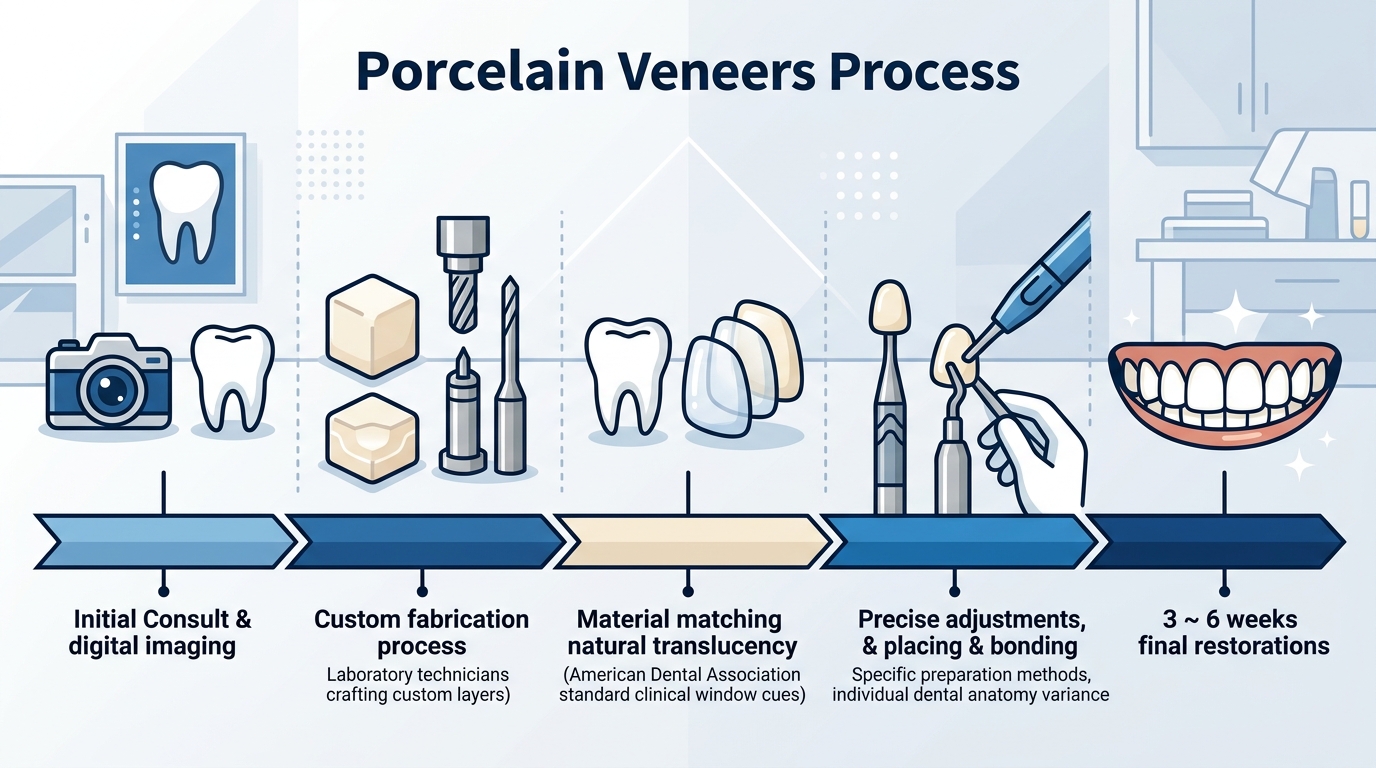
Patients seeking a complete smile transformation typically wait between three and six weeks for their final porcelain restorations. According to the American Dental Association, this standard clinical window allows laboratory technicians to craft custom ceramic layers that match natural tooth translucency. The timeline varies based on individual dental anatomy and the specific preparation method selected by your provider. Understanding each phase of the appointment schedule helps you plan your schedule without unexpected delays. This guide breaks down every step from your initial consultation to your final placement.
The Initial Consultation and Digital Planning Phase
Your journey begins with a comprehensive diagnostic evaluation. Your provider will examine your existing dentition, review your medical history, and discuss your aesthetic goals. This initial meeting establishes the foundation for your entire treatment plan. Digital smile design is a computer-aided imaging technique that maps your proposed aesthetic changes before any physical work begins. The software generates a preview of your new smile, allowing you to visualize the final outcome. Most consultations require approximately sixty minutes to complete. You will receive a detailed treatment proposal outlining the number of units required and the estimated timeline.
During this stage, your dentist may capture high-resolution intraoral scans. These digital impressions replace traditional putty molds and improve accuracy. The laboratory receives these digital files immediately, which accelerates the manufacturing schedule. You will also discuss your budget and financing options. Our transparent pricing structure ensures there are no hidden fees during the production phase. You can review our complete cost breakdown to understand the financial commitment.
Tooth Preparation and Temporary Restoration Placement
The second appointment focuses on modifying your natural teeth to receive the custom shells. Your provider will carefully remove a microscopic layer of enamel to ensure a seamless fit. This step is mandatory for traditional restorations but may be skipped for minimal-prep alternatives. Minimal-prep veneers is a conservative restorative approach that preserves maximum natural tooth structure while achieving aesthetic improvements. Your dentist will evaluate your specific case to determine if this technique applies to your anatomy.
Once the teeth are prepared, the laboratory creates provisional restorations. These temporary covers protect your sensitive dentition while the permanent units are manufactured. You will wear these temporary shells for approximately two to three weeks. Your provider will schedule a follow-up check to ensure the temporaries are comfortable and properly sealed. You must avoid biting into hard foods during this period. The temporary phase allows you to test the proposed shape and length before final fabrication.
Laboratory Fabrication and Custom Shade Matching
While you wear your temporary restorations, master ceramists begin crafting your permanent units. This phase requires meticulous attention to detail and typically takes ten to fourteen business days. The laboratory uses high-feldspathic porcelain to replicate the light-reflecting properties of natural enamel. Each layer is individually stained and glazed to match your surrounding dentition. Porcelain veneers is a thin layer of ceramic material that is bonded to the front surface of your teeth to correct discoloration, spacing, or minor misalignment. The laboratory team will consult with your dentist to verify the exact shade and contour specifications.
Quality control checks occur at multiple stages during manufacturing. The ceramists verify the marginal fit, occlusal clearance, and aesthetic harmony before shipping the units. According to the National Institute of Dental Research, advanced ceramic composites now offer superior fracture resistance compared to older composite resins. Your provider will receive the finished units in a sterile, tamper-evident package. You will schedule your final placement appointment once the laboratory confirms the units are ready for delivery.
The Final Bonding and Adjustment Appointment
Your final visit typically lasts between ninety minutes and two hours. Your provider will remove the temporary restorations and thoroughly clean your prepared teeth. The laboratory units are tried in to verify the fit and aesthetic alignment. Minor adjustments to the contour or shade can be made at this stage. Once you approve the final appearance, your dentist will isolate each tooth with rubber dams to prevent moisture contamination.
The bonding process utilizes a specialized adhesive resin that creates a permanent mechanical and chemical union between the ceramic and your natural enamel. Your provider will cure the adhesive with a high-intensity blue light to activate the polymerization process. Excess cement is carefully removed from the margins to prevent gum irritation. You will receive detailed instructions regarding your first few days of wear. Our comprehensive aftercare guidelines outline the specific brushing and flossing techniques required to protect your investment.
Post-Placement Maintenance and Long-Term Care
Long-term success depends entirely on your daily maintenance routine and regular professional cleanings. Your provider will schedule a follow-up appointment within two weeks to evaluate your bite and gum response. You may experience minor sensitivity during the first few days, which typically resolves as your nerves adapt to the new restorations. Occlusal guards is a custom-fitted protective appliance that is worn during sleep to prevent excessive grinding forces from fracturing your ceramic shells. If you exhibit signs of bruxism, your dentist will recommend a nighttime guard to preserve your investment.
Regular dental visits remain essential for monitoring the integrity of your restorations. Your hygienist will use non-abrasive polishing pastes to maintain the glossy surface without scratching the ceramic. According to the Mayo Clinic Health System, properly maintained ceramic restorations can successfully function for fifteen to twenty years with consistent oral hygiene. You should avoid using your front teeth to open packages or bite hard objects. Consistent maintenance ensures your smile remains vibrant and structurally sound for decades.
Service Comparison and Timeline Summary
| Restoration Type | Preparation Required | Estimated Timeline | Longevity Expectation |
|---|---|---|---|
| Traditional Ceramic Shells | Enamel reduction required | 3 to 4 weeks | 15 to 20 years |
| Minimal-Prep Ceramic Shells | Minimal or no enamel removal | 4 to 6 weeks | 10 to 15 years |
| Direct Composite Resin | Minimal enamel reduction | 1 to 2 hours | 5 to 7 years |
| Full Coverage Ceramic Crowns | Significant tooth reduction | 3 to 4 weeks | 10 to 15 years |
Key Takeaways
- The complete clinical process typically spans three to six weeks from initial consultation to final bonding.
- Digital smile design software accelerates the planning phase and reduces appointment frequency.
- Traditional ceramic shells require microscopic enamel reduction for optimal marginal fit.
- Laboratory fabrication requires ten to fourteen business days for custom shade matching and layering.
- Final bonding appointments last between ninety minutes and two hours to ensure precise adhesive curing.
- Custom occlusal guards are highly recommended for patients who exhibit nighttime grinding habits.
- Consistent professional cleanings and proper home care extend the functional lifespan to two decades.
Frequently Asked Questions
How many appointments are required to complete the entire process?
Most patients require three to four separate clinical visits. The initial consultation establishes your treatment plan and captures digital impressions. The second appointment involves tooth preparation and temporary placement. The third visit focuses on laboratory fabrication and shade verification. Your final appointment covers the permanent bonding and occlusal adjustments.
Can the process be completed in a single day?
Traditional ceramic restorations cannot be completed in a single day due to laboratory fabrication requirements. Some providers offer same-day CAD/CAM milling systems, but these typically utilize composite materials rather than high-strength porcelain. The multi-visit approach ensures superior aesthetics and long-term durability for complex smile makeovers.
What causes delays during the laboratory fabrication phase?
Complex shade matching and intricate contouring require additional laboratory time. If your case involves multiple anterior teeth with varying translucency levels, the ceramists will spend extra hours layering the ceramic. Rushing the fabrication process often results in poor marginal adaptation and compromised aesthetics. Your provider will notify you immediately if any adjustments are needed before shipping.
Is it normal to experience sensitivity after the final bonding?
Mild temperature sensitivity is common during the first few days following placement. Your dentin may react to the adhesive curing process and the new marginal contours. This discomfort typically resolves as your nerves adapt to the restored surfaces. Your provider can apply desensitizing agents if the sensitivity persists beyond one week.
How do I maintain my restorations during the waiting period?
You must follow strict oral hygiene protocols while wearing your temporary restorations. Brush twice daily with a soft-bristled brush and floss carefully around the margins. Avoid sticky or hard foods that could dislodge your temporaries. Your provider will supply specific cleaning solutions to maintain the provisional seal. You can review our detailed maintenance protocols for step-by-step instructions.
What happens if a temporary restoration breaks before my final appointment?
Minor fractures or dislodgement of provisional shells require immediate clinical attention. Your provider will repair the temporary unit or fabricate a replacement to protect your prepared teeth. You should avoid chewing directly on the affected area until you are seen. Prompt communication prevents sensitivity and maintains the spatial integrity of your treatment plan.
Schedule Your Smile Consultation Today
Understanding the complete timeline empowers you to plan your schedule with confidence. Our Beverly Hills practice specializes in precision cosmetic dentistry and patient-centered care. We utilize advanced digital imaging and state-of-the-art laboratory partnerships to deliver predictable results. Contact our office to book your initial diagnostic evaluation and begin your smile transformation journey. Visit our main homepage to explore our full range of cosmetic services and patient resources.