

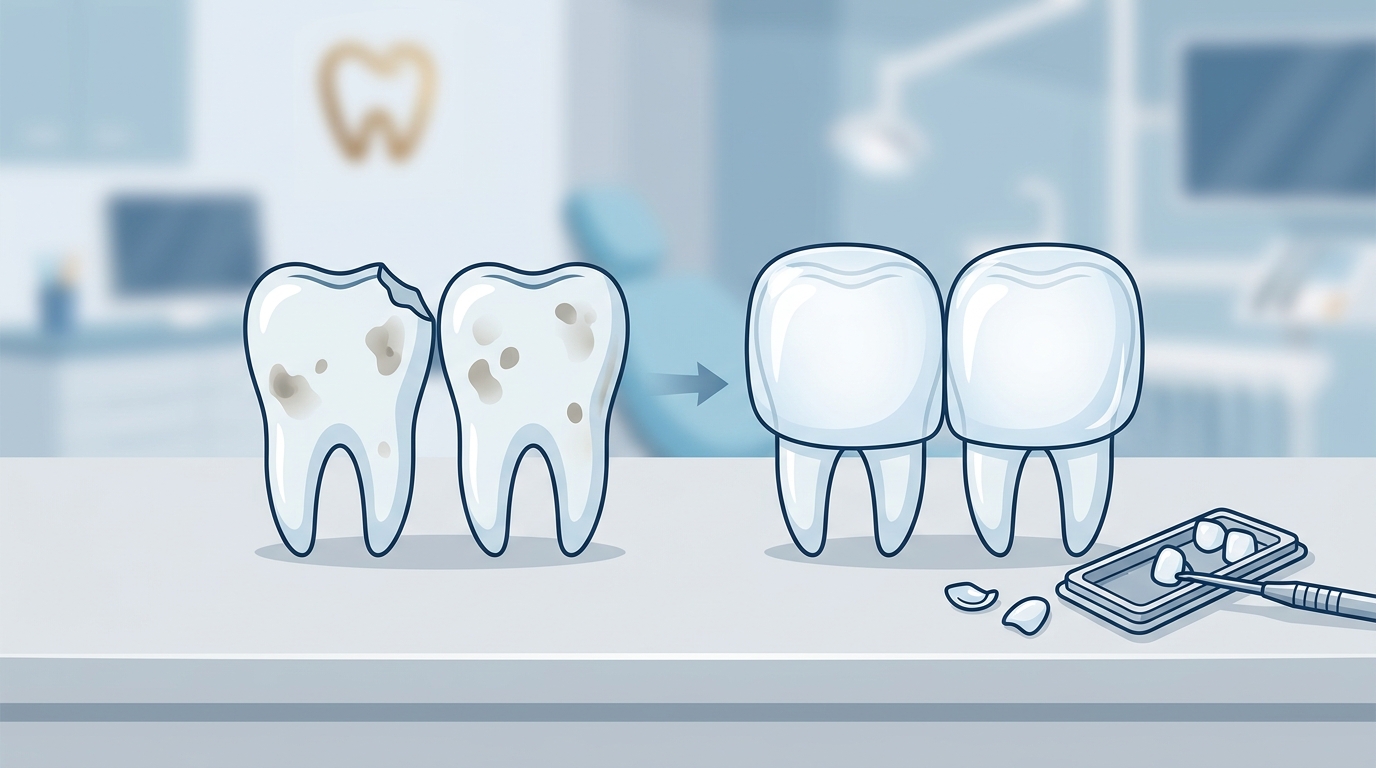
Porcelain veneers are thin, custom-made shells designed to cover the front surface of teeth to improve appearance. Recent industry data indicates that over 3 million veneers are placed annually in the United States, highlighting their status as a premier cosmetic dental procedure. These restorations address common aesthetic concerns by masking deep discoloration, bridging visible spacing, and restoring structural integrity to damaged enamel. Patients seeking a natural smile makeover benefit from the durability and translucency of high-quality porcelain, which mimics the light-reflecting properties of natural tooth enamel.
How Porcelain Veneers Close Gaps Between Teeth
Closing gaps between teeth, known as diastema, creates a seamless visual line across the dental arch. Porcelain veneers are thin, custom-made shells designed to cover the front surface of teeth to improve appearance. By adding precise width to the veneer material, Dr. Chirag Patel can effectively bridge spacing without altering the underlying tooth structure. This approach allows for immediate aesthetic correction while maintaining a natural tooth proportion. Patients interested in this specific correction can explore our dedicated resources on veneers for closing gaps to view before-and-after examples. The team also addresses crowding and misalignment to achieve a balanced smile.
Restoring Structure to Fix Chipped or Broken Teeth
Fixing chipped or broken teeth restores both function and aesthetics. When enamel fractures occur, porcelain veneers provide a durable overlay that protects the remaining tooth structure. This method is ideal for minor to moderate damage where bonding might not offer sufficient longevity. The porcelain material bonds securely to the tooth, creating a unified surface that resists further cracking. For detailed guidance on this procedure, review our section on veneers for chipped teeth. This solution is also effective for correcting bite issues when combined with other cosmetic treatments.
Masking Deep Stains and Tetracycline Discoloration
Covering deep stains addresses discoloration that resists standard whitening treatments. Tetracycline stains and severe fluoride marks often penetrate deep into the dentin layer, making surface bleaching ineffective. Porcelain veneers are opaque enough to mask these dark hues while allowing light to reflect naturally. This solution provides a permanent fix for intrinsic staining without the need for repeated procedures. Patients seeking relief from stubborn discoloration should consult our guide on veneers for tetracycline stain. The porcelain material also offers excellent resistance to future staining from coffee or wine.
The Role of No-Prep Veneers in Minimally Invasive Treatment
No-prep veneers are a minimally invasive alternative that requires little to no removal of natural tooth structure. This technique preserves maximum enamel, reducing sensitivity and extending the lifespan of the restoration. Dr. Patel utilizes advanced digital imaging to ensure a precise fit for minimal-prep cases. This approach is particularly beneficial for patients with small teeth or those seeking a conservative treatment path. Learn more about this option by visiting our page on no prep veneers. This method aligns with the practice's commitment to preserving natural tooth health.
Understanding the Process and Aftercare Protocol
The process of veneers involves a collaborative smile makeover journey starting with digital scans and wax models. Dr. Chirag Patel and his team focus on a patient-centered approach to ensure optimal aesthetic outcomes. The office is located at 435 N. Roxbury Drive, Suite#410, Beverly Hills, CA 90210, providing convenient access for local and traveling patients. The workflow includes shade matching, temporary veneers if needed, and final bonding. This meticulous attention to detail ensures a natural result. You can find detailed financial information on our cost of porcelain veneers page. Aftercare of veneers includes brushing twice daily and flossing to prevent bacterial buildup around the margins. Occlusal guards are protective appliances worn to prevent excessive wear on restorations during sleep. Regular dental visits ensure the integrity of the bonding and the health of the surrounding gums. Patients should avoid damaging habits like biting hard objects to maintain the longevity of their smile. Comprehensive maintenance instructions are available on our aftercare of veneers page. The team emphasizes that proper care can help veneers last for many years.
Comparison of Veneer Options
| Feature | Traditional Porcelain Veneers | No-Prep Veneers |
|---|---|---|
| Tooth Preparation | Minimal enamel removal required | Little to no enamel removal |
| Best For | Severe staining, gaps, chips | Minor corrections, small teeth |
| Reversibility | Irreversible procedure | Often reversible |
| Consultation | Digital imaging and wax models | Digital imaging and wax models |
Key Takeaways
- Porcelain veneers are thin, custom-made shells designed to cover the front surface of teeth to improve appearance.
- Recent industry data indicates that over 3 million veneers are placed annually in the United States, highlighting their status as a premier cosmetic dental procedure.
- According to the American Academy of Cosmetic Dentistry, 92 percent of adults feel embarrassed by their smile, driving demand for cosmetic solutions.
- Closing gaps between teeth creates a seamless visual line across the dental arch without altering underlying structure.
- No-prep veneers are a minimally invasive alternative that requires little to no removal of natural tooth structure.
- Porcelain veneers provide a durable overlay that protects the remaining tooth structure when enamel fractures occur.
- Porcelain veneers are opaque enough to mask deep discoloration while allowing light to reflect naturally.
- Dr. Chirag Patel is a leader in the field of cosmetic dentistry, specializing in porcelain veneers at his Beverly Hills facility.
Frequently Asked Questions
How long do porcelain veneers last?
With proper care, porcelain veneers can last between 10 to 20 years. Regular dental visits and good oral hygiene are essential for maximizing their lifespan.
Are porcelain veneers reversible?
Traditional porcelain veneers are not reversible because they require the removal of a small amount of enamel. No-prep veneers may be reversible in some cases.
Can veneers fix crooked teeth?
Veneers can create the appearance of straight teeth by masking minor misalignment. For severe crowding, clear aligners or other orthodontic treatments may be recommended.
How much do porcelain veneers cost?
The cost of porcelain veneers varies based on the number of units and the complexity of the case. Transparent pricing allows patients to plan their investment with confidence.
Do veneers look natural?
Yes, high-quality porcelain veneers mimic the light-reflecting properties of natural tooth enamel. Dr. Patel uses advanced shade matching to ensure a seamless blend.
Can I get veneers if I have gum disease?
Gum health must be addressed before veneer placement. The team may recommend gum contouring or other treatments to ensure optimal results.
What is the process of veneers?
The process of veneers involves digital scans, wax models, and temporary veneers before final bonding. This collaborative smile makeover journey ensures optimal aesthetic outcomes.
How do I care for my veneers?
Aftercare of veneers includes brushing twice daily, flossing, and wearing occlusal guards if recommended. Avoid damaging habits like biting hard objects.
Schedule Your Smile Consultation
Transform your smile with expert care from Dr. Chirag Patel and his team. Located at 435 N. Roxbury Drive, Suite#410, Beverly Hills, CA 90210, our state-of-the-art facility offers top-of-the-class cosmetic dental care. Contact us today at (323) 909-9300 to schedule your consultation and begin your signature smile makeover journey. Visit Smiles by Dr. P to learn more about our services.