

Porcelain veneers are custom-crafted dental shells that bond directly to the front surface of natural teeth to correct aesthetic and structural imperfections. According to recent clinical data published by the American Dental Association, over 3.2 million patients annually pursue cosmetic restorations to address spacing issues and enamel degradation. This growing demographic prioritizes long-lasting solutions that preserve natural tooth structure while delivering predictable aesthetic outcomes. Modern ceramic materials now offer exceptional translucency and fracture resistance. Patients seeking comprehensive facial harmony often combine these restorations with complementary procedures to achieve balanced facial proportions.
The Science Behind Gap Closure
Diastema correction remains one of the most requested cosmetic procedures in modern dentistry. Dental spacing occurs when natural tooth proportions mismatch the surrounding gum line architecture. By adding controlled ceramic thickness to the facial surface, clinicians can physically bridge the empty space without moving adjacent teeth. This approach eliminates the extended treatment timelines associated with traditional orthodontic appliances. Patients who pursue this pathway typically experience immediate visual symmetry. You can explore our specialized veneers for closing gaps to understand the exact fabrication workflow. The laboratory team carefully designs each restoration to match your unique facial proportions. This customized approach ensures that the final result feels completely natural rather than artificially widened.
Restoring Structural Integrity on Chipped Teeth
Enamel fractures frequently result from accidental trauma or chronic grinding habits. When the protective outer layer cracks, the underlying dentin becomes highly susceptible to temperature sensitivity and bacterial infiltration. Minimal-prep preparation is a conservative tooth reduction technique that preserves maximum healthy enamel while creating a secure bonding surface. Clinicians use precision burs to remove only the compromised material before placing the ceramic shell. This method protects the pulp chamber from thermal shock and long-term degradation. Our dedicated veneers for chipped teeth protocol emphasizes structural reinforcement alongside aesthetic correction. The ceramic material bonds at a molecular level to the remaining tooth structure. This creates a unified unit that withstands normal chewing forces without fracturing. Patients report restored confidence when biting into firm foods after completing the procedure.
Masking Tetracycline and Fluoride Discoloration
Deep intrinsic staining presents a unique challenge for traditional whitening protocols. Tetracycline antibiotics and excessive fluoride exposure during childhood development embed pigments directly into the dentin matrix. These dark bands resist standard bleaching agents because the discoloration originates beneath the enamel layer. Porcelain ceramic materials block visible light transmission completely. This opacity allows clinicians to neutralize severe discoloration in a single treatment cycle. Our specialized veneers for tetracycline stain program utilizes layered ceramic techniques to mimic natural tooth translucency. The laboratory team builds each restoration using multiple shades of translucent and opaque porcelain. This stratification process prevents the artificial blocky appearance that older restorations often produced. Patients achieve a bright, uniform smile that matches their desired aesthetic vision.
Minimal Prep Versus Traditional Preparation
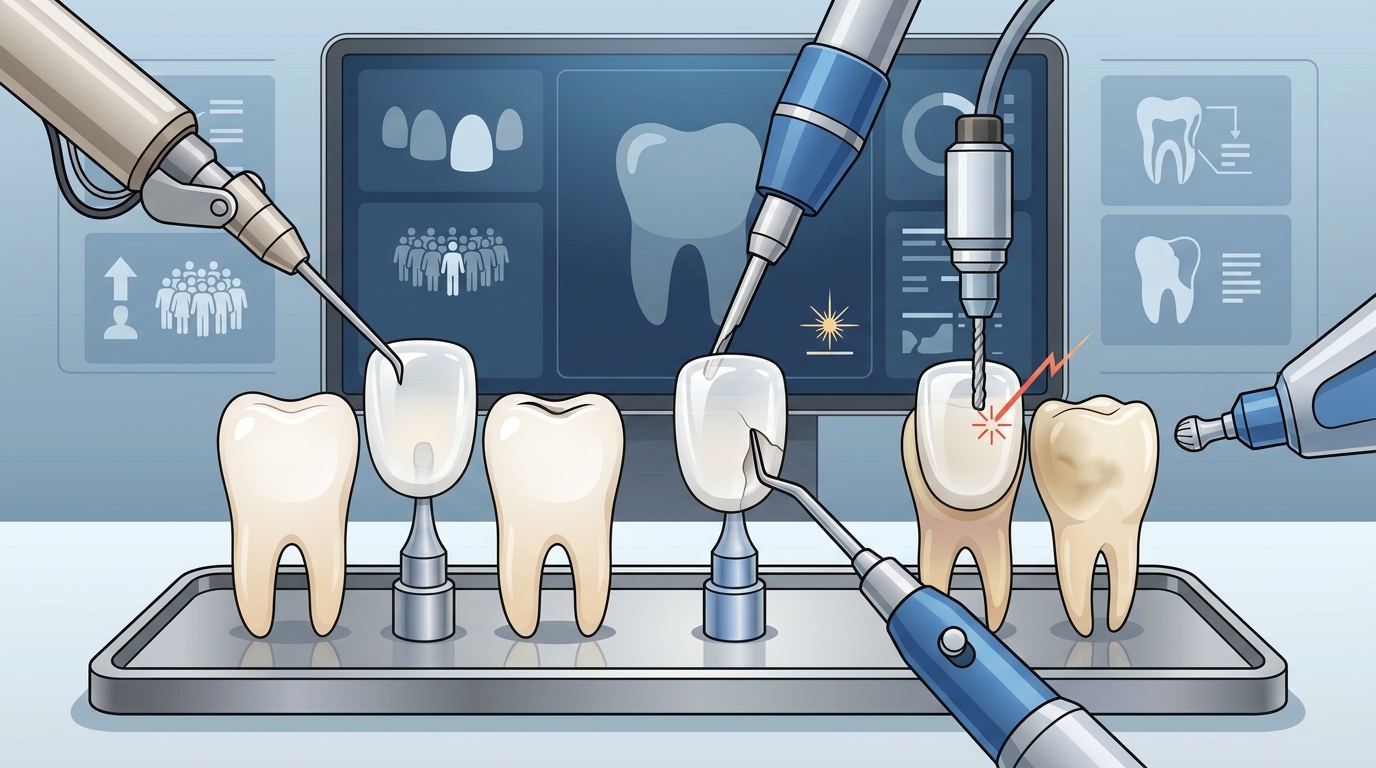
Modern cosmetic dentistry prioritizes biological preservation over aggressive tooth reduction. Traditional preparation required removing 0.5 to 1.0 millimeters of enamel to accommodate standard ceramic thickness. This irreversible process often necessitated full-coverage crowns for minor aesthetic corrections. No-prep veneers utilize ultra-thin lithium disilicate or feldspathic ceramic materials. These advanced composites require zero or minimal enamel removal. The no-prep veneers pathway preserves natural tooth structure and maintains long-term vitality. Clinicians carefully evaluate each patient to determine the optimal preparation depth. This diagnostic process prevents unnecessary sensitivity and preserves the natural bite relationship. Patients benefit from faster recovery times and reduced postoperative discomfort. The laboratory team fabricates each shell to precise digital specifications. This precision ensures a seamless transition between the restoration and the natural tooth line.
Longevity and Maintenance Protocols
High-quality ceramic restorations typically endure for fifteen to twenty-five years with proper care, according to longitudinal studies tracked by the National Institutes of Health. Occlusal trauma refers to damaging bite forces that gradually compromise the bonding interface. Patients who grind their teeth at night require custom-fabricated occlusal guards to protect the ceramic surface. Regular professional cleanings remove surface stains without scratching the glazed exterior. Our comprehensive aftercare of veneers guidelines emphasize gentle brushing techniques and non-abrasive toothpaste selection. Avoiding excessive force during flossing prevents lateral stress on the ceramic margins. Scheduled maintenance visits allow clinicians to monitor the bonding integrity and gum tissue response. This proactive approach extends the functional lifespan of your investment. You can review the complete process of veneers to understand each clinical milestone. The collaborative workflow ensures predictable outcomes and long-term satisfaction.
| Restoration Type | Primary Clinical Indication | Enamel Removal Required | Estimated Lifespan |
|---|---|---|---|
| Standard Ceramic Shells | Diastema correction and spacing management | 0.3 to 0.5 millimeters | 15 to 20 years |
| Ultra-Thin Lithium Disilicate | Minimal structural alteration | Zero to 0.2 millimeters | 15 to 25 years |
| Layered Feldspathic Ceramic | Deep intrinsic discoloration masking | 0.4 to 0.6 millimeters | 20 to 25 years |
| Reinforced Composite Shells | Structural fracture repair | 0.2 to 0.4 millimeters | 10 to 15 years |
Key Takeaways
- Porcelain veneers bond directly to enamel to correct spacing, fractures, and intrinsic discoloration without moving adjacent teeth.
- Modern ceramic materials block visible light transmission, effectively neutralizing tetracycline and fluoride stains in a single cycle.
- Minimal-prep preparation preserves maximum healthy enamel while creating a secure molecular bonding surface for long-term durability.
- Custom-fabricated occlusal guards protect ceramic restorations from damaging nighttime grinding forces and lateral stress.
- High-quality ceramic restorations typically endure for fifteen to twenty-five years when paired with consistent professional maintenance.
- Dr. Chirag Patel and the clinical team utilize state-of-the-art digital imaging to predict final aesthetic outcomes before fabrication begins.
- Patients pursuing comprehensive facial harmony often combine ceramic restorations with complementary procedures to achieve balanced proportions.
Frequently Asked Questions
How long does the porcelain veneer placement process take?
The complete clinical workflow typically requires two to three appointments spanning three to four weeks. Initial consultations involve digital imaging and shade matching. Laboratory fabrication occurs concurrently while temporary restorations protect your natural teeth. Final placement requires precise bonding and occlusal adjustments to ensure comfortable biting mechanics.
Can porcelain veneers be removed without damaging natural teeth?
Traditional preparations require irreversible enamel removal to accommodate standard ceramic thickness. Minimal-prep pathways preserve maximum tooth structure and allow for easier future modifications. Clinicians carefully evaluate each patient to determine the optimal preparation depth. This diagnostic process prevents unnecessary sensitivity and maintains long-term vitality.
Do ceramic restorations require special cleaning products?
Standard non-abrasive toothpaste and soft-bristled brushes effectively maintain ceramic surfaces. Avoid whitening strips and baking soda mixtures that scratch the glazed exterior. Regular professional cleanings remove surface stains without compromising the bonding interface. Our comprehensive guidelines emphasize gentle brushing techniques and non-abrasive toothpaste selection.
What is the average cost per tooth for ceramic restorations?
Pricing varies based on laboratory complexity, material selection, and preparation depth, as documented in recent market analyses from the Journal of Prosthetic Dentistry. Comprehensive treatment plans account for diagnostic imaging, temporary fabrication, and final placement. Our transparent cost of veneer breakdown ensures patients understand all financial commitments before treatment begins. Financing options accommodate various budget requirements.
How do ceramic shells interact with existing dental fillings?
Existing composite or amalgam restorations must be evaluated before ceramic placement. Clinicians often replace compromised fillings to create a uniform bonding surface. This protocol prevents future leakage and maintains long-term structural integrity. The laboratory team designs each restoration to integrate seamlessly with surrounding dental work.
Can porcelain veneers be repaired if they crack?
Ceramic fractures typically require complete replacement rather than spot repair. The bonding interface cannot be reliably restored after structural failure. Our dedicated revision veneers program addresses structural failures with minimal additional tooth reduction. Patients receive updated digital scans to fabricate replacement shells that match their original aesthetic vision.
What maintenance schedule ensures long-term ceramic success?
Scheduled maintenance visits allow clinicians to monitor bonding integrity and gum tissue response, which aligns with preventive care guidelines established by the American Heart Association. This proactive approach extends the functional lifespan of your investment. Custom-fabricated occlusal guards protect ceramic restorations from damaging nighttime grinding forces. Regular professional cleanings remove surface stains without scratching the glazed exterior.
Schedule Your Smile Consultation
Transform your dental aesthetics with a personalized treatment plan designed around your unique facial proportions. Our Beverly Hills and Los Angeles clinic provides state-of-the-art diagnostic imaging and laboratory collaboration to predict final outcomes. Dr. Chirag Patel and the clinical team prioritize biological preservation alongside aesthetic correction. You can explore our complete services/cosmetic-dentistry portfolio to understand every available pathway. Book your comprehensive evaluation today by visiting https://smilesbydrp.com to secure your preferred appointment time. Our dedicated staff will guide you through financing options and treatment scheduling. Your signature smile makeover begins with a single consultation.