

Modern cosmetic dentistry has fundamentally shifted how specialists approach smile transformations. According to the American Dental Association, over four million patients annually pursue porcelain restorations to correct discoloration, minor misalignment, or structural wear. This massive clinical demand highlights a critical question for prospective patients. You must determine whether preserving your natural enamel outweighs the structural benefits of traditional preparation. Understanding the precise mechanical differences between these procedures will directly impact your long-term dental health and aesthetic results. (Porcelain Veneers in Beverly)
What Are No-Prep Veneers?
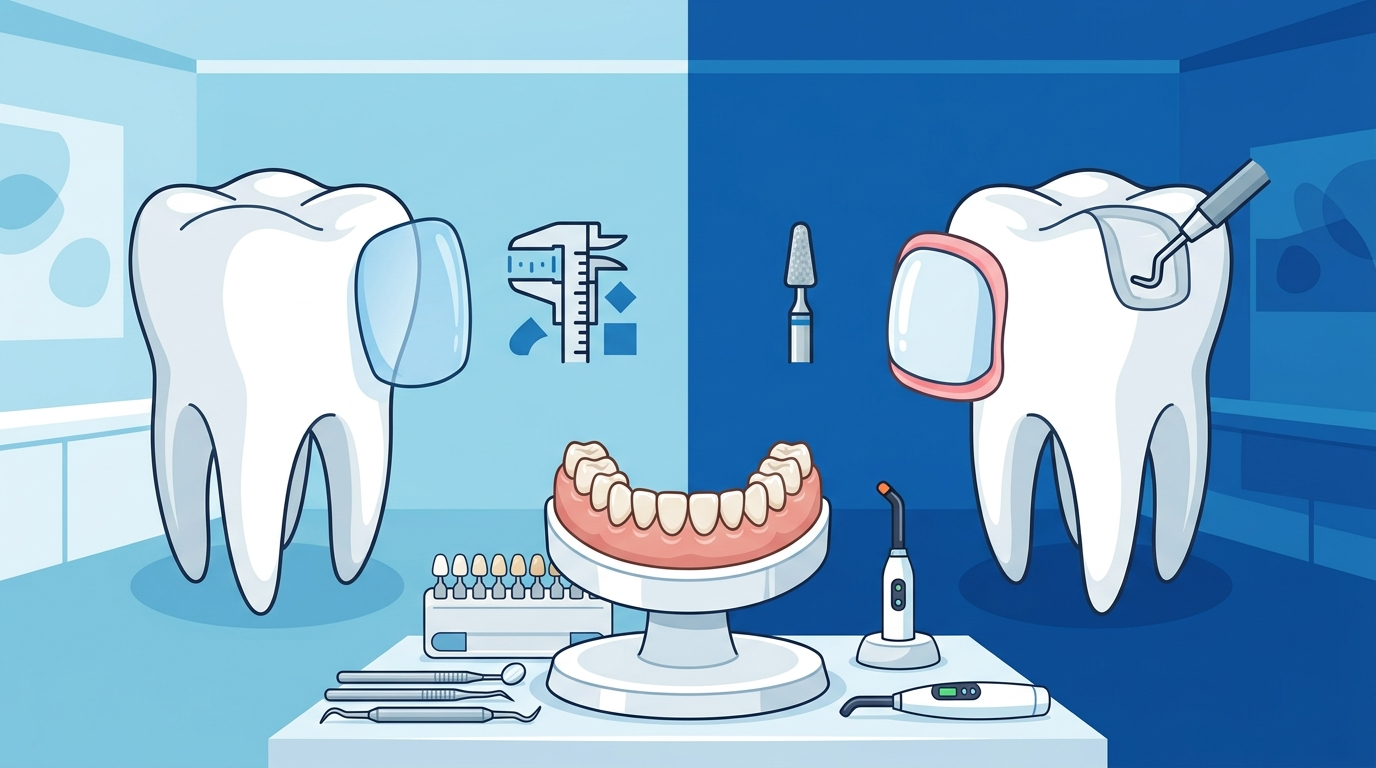
No-prep veneers are ultra-thin dental shells designed to cover the front surface of your teeth without removing any natural enamel. These restorations typically measure between zero point zero three and zero point zero five millimeters in thickness. Because the dentist skips the enamel reduction step, the procedure remains completely reversible. Patients seeking minor aesthetic enhancements often select this route to preserve maximum tooth structure. The clinical advantage centers on eliminating post-operative sensitivity and reducing overall treatment time. (Dental Implants Los Angeles)
Minimal-prep veneers represent a middle-ground cosmetic procedure that removes a fraction of enamel to ensure proper bonding and aesthetic layering. This approach balances preservation with structural integrity. Dr. Chirag Patel frequently utilizes this technique at his Beverly Hills facility to achieve natural translucency. You can explore the complete no-prep veneers protocol on our dedicated service page. The decision ultimately depends on your existing tooth morphology and desired aesthetic outcome.
How Traditional Veneers Work
Traditional veneers are minimally invasive restorations that require precise enamel reduction to create space for the ceramic material. Dental professionals typically remove between zero point three and zero point five millimeters of tooth structure. This preparation ensures the final restoration sits flush with your natural bite line. The American Association of Endodontists notes that properly prepared teeth maintain structural longevity when bonded with medical-grade resin. This method remains the gold standard for correcting severe discoloration or significant structural misalignment.
Patients with heavily stained or misaligned teeth often require this level of preparation. The process involves digital scanning, temporary crown placement, and laboratory fabrication. You can review the detailed process of veneers to understand each clinical stage. Traditional restorations deliver exceptional durability when maintained through proper oral hygiene. The trade-off involves irreversible enamel removal and a slightly longer adaptation period.
Clinical Comparison and Suitability
Selecting the correct restoration requires evaluating your existing dental architecture. No-prep options excel for patients with healthy enamel and minor aesthetic concerns. Traditional preparations remain necessary for correcting deep intrinsic staining or severe crowding. The National Institute of Dental and Craniofacial Research emphasizes that enamel preservation directly correlates with long-term tooth vitality. Your dentist will conduct a comprehensive diagnostic exam to map your ideal treatment path.
Both procedures utilize high-strength dental porcelain or lithium disilicate ceramics. These materials resist staining and mimic natural light refraction. You can learn more about our comprehensive cosmetic dentistry offerings to see how these materials integrate into full smile makeovers. The clinical decision hinges on your specific anatomical constraints. We recommend scheduling a diagnostic consultation to evaluate your enamel thickness and bite dynamics.
Cost Factors and Long-Term Maintenance
Financial planning plays a crucial role in your treatment decision. No-prep restorations often carry a slightly higher per-unit cost due to specialized laboratory fabrication requirements. Traditional veneers may require additional diagnostic imaging and temporary crown manufacturing. You can review our transparent cost of porcelain veneers breakdown to understand your investment. Both procedures require identical long-term maintenance protocols to ensure maximum longevity.
Proper aftercare directly impacts your restoration lifespan. You must maintain a strict brushing and flossing routine to prevent marginal decay. Our dedicated aftercare of veneers guide outlines the exact maintenance schedule. Patients who avoid excessive grinding and attend biannual checkups typically enjoy ten to twenty years of flawless function. Regular professional cleanings preserve the ceramic polish and prevent plaque accumulation along the gumline.
Key Takeaways
- No-prep veneers preserve one hundred percent of your natural enamel structure.
- Traditional veneers require zero point three to zero point five millimeters of precise enamel reduction.
- Minimal-prep veneers offer a balanced clinical approach for moderate aesthetic corrections.
- Porcelain restorations typically deliver ten to twenty years of functional durability.
- Enamel preservation directly reduces post-operative sensitivity and treatment complexity.
- High-strength ceramics resist staining and mimic natural light refraction perfectly.
- Biannual professional cleanings remain essential for long-term marginal seal integrity.
Frequently Asked Questions
Are no-prep veneers reversible?
Yes. Because no enamel is removed during the placement process, your dentist can safely remove the restorations without permanently altering your natural tooth structure. This reversibility makes them an attractive option for conservative patients.
Which option looks more natural?
Both options utilize high-quality dental porcelain that mimics natural light refraction. Traditional veneers may offer slightly better translucency control for heavily stained teeth. No-prep options excel when your underlying enamel is already healthy and properly shaded.
How long do porcelain restorations last?
Properly maintained ceramic restorations typically deliver ten to twenty years of functional durability. Regular professional cleanings and avoiding excessive grinding directly impact your longevity timeline.
Is dental insurance covered for these procedures?
Most dental insurance plans classify these restorations as cosmetic procedures. You can explore our flexible payment options to manage your investment efficiently. Many practices offer structured financing plans to make treatment accessible.
Can I whiten my teeth after getting veneers?
Porcelain materials do not respond to standard bleaching agents. You must complete any professional whitening treatments before your final restorations are fabricated. This ensures a perfect shade match across your entire smile.
What is the typical recovery timeline?
No-prep procedures often require zero recovery time. Traditional preparations may cause mild sensitivity for three to five days. Your dentist will provide precise post-operative instructions to manage any temporary discomfort.
Next Steps for Your Smile
Choosing between these procedures requires a comprehensive diagnostic evaluation. Our Beverly Hills team specializes in crafting personalized smile makeovers that prioritize long-term dental health. You can schedule your initial consultation by visiting our schedule a consultation page. We utilize advanced digital imaging to map your ideal treatment path. Contact our office today to begin your collaborative smile transformation journey.