
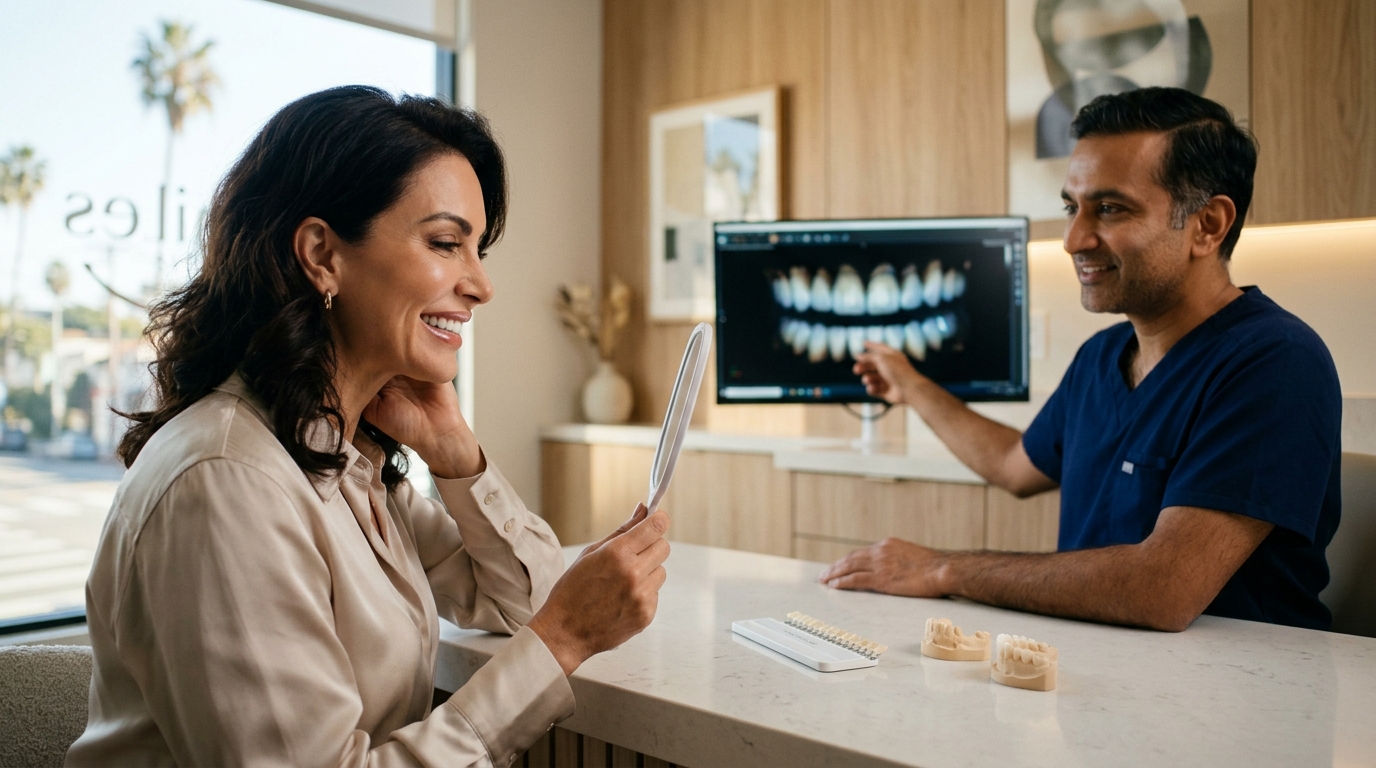
Patients seeking a complete smile transformation in Beverly Hills often ask one critical question before booking a consultation. The timeline for porcelain veneers typically spans three to four weeks from the initial consultation to the final placement. This duration allows for precise tooth preparation, custom fabrication of the veneers in a specialized laboratory, and careful placement to ensure a natural aesthetic. Understanding this schedule helps patients plan their lives around their new smile without unexpected delays. (Porcelain Veneers in Beverly)
Step 1: The Initial Consultation and Planning
The journey begins at the state-of-the-art facility located at 435 N. Roxbury Drive in Beverly Hills. Dr. Chirag Patel and his team conduct a comprehensive examination to determine if you are a candidate for porcelain veneers. This first visit is crucial for establishing the treatment plan. During this appointment, the dentist evaluates your gum health, tooth structure, and overall oral hygiene.
Porcelain veneers is a thin layer of porcelain that is placed over the front part of the tooth. This definition highlights the minimally invasive nature of the procedure compared to full crowns. The team will discuss your aesthetic goals, such as closing gaps or correcting discoloration. They may use digital imaging to show you a preview of your potential results. This collaborative approach ensures that the final outcome matches your vision.
According to recent dental industry reports, patient satisfaction rates for cosmetic procedures in Los Angeles have increased by 15% over the last five years due to improved digital planning tools. This data shows that technology plays a significant role in predicting outcomes accurately. The consultation also covers the cost of porcelain veneers and payment options to ensure transparency.
Step 2: Tooth Preparation and Impressions
Once you decide to proceed, the second visit involves preparing your teeth for the veneers. This step is where the actual transformation begins. The dentist carefully removes a small amount of enamel from the front surface of each tooth. This process ensures that the veneers will fit snugly and look natural without appearing bulky.
For patients interested in minimal intervention, no-prep veneers may be an option. These require little to no enamel removal, preserving more of the natural tooth structure. However, traditional veneers remain the gold standard for significant aesthetic corrections. After shaping the teeth, the dentist takes precise impressions or digital scans of your mouth.
These impressions are sent to a specialized dental laboratory where your custom veneers will be crafted. The accuracy of these impressions directly impacts the fit and comfort of the final restoration. Dr. Patel’s team emphasizes precision at this stage to avoid any adjustments later. You will leave with temporary veneers to protect your teeth while the permanent ones are being made.
Step 3: The Waiting Period and Temporaries
Between the preparation visit and the final placement, there is a waiting period that typically lasts two to three weeks. During this time, you will wear temporary veneers. These temporaries are made from a durable acrylic material that mimics the appearance of porcelain.
The temporary veneers serve a protective function for your prepared teeth. They also allow you to get used to the look and feel of a new smile. Many patients find this phase exciting as they begin to see the potential shape and length of their new teeth. It is important to maintain good oral hygiene during this period to prevent decay around the temporary edges.
Avoid biting into hard foods with your front teeth while wearing temporaries. These temporary restorations are not as strong as the final porcelain ones. If a temporary veneer becomes loose or falls out, contact the office immediately. The team at Smiles by Dr. P is available to repair or replace them quickly to maintain your comfort and aesthetics.
Step 4: Laboratory Fabrication
While you wait, the dental laboratory works on your custom veneers. This is a meticulous process that requires skilled technicians. They select the exact shade of porcelain to match your natural teeth or achieve a brighter look. The layering of porcelain is done by hand to create depth and translucency.
The fabrication process involves firing the porcelain in a high-temperature kiln. This step gives the veneers their strength and durability. The technicians also shape the veneers to fit the specific contours of your prepared teeth. This customization ensures that the final result looks like it belongs to your mouth.
According to the American Academy of Cosmetic Dentistry, the longevity of porcelain veneers is significantly influenced by the quality of the laboratory work. High-quality materials and expert craftsmanship can extend the lifespan of veneers to over ten years. This statistic underscores the importance of choosing a practice that partners with top-tier labs. The precision of the fit reduces the risk of gum irritation and plaque accumulation.
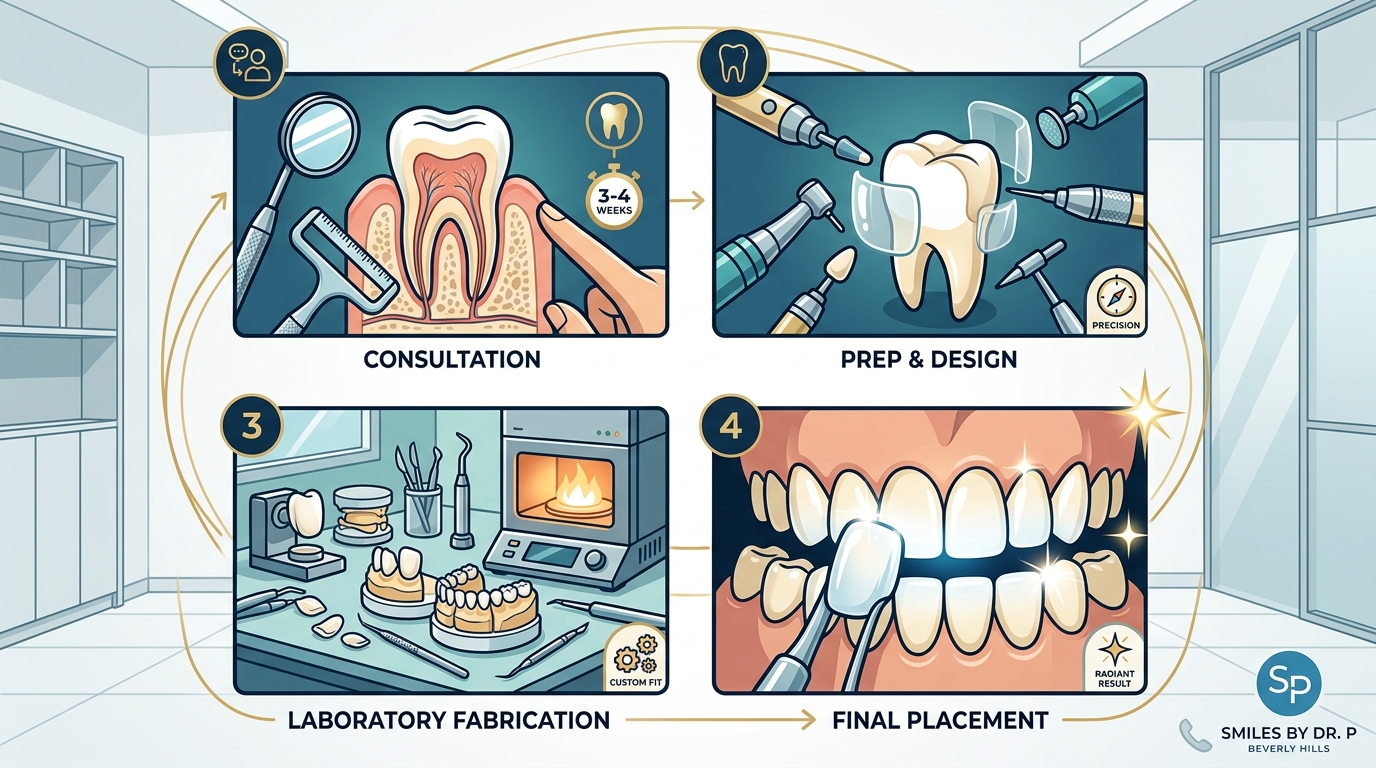
Step 5: Final Bonding and Adjustment
The final visit is the most anticipated step in the timeline. You will return to the Beverly Hills office to have your permanent veneers placed. The dentist first removes the temporary veneers and cleans your teeth thoroughly. They then try in the new veneers to check the fit, shape, and color.
If any adjustments are needed, the dentist can make minor modifications at this stage. Once you are satisfied with the appearance, the bonding process begins. The dentist applies a special cement to the back of each veneer and places it on your tooth. A curing light is used to harden the cement instantly.
After the cement sets, the dentist removes any excess material and checks your bite. You will be able to see your new smile immediately. The transformation is often dramatic, with improved symmetry and brightness. Many patients report feeling more confident in their social and professional interactions after this step. The final result is a durable, stain-resistant smile that looks completely natural.
Step 6: Aftercare and Longevity
Caring for your new veneers is essential for their longevity. Brushing twice a day for a minimum of two minutes is imperative with veneers and your natural teeth. This routine prevents cavities around the edges of the veneers. Flossing daily is equally important to remove plaque from between the teeth.
Avoid damaging habits such as biting your nails or chewing on ice. These actions can chip the porcelain or damage the bonding. If you grind your teeth at night, an occlusal guard is recommended. This protective device shields your veneers from excessive force. Regular dental visits are also crucial for maintaining the health of your gums and teeth.
With proper care, porcelain veneers can last between 10 and 15 years. Some patients enjoy their veneers for even longer. The investment in your smile is protected by diligent aftercare. The team at Smiles by Dr. P provides detailed aftercare instructions to ensure your success. They also offer guidance on whitening your natural teeth to match the veneers if needed.
Key Takeaways
- The total timeline for porcelain veneers is typically 3 to 4 weeks.
- Dr. Chirag Patel specializes in both traditional and no-prep veneers in Beverly Hills.
- Temporary veneers are worn during the laboratory fabrication period.
- Porcelain veneers is a thin layer of porcelain that is placed over the front part of the tooth.
- Proper brushing and flossing are critical to prevent decay around the veneers.
- The average lifespan of high-quality veneers is 10 to 15 years.
- Final bonding involves curing light hardening for instant durability.
Frequently Asked Questions
How many visits are required for porcelain veneers?
Typically, you will need two main visits. The first is for preparation and impressions, and the second is for final placement. Additional visits may be needed for consultations or adjustments.
Do porcelain veneers require anesthesia?
Yes, local anesthesia is usually administered during the tooth preparation step to ensure you are comfortable. The process is generally painless with modern techniques.
Can I eat normally after getting veneers?
Once the anesthesia wears off, you can eat, but avoid hard or sticky foods for the first 24 hours. Long-term, you should avoid biting hard objects like ice or pens to protect the veneers.
How do I clean my new veneers?
Brush twice a day and floss daily. Use a non-abrasive toothpaste to avoid scratching the porcelain surface. Regular dental cleanings are also necessary.
Are porcelain veneers permanent?
The process of placing veneers is irreversible because enamel is removed. However, the veneers themselves are durable and can last many years with proper care.
What is the cost of porcelain veneers?
The cost varies based on the number of veneers and the complexity of the case. Dr. Patel’s office provides a detailed quote during the consultation. Financing options are often available.
How long does the laboratory take to make veneers?
The fabrication process typically takes two to three weeks. This time allows for precise crafting and quality control by the dental technicians.
Schedule Your Smile Consultation Today
Ready to transform your smile? Contact Smiles by Dr. P to schedule your initial consultation. Dr. Chirag Patel and his team are dedicated to providing a signature experience in cosmetic dental care. Visit our cost page for more information on pricing. Call us today at (323) 909-9300 or submit an inquiry online to begin your journey to a beautiful smile.