

Porcelain veneers are a transformative solution for patients seeking to enhance their smile aesthetics in Beverly Hills and Los Angeles. According to recent cosmetic dentistry trends, the demand for minimally invasive procedures has surged, with many patients prioritizing tooth preservation over aggressive alteration. This shift has placed no-prep veneers, also known as Lumineers, in the spotlight as a viable alternative to traditional veneers. Understanding the mechanical and aesthetic differences between these two approaches is critical for making an informed decision about your dental health.
What Are No-Prep Veneers?
No-prep veneers are ultra-thin shells of porcelain that are bonded directly to the front surface of your teeth without the need for significant enamel removal. No-prep veneers are a minimally invasive cosmetic dental treatment designed to alter the appearance of teeth without drilling. Because they are so thin, often comparable to a contact lens in thickness, they can be placed with little to no alteration of the natural tooth structure. This approach is particularly appealing to patients who are hesitant about the irreversible nature of traditional veneer preparation.
At Smiles by Dr. P, we specialize in evaluating whether your specific dental anatomy allows for this conservative approach. The process begins with a comprehensive digital scan and mock-up to ensure that the final result looks natural and fits your facial structure perfectly. If your teeth are already well-aligned and you only need minor color or shape corrections, no-prep veneers may be the ideal choice.
Traditional vs. Minimal-Prep Veneers
The primary distinction between traditional and no-prep veneers lies in the amount of enamel that must be removed. Traditional veneers typically require the removal of about 0.5 millimeters of enamel to create space for the porcelain shell. This ensures that the veneer does not look bulky or protrude from the gum line. Traditional veneers are a restorative cosmetic procedure that involves shaving down the tooth surface to accommodate a thicker porcelain layer. This method is necessary for patients with significant discoloration, crowding, or misalignment.
In contrast, minimal-prep or no-prep veneers rely on the precision of modern ceramic materials. They do not require the aggressive drilling associated with conventional methods. However, this does not mean they are suitable for everyone. If a patient has severely rotated teeth or deep stains, adding material without removing enamel can result in a "bulky" smile that looks unnatural. Dr. Chirag Patel at Smiles by Dr. P carefully assesses the bite and gum line to determine which method will yield the most aesthetic and functional outcome.
Who Is a Candidate for No-Prep Veneers?
Not every smile is a candidate for the no-prep approach. Ideal candidates typically have teeth that are already in good alignment, with minor gaps, slight discoloration, or small chips. If your teeth are crowded or rotated, adding a veneer on top of them without removing enamel can push the teeth forward, creating an unnatural profile. Minimal-prep veneers are best suited for patients with healthy, well-aligned teeth seeking minor aesthetic improvements.
During your consultation at our Beverly Hills office, we will analyze your dental history and current condition. We also consider your gum health, as healthy gums are essential for the longevity of any veneer placement. Patients with gum disease or significant tooth decay must address these issues before considering any cosmetic procedure. For those who do not qualify for no-prep veneers, we offer traditional porcelain veneers that provide a dramatic transformation while maintaining structural integrity.
Pros and Cons of Each Option
Choosing between no-prep and traditional veneers requires weighing the benefits and drawbacks of each. No-prep veneers offer the advantage of reversibility. Since little to no enamel is removed, the procedure is less invasive and often more comfortable during the recovery phase. Additionally, the cost can be lower because the laboratory work is sometimes less complex, and the chair time is reduced. However, the limitation is that they are not suitable for major corrections. If you have significant structural issues, no-prep veneers will not provide the desired aesthetic result.
Traditional veneers, on the other hand, offer greater versatility. They can correct severe discoloration, close large gaps, and fix misalignment issues that no-prep veneers cannot address. The downside is that the enamel removal is permanent. Once the enamel is gone, you will always need to wear a veneer or crown to protect the tooth. This irreversible step is a significant consideration for many patients. For more details on the cost of porcelain veneers, please review our detailed pricing guide.
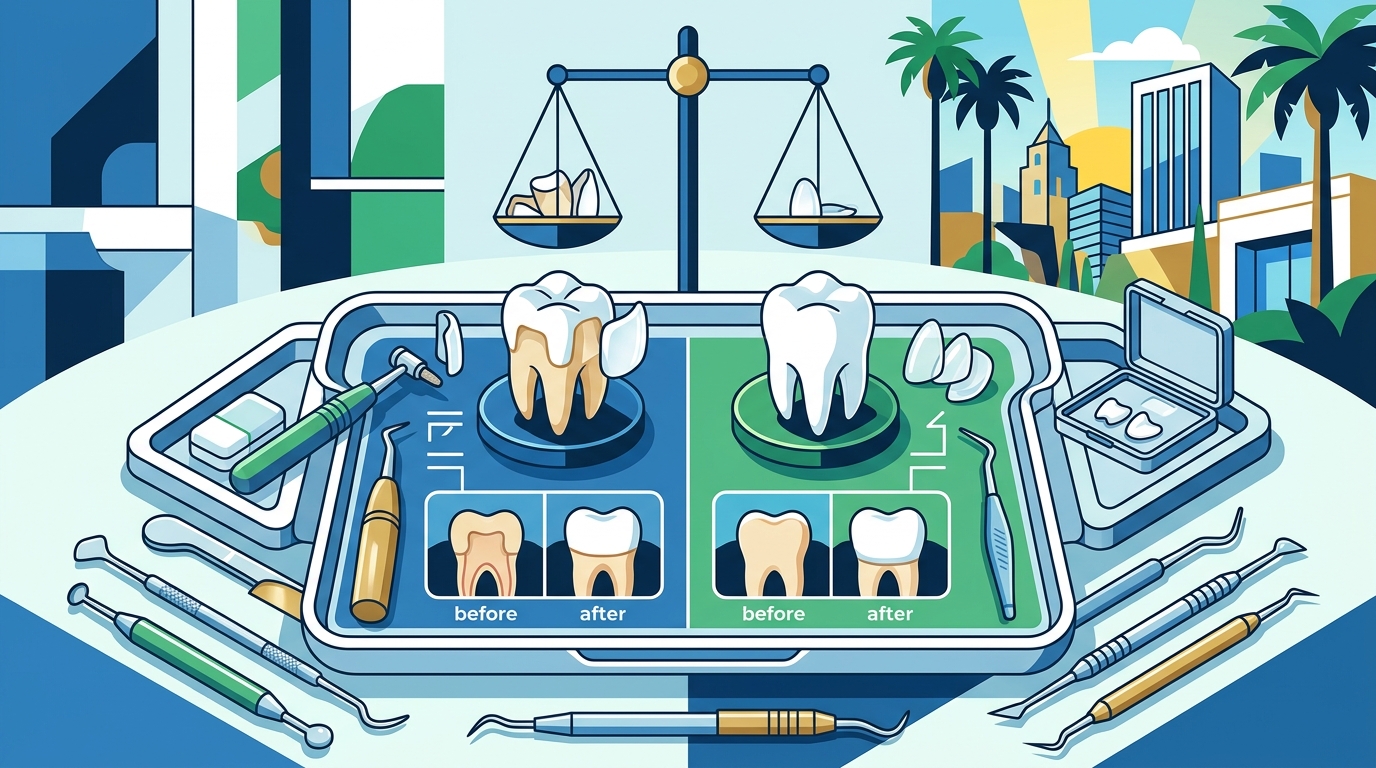
Comparison of Veneer Types
| Feature | No-Prep Veneers | Traditional Veneers |
|---|---|---|
| Enamel Removal | Minimal to None | Approx. 0.5mm |
| Reversibility | Often Reversible | Permanent |
| Ideal For | Minor Corrections | Major Structural Issues |
| Thickness | Ultra-Thin | Standard Thickness |
| Recovery Time | Minimal | Short Sensitivity Period |
Cost and Long-Term Maintenance
The cost of veneers varies based on the complexity of the case and the materials used. Generally, no-prep veneers may be slightly less expensive than traditional veneers due to the reduced laboratory time and chair side preparation. However, the long-term value depends on the durability and aesthetic satisfaction of the result. Both types of veneers require diligent oral hygiene to last. Proper aftercare is essential for extending the lifespan of any porcelain restoration.
Patients must commit to a strict oral hygiene routine. This includes brushing twice a day, flossing daily, and using non-abrasive toothpaste to prevent scratching the porcelain surface. Regular dental check-ups are also crucial. At Smiles by Dr. P, we provide comprehensive aftercare instructions to ensure your veneers remain bright and secure. We also recommend wearing an occlusal guard if you grind your teeth, as this can damage both no-prep and traditional veneers over time.
Key Takeaways
- No-prep veneers require little to no enamel removal, preserving natural tooth structure.
- Traditional veneers involve shaving down enamel to accommodate thicker porcelain for major corrections.
- No-prep veneers are ideal for patients with well-aligned teeth seeking minor aesthetic enhancements.
- Traditional veneers are necessary for correcting severe discoloration, crowding, or misalignment.
- The choice between the two depends on your specific dental anatomy and aesthetic goals.
- Both options require diligent oral hygiene and regular dental visits for long-term success.
- Dr. Chirag Patel at Smiles by Dr. P offers personalized consultations to determine the best path for your smile.
Frequently Asked Questions
Are no-prep veneers as durable as traditional veneers?
Yes, no-prep veneers are made from high-quality porcelain that is designed to withstand normal biting forces. However, because they are thinner, they may be slightly more prone to chipping if subjected to extreme trauma. Proper care and avoiding hard foods can mitigate this risk.
Can no-prep veneers fix crooked teeth?
No-prep veneers are not suitable for significantly crooked or rotated teeth. Adding material to a crooked tooth without removing enamel can result in a bulky, unnatural appearance. Traditional veneers or clear aligners may be better options for correcting alignment issues.
How long do no-prep veneers last?
With proper care, no-prep veneers can last between 10 to 15 years, similar to traditional veneers. The longevity depends on your oral hygiene habits, diet, and whether you grind your teeth at night.
Is the procedure for no-prep veneers painful?
The procedure is generally less painful than traditional veneers because little to no drilling is involved. Most patients experience minimal sensitivity during and after the placement. Local anesthesia may still be used for comfort during the bonding process.
Do no-prep veneers look natural?
When placed on suitable candidates, no-prep veneers look very natural because they do not add bulk to the teeth. Dr. Chirag Patel uses advanced digital imaging to ensure the veneers blend seamlessly with your existing smile.
What is the cost difference between no-prep and traditional veneers?
The cost can vary, but no-prep veneers are often slightly less expensive due to the reduced laboratory and chair time. However, the final cost depends on the number of veneers needed and the complexity of the case. Contact us for a detailed quote.
Can I whiten my teeth after getting no-prep veneers?
No-prep veneers are made of porcelain, which does not respond to traditional teeth whitening treatments. If you whiten your natural teeth, they may become lighter than your veneers, creating a mismatch. It is best to whiten your teeth before getting veneers.
Schedule Your Consultation
Deciding between no-prep and traditional veneers is a personal choice that depends on your unique dental needs. At Smiles by Dr. P in Beverly Hills, we are dedicated to providing a patient-centered approach to cosmetic dentistry. Our state-of-the-art facility and expert team are here to guide you through every step of your smile makeover journey. Contact us today to schedule a consultation and discover the best option for your smile.