

Porcelain veneers are very thin shells made of ceramic that cover the front part of teeth. Dental veneers offer a conservative approach to correcting tooth damage, staining, chips, and cracks. According to recent cosmetic dentistry trends, the demand for minimally invasive smile makeovers has surged, with many patients in Beverly Hills and Los Angeles seeking alternatives to traditional methods. This shift highlights a critical decision point for anyone considering a smile transformation. Understanding the mechanical and aesthetic differences between these two approaches is essential for making an informed choice about your oral health and facial aesthetics. (Porcelain Veneers in Beverly)
Defining No-Prep and Traditional Veneers
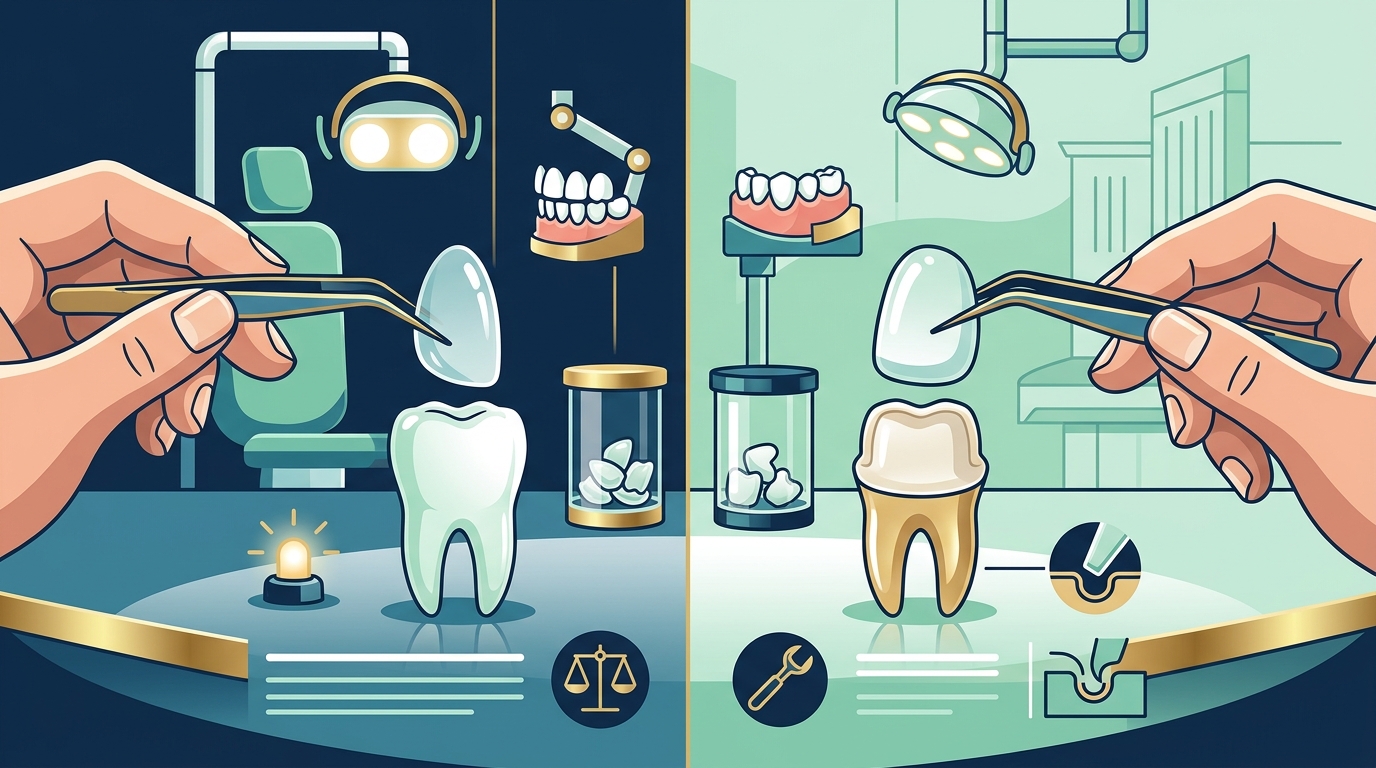
To understand which option is better, we must first establish clear definitions. No-prep veneers are ultra-thin porcelain shells, often referred to as Lumineers or minimal-prep veneers, that require little to no removal of natural tooth enamel. This allows for a reversible procedure in many cases. In contrast, traditional veneers involve the removal of a small layer of enamel to ensure the veneer fits naturally and bonds securely. This irreversible process is the standard for many complex cosmetic cases. (Dental Implants Los Angeles)
Dr. Chirag Patel at Smiles by Dr. P specializes in both approaches, ensuring that each patient receives a customized smile that is a pure reflection of their unique facial structure. The choice between these two methods depends heavily on the initial condition of your teeth and your aesthetic goals. (Porcelain Veneers in Beverly)
The Preparation Process Explained
The primary difference lies in the amount of tooth structure removed. Traditional veneers typically require the removal of 0.3 to 0.5 millimeters of enamel. This step is crucial for creating space so the veneer does not look bulky or protrude from the gums. Without this reduction, the final result can appear unnatural and affect your bite. (blog Page 1)
No-prep veneers, however, are designed to be placed directly over the existing enamel. This preserves the natural tooth structure, which is a significant advantage for patients who are anxious about dental procedures. However, this method is not suitable for everyone. If your teeth are significantly crowded or misaligned, adding a veneer without removing enamel might result in teeth that look too large or protrude excessively. Dr. Patel meticulously plans each smile to determine if minimal-prep is a viable option for your specific anatomy.
Durability and Longevity Comparison
When evaluating which veneer is better, longevity is a key factor. Traditional veneers are generally more durable because they are thicker and bonded to a prepared surface that provides a strong mechanical lock. With proper care, traditional veneers can last between 10 and 15 years or longer. The bonding process is robust, making them resistant to chipping and wear.
No-prep veneers are also made from high-quality porcelain, but their thinness can sometimes make them more susceptible to fracture if subjected to excessive force. They typically last between 5 and 10 years. While this is still a respectable lifespan, the need for replacement may arise sooner than with traditional options. It is important to note that veneer maintenance is easy, but it requires the same diligence as natural teeth. Brushing twice a day and flossing daily are imperative to prevent cavities around or under the veneers.
Ideal Candidates for Each Type
Not every patient is a candidate for no-prep veneers. Ideal candidates for minimal-prep options have teeth that are already in good alignment, have sufficient enamel, and do not require significant color correction. If you have tetracycline stains or fluoride stains, traditional veneers might be necessary to mask the discoloration effectively without adding bulk.
Traditional veneers are the better choice for patients with crooked teeth, gaps, or chips. They offer greater versatility in reshaping the tooth structure. For example, veneers for closing gaps often require traditional preparation to ensure the final width of the teeth looks proportional. Similarly, veneers for chipped teeth need the strength of a thicker porcelain layer to restore function and aesthetics.
Cost and Maintenance Factors
The cost of veneers varies based on the complexity of the case and the materials used. Generally, no-prep veneers may be slightly less expensive initially because they require less chair time and no temporary veneers. However, the long-term cost must be considered. If no-prep veneers require replacement more frequently, the cumulative cost may exceed that of traditional veneers.
Maintenance is another critical consideration. Both types require regular dental visits for check-ups and professional cleanings. You should request your dentist to use hand scalers around your veneers and avoid electric scalers that could damage the edges. Additionally, if you grind your teeth, an occlusal guard is essential to protect your investment. Grinding and clenching can exert incredible amounts of pressure on your teeth and veneers, leading to fractures.
Comparison Summary
| Feature | No-Prep Veneers | Traditional Veneers |
|---|---|---|
| Tooth Preparation | Minimal or none | Enamel removal required |
| Reversibility | Often reversible | Irreversible |
| Thickness | Ultra-thin | Standard thickness |
| Best For | Minor corrections, healthy enamel | Crowding, gaps, severe stains |
| Lifespan | 5-10 years | 10-15+ years |
Frequently Asked Questions
Are no-prep veneers permanent?
No-prep veneers are often considered reversible because they require little to no tooth reduction. However, once bonded, they are a permanent restoration until removed by a dentist. The advantage is that the underlying tooth structure remains intact for future treatments.
Can no-prep veneers fix crooked teeth?
No-prep veneers are not ideal for significantly crooked teeth. Adding thickness to a crooked tooth can make it protrude, affecting your bite and appearance. Traditional veneers are better suited for aligning and reshaping crooked teeth.
How do I care for my veneers?
Care for veneers is similar to natural teeth. Brush twice a day, floss daily, and use a water flosser for thorough cleaning. Avoid hard foods like ice or hard candy, and wear a night guard if you grind your teeth. Regular dental visits are also crucial for long-term success.
Do no-prep veneers look natural?
Yes, when applied to the right candidates, no-prep veneers can look very natural. However, if the teeth are already large, they may appear bulky. Dr. Patel carefully evaluates your facial aesthetics to ensure the result enhances your smile without looking artificial.
What is the cost of veneers in Beverly Hills?
The cost varies based on the number of veneers and the complexity of the case. Traditional veneers may cost more due to the additional preparation and laboratory work. No-prep veneers can be a cost-effective option for minor corrections. Contact Smiles by Dr. P for a detailed quote.
How long does the process take?
The traditional veneer process typically takes two to three visits over a few weeks. No-prep veneers may be completed in fewer visits due to the lack of preparation and temporary veneers. The timeline depends on your specific treatment plan.
Schedule Your Consultation
Choosing between no-prep and traditional veneers is a significant decision that impacts your smile for years to come. Dr. Chirag Patel and his team at Smiles by Dr. P are dedicated to providing a signature experience in our collaborative smile makeover journey. We pride ourselves in providing a customized smile that is unique and a pure reflection of you.
If you are considering a smile makeover, we invite you to submit an inquiry or schedule a consultation today. Located at 435 N. Roxbury Drive, Suite #410, Beverly Hills, CA 90210, our state-of-the-art facility is ready to help you achieve the natural-looking, long-lasting smile you deserve. Call us at (323) 909-9300 to discuss your options.