

Porcelain veneers are very thin shells made of ceramic that cover the front part of teeth. Dental veneers offer a conservative approach to correcting tooth damage, staining, chips, and cracks. According to the American Academy of Cosmetic Dentistry, over 3.5 million people have received veneers to enhance their smiles. This statistic highlights the massive shift toward minimally invasive cosmetic dentistry. Patients in Beverly Hills and Los Angeles are increasingly seeking options that preserve their natural tooth structure while delivering dramatic aesthetic results. Understanding the differences between no-prep and traditional veneers is critical for making an informed decision about your smile makeover journey.
Defining No-Prep and Traditional Veneers
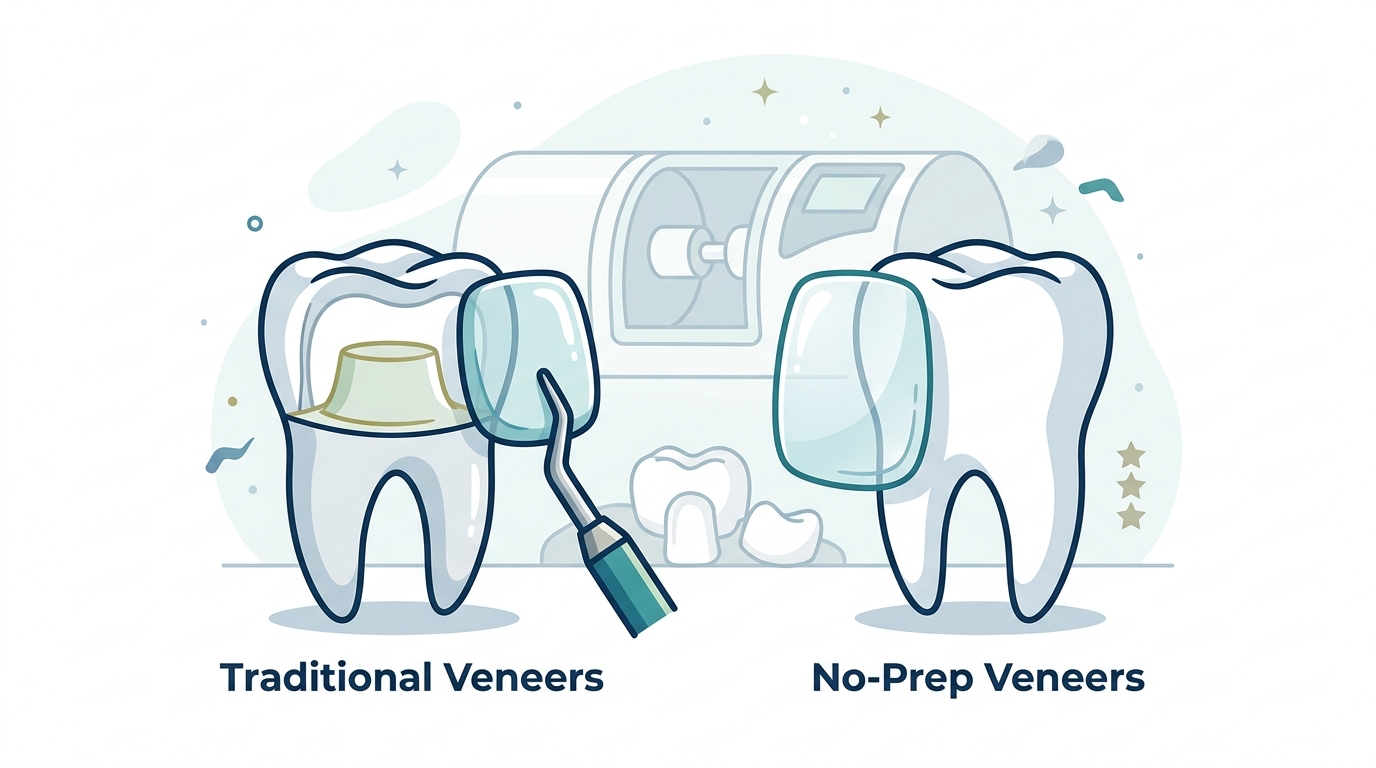
To understand which option is better, we must first define the core mechanisms of each procedure. No-prep veneers are ultra-thin porcelain shells that require little to no removal of natural tooth enamel. They are often referred to as Lumineers or minimal-prep veneers. This approach relies on the precision of modern dental ceramics to achieve coverage without aggressive tooth reduction.
Traditional veneers involve the removal of a small layer of enamel, typically between 0.3mm and 0.5mm. This process creates space for the veneer so that it does not look bulky or protrude from the gums. Dr. Chirag Patel at Smiles by Dr. P specializes in both approaches, tailoring the treatment plan to the patient's unique anatomical needs. The goal is always a natural-looking smile that complements facial aesthetics.
The Preparation Process Explained
The primary difference lies in the clinical preparation phase. Traditional veneers require a more invasive workflow. The dentist must carefully shave down the front surface of the tooth. This step is irreversible because enamel does not grow back. Once the enamel is removed, the tooth becomes sensitive and relies on the veneer for protection.
In contrast, the no-prep or minimal-prep process is significantly less invasive. In many cases, no drilling is required at all. If minor adjustments are needed, they are extremely conservative. This preservation of natural tooth structure is the biggest advantage of the minimal-prep approach. It allows for easier future revisions or replacements if necessary. Patients often report less sensitivity during and after the procedure compared to traditional methods.
Pros and Cons of Each Option
Choosing between the two requires weighing specific benefits and drawbacks. Neither option is universally "better"; the right choice depends on your dental anatomy and aesthetic goals.
Advantages of No-Prep Veneers
- Reversibility: Because little to no enamel is removed, the procedure is often reversible or easily reversible.
- Less Sensitivity: Patients typically experience minimal post-operative sensitivity.
- Speed: The process can be faster since there is less preparation time.
Advantages of Traditional Veneers
- Custom Fit: The space created allows for a more precise fit and natural translucency.
- Correction Power: They are better for correcting significant misalignments or severe discoloration.
- Longevity: Some studies suggest traditional veneers may last longer due to better bonding surfaces and fit.
Who Is a Candidate for No-Prep?
Not everyone is a suitable candidate for no-prep veneers. Ideal candidates typically have small, slightly crooked teeth or minor gaps. If your teeth are large or protrude significantly, adding a veneer without removing enamel could result in a bulky, unnatural appearance. Dr. Patel evaluates the lower third of the face and lip support to determine the best approach.
For patients with severe crowding or bite issues, traditional veneers or even clear aligners might be a more appropriate first step. The clear aligners service at Smiles by Dr. P can correct alignment before veneers are considered. This holistic approach ensures that the final smile is not just aesthetically pleasing but also functionally sound. A consultation is necessary to determine if your enamel thickness and gum line are suitable for the minimal-prep technique.
Cost and Longevity Comparison
Cost is a significant factor for many patients. Generally, no-prep veneers can be slightly more expensive due to the specialized manufacturing process required for their ultra-thin strength. However, the long-term value depends on maintenance and durability. Both types of veneers can last 10 to 15 years or longer with proper care.
Proper aftercare is essential for longevity. Aftercare of veneers includes brushing twice a day, flossing daily, and using an occlusal guard if you grind your teeth. Avoiding damaging habits like biting nails or chewing ice is crucial. Regular dental visits ensure that the bonding remains intact and the gums stay healthy.
| Feature | No-Prep Veneers | Traditional Veneers |
|---|---|---|
| Enamel Removal | Minimal or None | 0.3mm - 0.5mm |
| Reversibility | High | Low |
| Ideal For | Minor gaps, small teeth | Severe stains, misalignment |
| Recovery Time | Minimal | Moderate |
| Cost | Higher Initial Cost | Standard Market Rate |
Frequently Asked Questions
Are no-prep veneers as strong as traditional veneers?
Yes, modern dental ceramics used in no-prep veneers are highly durable. They are designed to withstand normal biting forces. However, patients who grind their teeth may need an occlusal guard to protect them.
Can no-prep veneers fix crooked teeth?
No-prep veneers can mask minor crookedness by creating the illusion of straight teeth. For significant crowding, orthodontic treatment like clear aligners is recommended first.
How long do no-prep veneers last?
With proper care, no-prep veneers can last 10 to 15 years or more. Regular check-ups and good oral hygiene are key to extending their lifespan.
Is the process painful?
Most patients report minimal discomfort. Since little to no enamel is removed, there is often no need for local anesthesia, though it may be used for comfort.
Do no-prep veneers look natural?
When applied to suitable candidates, no-prep veneers look very natural. Dr. Patel ensures that the thickness and shade are customized to match your facial aesthetics.
What is the cost of no-prep veneers?
The cost varies based on the number of veneers and individual case complexity. Contact Smiles by Dr. P for a detailed quote.
Can I whiten my teeth after getting veneers?
Veneers themselves cannot be whitened. However, your natural teeth can. It is best to whiten your natural teeth before getting veneers to ensure a perfect color match.
Schedule Your Consultation
Deciding between no-prep and traditional veneers is a personal journey. Dr. Chirag Patel and his team at Smiles by Dr. P are dedicated to providing a customized smile that is a pure reflection of you. We pride ourselves in providing a signature experience in our collaborative smile makeover journey with you.
Ready to explore your options? Submit an inquiry or call us at (323) 909-9300 to schedule a consultation. Visit our office at 435 N. Roxbury Drive, Suite#410, Beverly Hills, CA 90210. Let us help you achieve the beautiful, natural smile you deserve.