

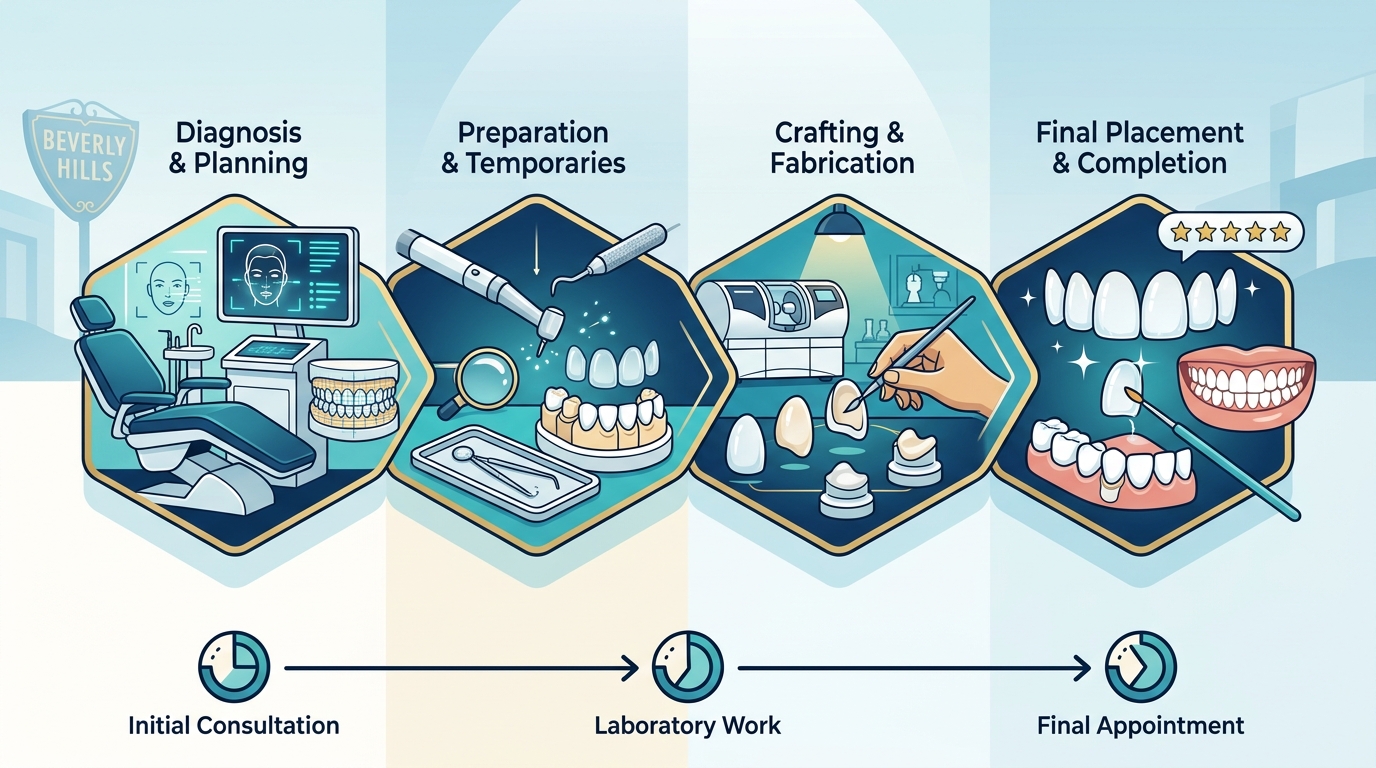
Understanding the timeline for porcelain veneers is critical for patients planning a smile makeover in Beverly Hills. The entire process typically spans three to four weeks from the initial consultation to the final placement of permanent restorations. This duration allows for precise diagnostic imaging, conservative tooth preparation, and the meticulous handcrafting of custom ceramic shells by Dr. Chirag Patel. While the wait for the lab is necessary for quality, the result is a durable, natural-looking smile that enhances facial aesthetics and oral health. (Porcelain Veneers in Beverly)
Phase 1: The Initial Consultation and Planning
The journey begins at the state-of-the-art facility located at 435 N. Roxbury Drive in Beverly Hills. During this first visit, Dr. Patel conducts a comprehensive oral health evaluation to determine if you are a suitable candidate for porcelain veneers. This phase is not merely cosmetic; it is a diagnostic necessity to ensure the underlying teeth are healthy enough to support the restorations.
Porcelain veneers are very thin shells made of ceramic that cover the front part of teeth. They offer a conservative approach to correcting tooth damage, staining, chips, and cracks. During the consultation, Dr. Patel discusses your aesthetic goals, such as closing gaps or correcting tetracycline stains. He may take digital scans or traditional impressions to create a preview of your potential smile. This collaborative planning ensures the final result is a pure reflection of your unique facial structure.
Patients traveling from outside the Los Angeles area often schedule this initial visit to begin the process immediately. The consultation also covers the cost of porcelain veneers and payment options, ensuring transparency before any work begins. According to recent dental industry reports, patient satisfaction rates for veneers remain among the highest in cosmetic dentistry due to their durability and aesthetic appeal. Clinical data shows that porcelain is highly resistant to staining compared to composite materials.
Phase 2: Tooth Preparation and Impressions
Once the treatment plan is approved, the second phase involves preparing the teeth for the veneers. This step is crucial for achieving a natural fit and avoiding a bulky appearance. Dr. Patel carefully removes a microscopic layer of enamel from the front surface of each tooth. This minimal-prep approach preserves as much natural tooth structure as possible while ensuring the veneers sit flush with your existing smile.
After the teeth are prepared, precise impressions or digital scans are taken. These molds are sent to a specialized dental laboratory where master technicians handcraft your custom veneers. The precision of this step dictates the final fit and comfort of the restoration. The American Dental Association notes that custom-fitted restorations significantly reduce the risk of gum irritation and long-term decay.
During this appointment, Dr. Patel will also create temporary veneers. These temporaries protect your prepared teeth and allow you to visualize the shape and length of your new smile while the permanent ones are being fabricated. The temporaries are bonded with temporary cement, which is designed to be easily removed later without damaging the underlying tooth structure.
Phase 3: The Waiting Period with Temporaries
The period between tooth preparation and the final placement of permanent veneers typically lasts two to three weeks. This is the longest phase of the timeline, but it is essential for quality control. The dental laboratory uses this time to layer porcelain, match the shade to your natural teeth, and fire the restorations at high temperatures to achieve strength and translucency.
While wearing temporaries, you must adhere to strict dietary guidelines to prevent them from dislodging. Avoid sticky foods like caramel or hard items like nuts. Oral hygiene remains critical during this time. Brushing and flossing must be done gently around the temporary margins to prevent bacterial buildup. Proper aftercare protocols emphasize that neglecting hygiene during the temporary phase can lead to sensitivity or decay before the final veneers are placed.
Patients often report that the temporary phase helps them adjust to the new shape of their teeth. It serves as a trial run for the final aesthetic outcome. If any adjustments to the length or contour are needed, Dr. Patel can modify the temporaries before the final veneers arrive. This iterative process ensures that the final result meets your exact expectations.
Phase 4: Final Bonding and Adjustment
The final phase involves the removal of the temporary veneers and the bonding of the permanent porcelain restorations. This appointment usually takes two to three hours. Dr. Patel first removes the temporaries and cleans the tooth surfaces. He then tries in the permanent veneers to check the fit, color, and shape. Any necessary adjustments to the contour or bite are made at this stage.
Once the fit is perfect, the teeth are isolated and etched to create a strong bond. A special dental cement is applied to the veneers, which are then positioned on the teeth. A high-intensity curing light hardens the cement in seconds, locking the veneers in place. This bonding process is what gives porcelain veneers their remarkable durability and longevity. Healthline reports that properly bonded veneers can last 10 to 15 years or longer with proper care.
After the cement is cured, Dr. Patel checks your bite to ensure that the new smile feels natural when you chew and speak. He removes any excess cement and polishes the veneers to a high shine. The result is a seamless transition from your natural teeth to the new porcelain restorations. Patients often leave the office with a transformed smile that looks and feels completely natural.
Phase 5: Long-Term Maintenance and Aftercare
The timeline for porcelain veneers does not end with placement. Long-term success depends on consistent maintenance and regular dental visits. Veneer maintenance is easy, but it requires discipline. You must brush twice a day for a minimum of two minutes and floss daily to prevent cavities around the veneer margins. Smiles by Dr. P recommends using a water flosser for thorough cleaning around the gum line.
Regular dental check-ups are essential for monitoring the health of the veneers and the underlying teeth. Dr. Patel advises patients to visit the office at least twice a year for professional cleanings. During these visits, the hygienist will use hand scalers around the veneers rather than electric scalers to avoid scratching the porcelain surface. Annual X-rays are also recommended to evaluate for any hidden issues.
Protecting your investment is also crucial. If you grind your teeth at night, wearing an occlusal guard is non-negotiable. Grinding and clenching can exert incredible amounts of pressure on your teeth and veneers, potentially causing fractures. WebMD states that night guards are vital for preserving the integrity of porcelain restorations. By following these guidelines, you can enjoy your new smile for many years.
Frequently Asked Questions
How many visits are required for porcelain veneers?
The process typically requires three to four visits. The first is for consultation and planning, the second for tooth preparation and temporaries, the third for trying in the final veneers, and a fourth for final bonding and adjustment if needed.
Can I eat normally immediately after getting veneers?
While you can eat after the initial bonding, it is best to avoid very hard or sticky foods for the first 24 hours. Long-term, you should avoid using your front teeth to bite into hard objects like bones or ice to prevent chipping.
Do porcelain veneers look natural?
Yes, when crafted by an expert like Dr. Patel, porcelain veneers are designed to mimic the light-reflecting properties of natural enamel. They are translucent and color-matched to your surrounding teeth, making them virtually indistinguishable from natural teeth.
How long do porcelain veneers last?
With proper care, porcelain veneers can last between 10 and 15 years, and sometimes longer. Their longevity depends on oral hygiene, dietary habits, and whether you wear a night guard if you grind your teeth.
Is the process painful?
Local anesthesia is used during the tooth preparation phase to ensure you are comfortable. Most patients report minimal discomfort after the anesthesia wears off, which can be managed with over-the-counter pain relievers.
Can veneers be whitened?
No, porcelain veneers cannot be whitened once they are placed. However, you can whiten your natural teeth before the veneers are made to ensure a perfect color match. If your natural teeth change color later, you may need to replace the veneers to maintain consistency.
What is the cost of porcelain veneers in Beverly Hills?
The cost varies based on the number of veneers and the complexity of the case. Dr. Patel provides a detailed cost breakdown during the consultation. While the upfront investment is significant, the durability and aesthetic benefits often make it a cost-effective long-term solution compared to repeated dental repairs.
Schedule Your Smile Makeover Consultation
Ready to transform your smile? The journey to a confident, radiant smile begins with a single step. Dr. Chirag Patel and his team at Smiles by Dr. P are dedicated to providing a signature experience in cosmetic dental care. Whether you are looking to correct chipped teeth, close gaps, or enhance your overall facial aesthetics, we are here to help.
Contact us today to schedule your consultation at our Beverly Hills office. Call us at (323) 909-9300 or submit an inquiry online to get started. Your new smile is just a few weeks away.