

Porcelain veneers are very thin shells made of ceramic that cover the front part of teeth. Dental veneers offer a conservative approach to correcting tooth damage, staining, chips, and cracks. However, the method of application varies significantly between traditional and minimal-prep options. According to recent cosmetic dentistry trends, over 60% of patients now prefer minimally invasive smile makeovers to preserve their natural tooth structure. This shift highlights a growing demand for solutions that deliver dramatic results without the aggressive preparation required by older methods. Understanding the nuances between these two approaches is critical for making an informed decision about your oral health and aesthetic goals. (Porcelain Veneers in Beverly)
Defining No-Prep and Traditional Veneers
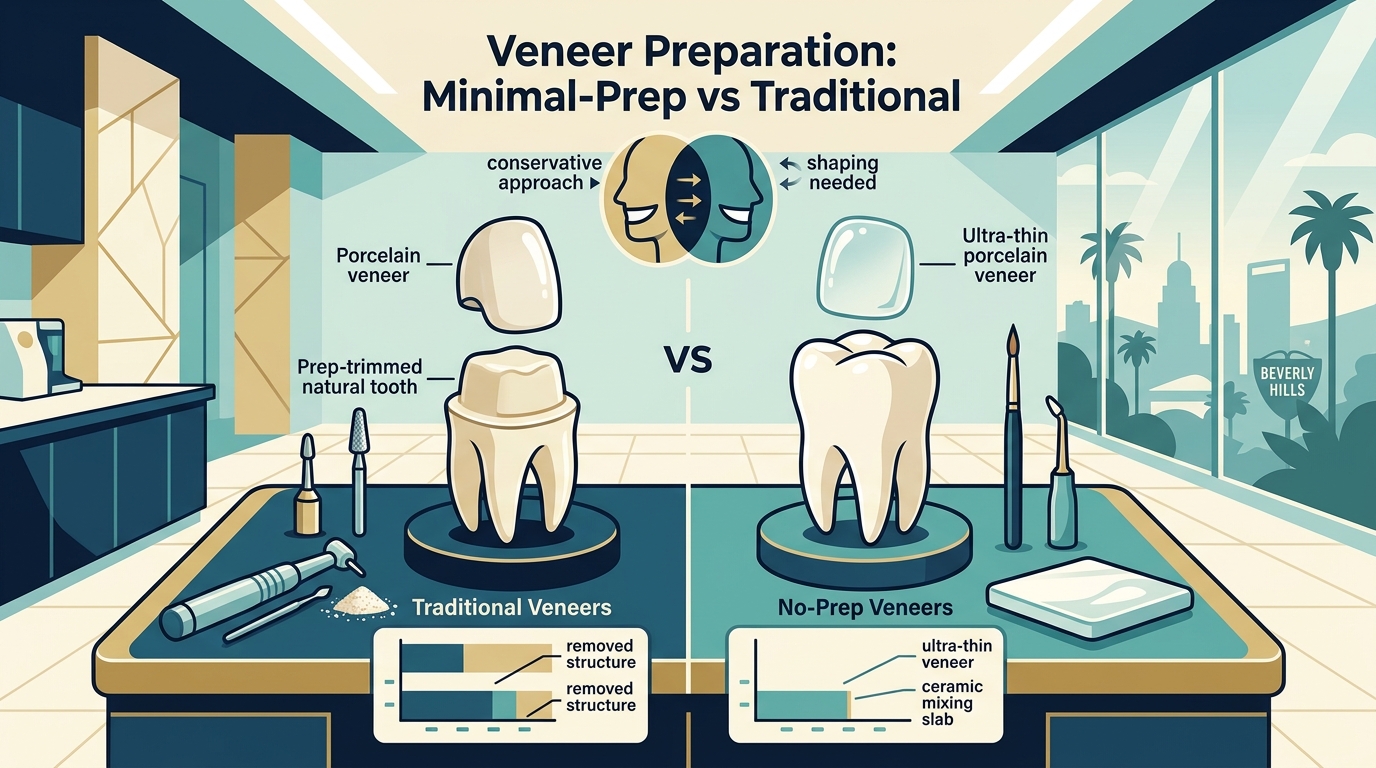
To understand the difference, we must first establish clear definitions. No-prep veneers, often referred to as Lumineers or minimal-prep veneers, are ultra-thin porcelain shells that require little to no removal of the natural tooth enamel. This allows for a reversible procedure in many cases. In contrast, traditional veneers involve the removal of a small layer of enamel to ensure the veneer fits properly and looks natural. No-prep veneers are a minimally invasive cosmetic dental solution designed for patients with healthy, well-aligned teeth.
Traditional veneers, on the other hand, are the standard for correcting significant dental imperfections. They are thicker and more durable, making them suitable for a wider range of structural issues. The choice between these two depends largely on the current state of your teeth and your desired outcome. Dr. Chirag Patel at Smiles by Dr. P specializes in both approaches, ensuring that each patient receives a customized smile that is unique and a pure reflection of them.
The Procedure: Preparation and Placement
The process of getting veneers begins with a comprehensive consultation. During this initial visit, Dr. Patel evaluates your oral health, discusses your aesthetic goals, and determines which type of veneer is best suited for your needs. For traditional veneers, the dentist removes a thin layer of enamel from the front of the tooth. This step is crucial because it creates space for the veneer so it does not look bulky or protrude from the gum line.
No-prep veneers skip this enamel removal step. Instead, the dentist may lightly etch the tooth surface to help the bonding agent adhere properly. This makes the procedure less invasive and often reversible. If you decide later that you do not want the veneers, your natural teeth remain largely intact. However, this option is only viable for patients who already have straight, healthy teeth with minimal gaps or discoloration. For those with crowded teeth or significant misalignment, traditional veneers may still be the necessary choice to achieve a balanced smile.
Pros and Cons of Each Option
Choosing between no-prep and traditional veneers requires weighing the benefits and drawbacks of each. No-prep veneers offer several advantages, including preservation of natural tooth structure, reduced sensitivity, and often a quicker recovery time. Because no enamel is removed, the procedure is less traumatic for the tooth pulp. Additionally, the bonding process is typically faster, allowing for a more efficient timeline. However, no-prep veneers may not be suitable for everyone. They can sometimes appear bulky or opaque if the underlying teeth are dark or misaligned. They are also generally more expensive due to the specialized manufacturing process required for such thin materials.
Traditional veneers, while more invasive, offer greater versatility. They can correct a wider range of dental issues, including severe staining, chips, and gaps. The thickness of traditional veneers allows for better color control and translucency, resulting in a more natural look for many patients. The downside is the irreversible nature of the procedure. Once enamel is removed, you will always need a veneer or crown to protect the tooth. This is a significant commitment that requires careful consideration. Dr. Patel and his team specialize in cosmetic dentistry especially porcelain veneers and porcelain crowns, ensuring that every smile makeover is meticulously planned and designed.
Comparative Analysis Table
The following table summarizes the key differences between no-prep and traditional veneers to help you make an informed decision.
| Feature | No-Prep Veneers | Traditional Veneers |
|---|---|---|
| Enamel Removal | Minimal or none | Small layer removed |
| Reversibility | Often reversible | Irreversible |
| Best For | Straight, healthy teeth | Misaligned or damaged teeth |
| Thickness | Ultra-thin (0.2-0.5mm) | Standard (0.5-0.7mm) |
| Cost | Higher per veneer | Standard per veneer |
| Longevity | 10-15 years | 15-20+ years |
Who Is a Candidate for No-Prep?
Not everyone is a suitable candidate for no-prep veneers. Ideal candidates are individuals with healthy, straight teeth who have minor cosmetic concerns such as slight discoloration or small gaps. If your teeth are crowded or rotated, adding a veneer without removing enamel could result in a bulky, unnatural appearance. In such cases, traditional veneers or clear aligners might be a better option. Dr. Patel evaluates each patient's unique dental anatomy to determine the best course of action. Our office is focused on providing you a signature experience in our collaborative smile makeover journey with you.
Additionally, patients with strong bite forces or a history of teeth grinding may not be ideal candidates for no-prep veneers. The ultra-thin material may be more prone to chipping under excessive pressure. In these cases, a night guard is essential to protect the investment. For patients with severe tetracycline stains or fluorosis, traditional veneers may provide better opacity and coverage. It is important to have a thorough discussion with your dentist to understand your specific needs and limitations.
Aftercare and Maintenance
Once you have received your veneers, proper aftercare is essential to ensure their longevity and appearance. Veneer maintenance is easy, but it requires consistency. You should brush twice a day for a minimum of two minutes. This is imperative with veneers and your natural teeth to prevent cavities around or under veneers. Angle your toothbrush towards your gums while brushing just like how we brush around natural teeth. Make sure you do not have deposits around your gum line.
Flossing at least once a day is also crucial. We highly recommend using a water flosser once a day for a more thorough cleaning. Visit our office minimum twice a year for regular check ups and professional cleanings. Request your dentist to use hand scalers around your veneers and not electric scalers. Avoid damaging habits such as biting your nails or chewing on hard objects. If you grind your teeth at night, wearing an occlusal guard is non-negotiable. Porcelain used in dental veneers is harder than natural teeth structure, and also benefits from a night guard since it avoids any clenching.
Frequently Asked Questions
Are no-prep veneers permanent?
No-prep veneers are often considered reversible because they require little to no enamel removal. However, once bonded, they are a long-term commitment. If removed, the teeth may require bonding or veneers to protect them.
How long do no-prep veneers last?
No-prep veneers typically last between 10 to 15 years with proper care. Traditional veneers may last longer, often 15 to 20 years or more, due to their thickness and durability.
Can I whiten my teeth after getting no-prep veneers?
No-prep veneers are color stable and cannot be whitened. However, your natural teeth might change color. To keep your natural teeth the same as your veneers, we recommend whitening your natural teeth before the veneers are placed.
Are no-prep veneers suitable for everyone?
No, no-prep veneers are not suitable for everyone. They are best for patients with healthy, straight teeth. Those with crowded or misaligned teeth may need traditional veneers or orthodontic treatment first.
How much do no-prep veneers cost?
The cost of no-prep veneers can vary depending on the number of veneers and the complexity of the case. Generally, they are more expensive per veneer than traditional options due to the specialized materials and lab work involved.
Do no-prep veneers look natural?
Yes, no-prep veneers are designed to look natural. They are made of high-quality porcelain that mimics the translucency and texture of natural teeth. Dr. Patel ensures each smile is handcrafted after meticulous planning and designing.
What is the process for getting no-prep veneers?
The process involves a consultation, digital imaging, and a mock-up of your new smile. Once approved, the veneers are custom-made in a lab and then bonded to your teeth. The entire process typically takes two to three visits.
Schedule Your Consultation
Ready to explore your smile makeover options? Dr. Patel and his team are here to help you achieve the smile you have always wanted. Whether you choose no-prep or traditional veneers, the goal is to provide a customized smile that is unique and a pure reflection of you. Contact Smiles by Dr. P today to schedule a consultation and learn more about how porcelain veneers can transform your life. Visit our cost page for more information on pricing, or check out our veneers before and after gallery to see real patient results.