

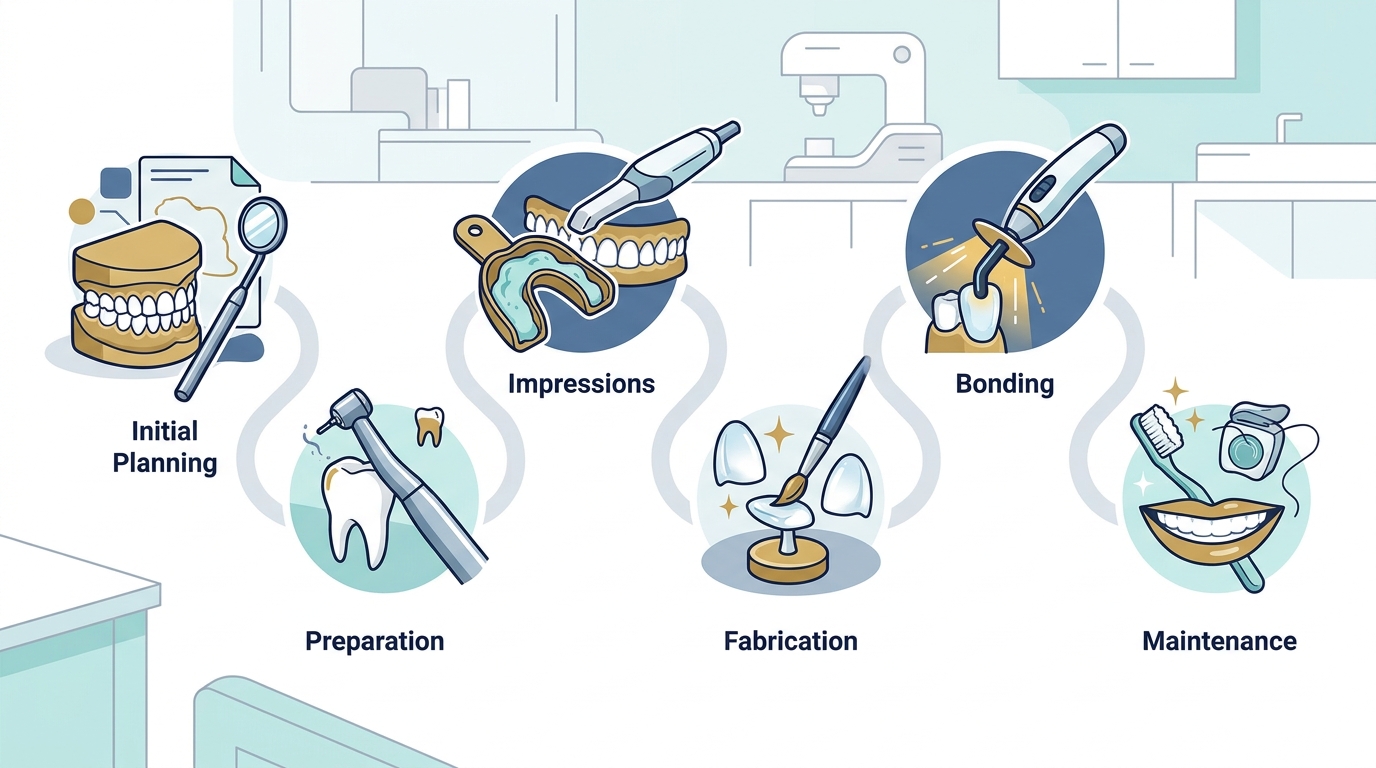
Getting porcelain veneers is a structured journey that moves from initial planning to long-term maintenance. At Smiles by Dr. P in Beverly Hills, we guide patients through a conservative, detail-oriented process designed to preserve natural enamel while achieving a radiant smile. Understanding these distinct phases helps you prepare for the timeline and the specific actions required at each step.
1. Comprehensive Consultation and Digital Smile Design
Establish your aesthetic goals and review your dental health. The process begins with a detailed evaluation of your teeth, gums, and facial proportions. Dr. Chirag Patel uses digital smile design technology to create a 3D preview of your potential new smile. This phase ensures that the final result complements your unique facial features and meets your personal expectations before any treatment begins.
2. Diagnostic Records and Treatment Planning
Collect precise data to fabricate custom restorations. Your dentist takes impressions, radiographs, and high-resolution photographs to map your dental anatomy. These records are sent to a master ceramist lab to begin the design of your porcelain shells. Accurate diagnostics are critical for ensuring the veneers fit seamlessly and function correctly with your bite.
3. Tooth Preparation and Temporary Veneers
Prepare the tooth surface and test-drive your new smile. For traditional veneers, a minimal amount of enamel, typically 0.5 to 0.7 mm, is removed to create space for the porcelain. Dr. Patel is known for offering temporary veneers during this phase, allowing you to wear and evaluate the shape and color before the final restorations are made. This "test drive" ensures you are completely satisfied with the aesthetic outcome.
4. Porcelain Fabrication by Master Ceramists
Wait for the custom crafting of your final restorations. While you wear your temporary veneers, the lab hand-crafts your final porcelain shells using high-quality materials like feldspathic porcelain or e.max. This phase usually takes one to two weeks. The master ceramists layer the porcelain to mimic the natural translucency and light-reflecting properties of your existing teeth.
5. Final Bonding and Adjustment
Permanently attach the veneers and fine-tune the bite. During the final visit, your temporary veneers are removed, and the permanent porcelain is bonded to your teeth using a specialized adhesive. The dentist checks the fit, color, and bite alignment, making any necessary adjustments to ensure comfort and function. This step is performed under local anesthesia if sensitivity is a concern.
6. Post-Operative Care and Long-Term Maintenance
Protect your investment with proper oral hygiene habits. After bonding, you may experience temporary sensitivity to temperature changes. Long-term success depends on consistent brushing, flossing, and regular dental check-ups. Wearing a night guard is often recommended to prevent damage from grinding or clenching, ensuring your veneers last for many years.
Choosing the Right Phase for Your Needs
Each phase serves a specific purpose in the veneer journey. If you are concerned about enamel preservation, focus on the preparation phase to discuss no-prep options. If aesthetics are your primary goal, prioritize the digital design and temporary veneer phases to ensure you love the look before it becomes permanent.
Frequently Asked Questions
How long does the entire porcelain veneer process take?
The porcelain veneer process usually requires three visits over one to four weeks. This timeline includes the initial consultation, tooth preparation with temporary veneers, and the final bonding appointment.
Do I need to remove enamel for porcelain veneers?
Traditional veneers require the removal of approximately 0.5 to 0.7 mm of enamel. However, no-prep veneers are ultra-thin restorations that may be bonded with little to no enamel reduction, depending on your tooth anatomy.
Can I see my new smile before the final veneers are placed?
Yes, you can wear temporary veneers as a test drive before the final porcelain is fabricated. This trial period allows you to evaluate the shape, length, and color of your new smile in real life.
How long do porcelain veneers last?
With proper care, porcelain veneers can last between 10 and 20 years. Factors such as oral hygiene, diet, and the use of a night guard significantly impact their longevity.
Is the veneer procedure painful?
The procedure is performed under local anesthesia and is generally not painful. Some patients may experience temporary sensitivity to hot or cold temperatures for a few days after the bonding process.