

Porcelain veneers are a transformative solution for patients seeking to correct cosmetic dental flaws, but the path to a perfect smile varies significantly based on the technique used. According to recent dental industry data, the demand for minimally invasive cosmetic procedures has surged, with a notable percentage of patients now preferring options that preserve natural tooth structure over traditional methods. This shift highlights a critical decision point for anyone considering a smile makeover in Beverly Hills or Los Angeles. Understanding the nuances between no-prep veneers and traditional veneers is essential for making an informed choice that aligns with your dental health and aesthetic goals.
What Are No-Prep Veneers?
No-prep veneers, often referred to as Lumineers or ultra-thin veneers, represent a significant advancement in cosmetic dentistry. These are extremely thin shells of porcelain that are bonded to the front surface of your teeth. The defining characteristic of this procedure is the minimal to non-existent removal of enamel. This approach allows for a reversible process, meaning that if you choose to remove the veneers later, your natural teeth remain largely intact.
At Smiles by Dr. P, we specialize in evaluating whether this conservative approach is suitable for your specific dental anatomy. The process begins with a detailed digital scan of your teeth. This technology allows Dr. Chirag Patel to design veneers that are thin enough to fit without grinding down your natural teeth, yet strong enough to withstand daily wear. This method is particularly appealing to patients who are anxious about the irreversible nature of traditional veneer preparation.
It is important to note that no-prep veneers are not a one-size-fits-all solution. They work best for patients who have small teeth, gaps between teeth, or minor misalignments. If your teeth are large or protruding, adding a layer of porcelain without removing enamel could result in a bulky, unnatural appearance. Therefore, a thorough clinical examination is required to determine if your bite and tooth structure can accommodate this technique.
Understanding Traditional Veneers
Traditional porcelain veneers have been the gold standard in cosmetic dentistry for decades. They are custom-made shells that cover the front surface of teeth to improve their appearance. Unlike no-prep options, traditional veneers require the removal of a small layer of enamel from the tooth surface. This step is crucial to ensure that the veneer fits properly and looks natural. Without this reduction, the veneer might appear too thick or cause discomfort when biting.
The process for traditional veneers involves several steps. First, your dentist will prepare your teeth by removing enamel. Then, an impression or digital scan is taken to create a mold. While your permanent veneers are being fabricated in a lab, you will wear temporary veneers to protect your teeth. Once the permanent veneers are ready, they are bonded to your teeth using a special cement. This process is irreversible because the enamel does not grow back.
Traditional veneers are ideal for correcting more significant cosmetic issues, such as severe discoloration, chips, or misalignment. They offer a wide range of customization options, allowing for precise control over color, shape, and size. For patients with complex dental needs, traditional veneers often provide a more predictable and durable result. You can learn more about the process of veneers to understand the detailed steps involved in this transformative treatment.
Key Differences: Preparation and Preservation
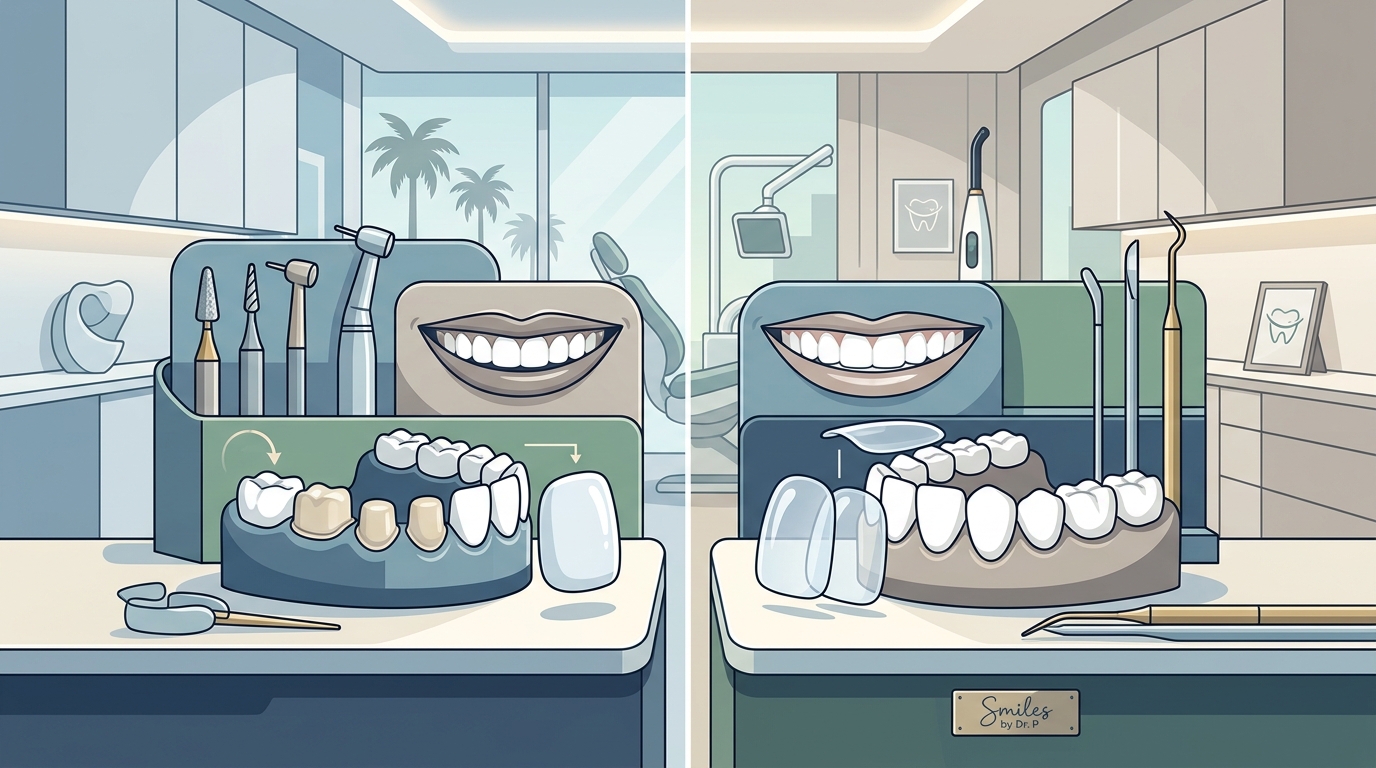
The primary difference between no-prep and traditional veneers lies in the amount of tooth structure removed. No-prep veneers require little to no enamel removal, preserving the natural integrity of your teeth. This preservation is a significant advantage for patients who want to maintain their natural tooth health. In contrast, traditional veneers require the removal of approximately 0.5 millimeters of enamel. This irreversible step ensures a perfect fit but means your teeth will always require coverage.
Another key difference is the thickness of the veneers. No-prep veneers are typically thinner, often around 0.2 millimeters, while traditional veneers are thicker, usually around 0.5 millimeters. The thickness affects how the veneers look and feel in your mouth. Thinner veneers may feel more natural to some patients, but they may not be suitable for everyone. Thicker veneers can provide more opacity, which is helpful for masking severe stains.
The reversibility of the procedure is also a major factor. No-prep veneers are considered reversible because the natural teeth remain largely untouched. Traditional veneers are irreversible due to the enamel removal. This distinction is critical for patients who are unsure about committing to a permanent change. You can explore the cost of porcelain veneers to understand the financial implications of each option.
Pros and Cons of Each Option
Choosing between no-prep and traditional veneers involves weighing the pros and cons of each. No-prep veneers offer minimal invasiveness, reduced sensitivity, and reversibility. However, they may not be suitable for all dental conditions and can sometimes appear bulky if not planned correctly. Traditional veneers offer superior customization, durability, and effectiveness for severe cosmetic issues. The downside is the irreversible nature of the procedure and the potential for increased sensitivity during the healing process.
Here is a summary of the key advantages and disadvantages:
| Feature | No-Prep Veneers | Traditional Veneers |
|---|---|---|
| Enamel Removal | Minimal to None | Approx. 0.5mm |
| Reversibility | Reversible | Irreversible |
| Best For | Minor flaws, gaps | Severe stains, chips |
| Thickness | Ultra-thin | Standard |
| Longevity | 10-15 years | 15-20 years |
For patients in Beverly Hills seeking a smile makeover, the choice often depends on the specific aesthetic goals and dental health. Dr. Patel provides expert guidance to help you navigate these options.
Who Is a Candidate for No-Prep Veneers?
Not everyone is a suitable candidate for no-prep veneers. Ideal candidates typically have healthy teeth and gums, with minor cosmetic concerns such as small gaps, slight misalignments, or mild discoloration. If your teeth are already large or protruding, adding veneers without removing enamel could result in an unnatural, bulky smile. In such cases, traditional veneers or orthodontic treatment might be more appropriate.
Patients with severe tooth wear or significant structural damage may also not be good candidates for no-prep veneers. The thinness of the veneers may not provide enough strength to cover the damage effectively. Additionally, if you have a history of gum disease or poor oral hygiene, you may need to address these issues before considering any veneer procedure. You can read more about aftercare of veneers to understand the maintenance required for long-term success.
During your consultation at Smiles by Dr. P, Dr. Patel will evaluate your teeth using advanced digital imaging. This allows for a precise assessment of whether no-prep veneers will achieve your desired aesthetic without compromising your dental health. The goal is to create a smile that looks natural and feels comfortable.
Cost and Longevity Comparison
The cost of veneers varies based on the type, the number of teeth treated, and the complexity of the case. Generally, no-prep veneers may be slightly less expensive than traditional veneers because they require less chair time and laboratory work. However, this is not always the case, as the materials and customization involved can influence the price. It is essential to get a detailed quote during your consultation.
Regarding longevity, both types of veneers can last many years with proper care. Traditional veneers are often cited as lasting longer due to their thickness and stronger bond to the prepared tooth structure. No-prep veneers, while durable, may require more frequent replacement if they chip or debond. Proper oral hygiene, including regular brushing and flossing, is crucial for extending the life of any veneer. You can check the veneers FAQ for more details on maintenance.
Investing in veneers is an investment in your confidence and overall well-being. Many patients find that the aesthetic benefits far outweigh the financial cost. For those traveling from out of town, traveling patients are welcome and can receive comprehensive care during their visit.
Key Takeaways
- No-prep veneers preserve natural tooth structure by requiring minimal to no enamel removal.
- Traditional veneers involve removing a small layer of enamel to ensure a proper fit and natural look.
- No-prep veneers are reversible, while traditional veneers are an irreversible commitment.
- Traditional veneers are better suited for severe cosmetic issues like deep stains or chips.
- No-prep veneers are ideal for minor corrections such as gaps or slight misalignments.
- Both options require excellent oral hygiene and regular dental checkups for longevity.
- Dr. Chirag Patel at Smiles by Dr. P provides expert evaluation to determine the best option for you.
Frequently Asked Questions
Are no-prep veneers as durable as traditional veneers?
No-prep veneers are made from high-quality porcelain and are quite durable. However, because they are thinner, they may be slightly more prone to chipping compared to traditional veneers. With proper care, they can last many years.
Can no-prep veneers fix crooked teeth?
No-prep veneers can mask minor misalignments, but they are not a substitute for orthodontic treatment like braces or clear aligners for significant crookedness. Dr. Patel can assess if your teeth are suitable for this approach.
How long does the no-prep veneer process take?
The process typically takes two to three visits. The first visit involves preparation and scanning, the second involves fitting the temporary veneers, and the final visit involves bonding the permanent veneers.
Do no-prep veneers look natural?
Yes, when designed correctly, no-prep veneers can look very natural. However, if the teeth are large, they may appear bulky. Digital planning helps ensure a natural aesthetic outcome.
Is the cost of no-prep veneers lower?
The cost can vary, but no-prep veneers are often comparable in price to traditional veneers. The final cost depends on the number of teeth and the complexity of the case.
Can I whiten my teeth after getting veneers?
Veneers cannot be whitened. If you want a brighter smile, you should whiten your natural teeth before getting veneers so they can be matched to your new shade.
What is the lifespan of porcelain veneers?
With proper care, porcelain veneers can last between 10 and 20 years. Regular dental visits and good oral hygiene are essential for maximizing their lifespan.
Schedule Your Consultation
Deciding between no-prep and traditional veneers is a personal choice that depends on your unique dental needs and aesthetic goals. At Smiles by Dr. P, we are dedicated to providing you with the highest quality cosmetic dentistry in Beverly Hills and Los Angeles. Dr. Chirag Patel and his team will work with you to create a customized treatment plan that enhances your smile and boosts your confidence.
Do not wait to achieve the smile you have always wanted. Contact us today to schedule a consultation and take the first step towards a beautiful, healthy smile. Our office is located at 435 N. Roxbury Drive, Suite #410, Beverly Hills, CA 90210. You can also call us at (323) 909-9300 for more information.