

Choosing between no-prep veneers and traditional veneers is one of the most critical decisions in modern cosmetic dentistry. According to recent industry data, the demand for minimally invasive aesthetic treatments has surged, with a significant percentage of patients now prioritizing tooth preservation over aggressive restoration. This shift reflects a broader understanding that healthy natural tooth structure is irreplaceable. At Smiles by Dr. P in Beverly Hills, we evaluate each patient's unique dental anatomy to determine which path offers the best long-term health and aesthetic outcome.
What Are No-Prep Veneers?
No-prep veneers, often referred to as Lumineers or ultra-thin porcelain veneers, represent a conservative approach to smile design. No-prep veneers are extremely thin shells of dental porcelain that are bonded directly to the front surface of the teeth without requiring significant enamel removal. Because they are so thin, typically around 0.2 to 0.3 millimeters, they can often be placed without the need for local anesthesia or extensive drilling.
This method is ideal for patients who have healthy, well-aligned teeth but wish to correct minor issues such as slight discoloration, small chips, or minor gaps. The preservation of natural enamel is the primary advantage. When enamel is preserved, the bond strength between the veneer and the tooth remains robust, and the risk of post-operative sensitivity is significantly reduced. Dr. Chirag Patel at Smiles by Dr. P specializes in this meticulous approach, ensuring that the veneers blend seamlessly with the natural gum line and tooth contours.
For more details on our specific process, you can review our Porcelain Veneers page. We also offer transparent pricing information to help you plan your investment in your smile.
Understanding Traditional Veneers
Traditional veneers have been the gold standard in cosmetic dentistry for decades. They are designed to address more significant aesthetic concerns, including severe staining, major misalignment, or teeth that are too small or short. Traditional veneers are ceramic restorations that require the removal of a thin layer of enamel, typically 0.5 to 1.0 millimeters, to create space for the restoration. This preparation ensures that the veneer does not look bulky or protrude from the mouth.
The removal of enamel is a permanent process. Once the enamel is gone, the tooth will always require a veneer or crown to protect it. However, this thickness allows for greater customization of color, shape, and translucency. For patients with tetracycline stains or severe discoloration that does not respond to whitening, traditional veneers provide the opacity and coverage needed for a bright, uniform smile.
If you are considering a more comprehensive transformation, our Smile Makeover services often incorporate traditional veneers to achieve dramatic results. We also provide detailed before and after photos to illustrate the potential outcomes of traditional veneer treatments.
Key Differences: Preparation and Material
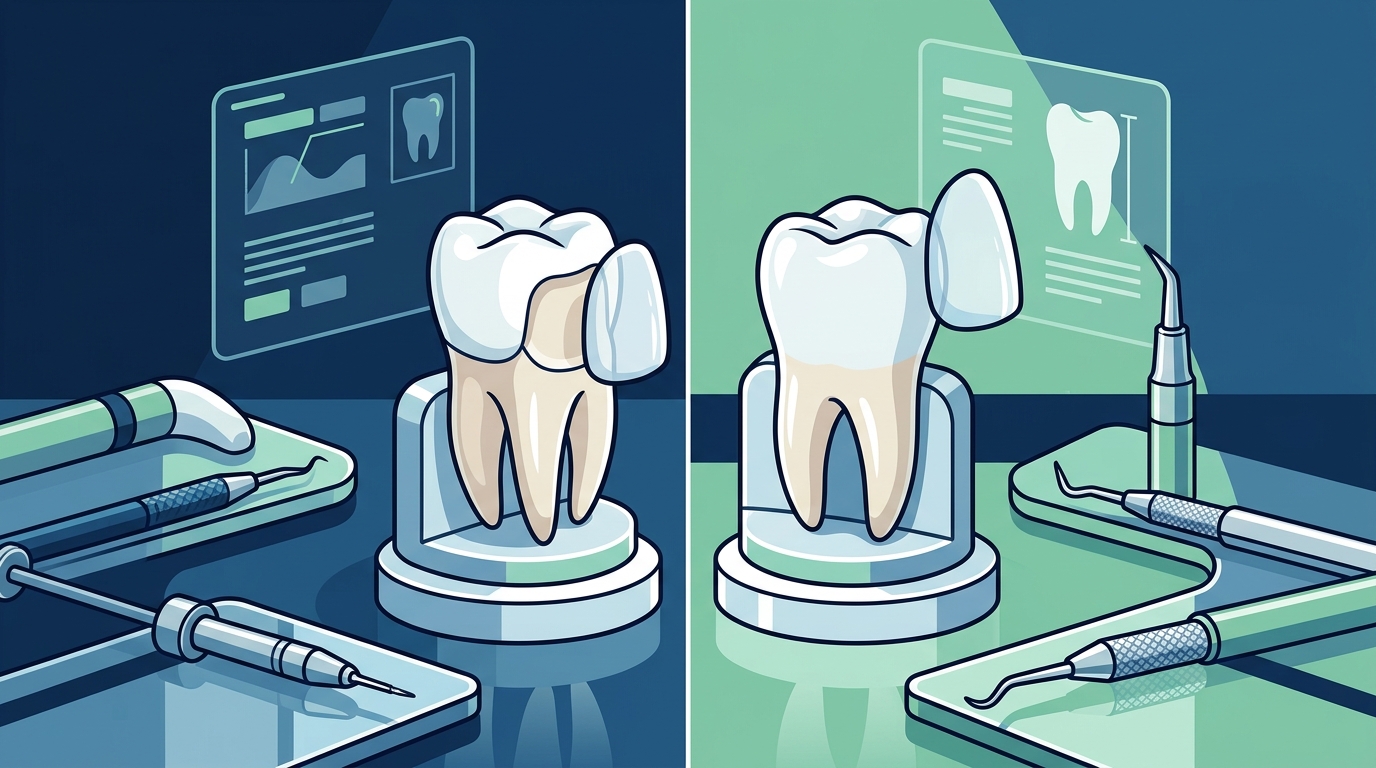
The fundamental difference lies in the amount of tooth structure removed. No-prep veneers are designed to be additive, sitting on top of the existing tooth. Traditional veneers are subtractive, requiring the dentist to reshape the tooth to accommodate the restoration. This distinction impacts everything from the initial consultation to the long-term maintenance of your smile.
Another critical factor is the material thickness. No-prep veneers must be made from high-strength, ultra-thin porcelain to withstand biting forces without breaking. Traditional veneers can be slightly thicker, allowing for more natural light transmission and a more lifelike appearance in complex cases. The choice between these materials depends on your specific dental anatomy and aesthetic goals.
Pros and Cons of Each Option
Pros of No-Prep Veneers
- Reversibility: Since little to no enamel is removed, the procedure is often reversible or easily transitioned to traditional veneers later.
- Minimal Sensitivity: Patients rarely experience the tooth sensitivity associated with enamel removal.
- Faster Treatment: The process often requires fewer appointments and no temporary veneers.
- Conservative: Preserves the natural integrity of your teeth.
Cons of No-Prep Veneers
- Limited Correction: They cannot correct severe misalignment or large gaps effectively.
- Bulkiness Risk: If the teeth are already prominent, adding veneers can make them look too large or "buck-toothed."
- Color Matching: They may not provide enough opacity for very dark underlying teeth.
Pros of Traditional Veneers
- Comprehensive Correction: Can fix severe staining, shape issues, and alignment problems.
- Natural Appearance: The thickness allows for better light reflection, mimicking natural teeth.
- Durability: Properly maintained, they last 10 to 15 years or longer.
Cons of Traditional Veneers
- Irreversible: Enamel removal is permanent.
- Sensitivity: Post-operative sensitivity is common.
- Complex Process: Requires temporary veneers and multiple visits.
Detailed Comparison Table
The following table summarizes the critical distinctions between no-prep and traditional veneers to help you make an informed decision.
| Feature | No-Prep Veneers | Traditional Veneers |
|---|---|---|
| Enamel Removal | Minimal to None | 0.5mm to 1.0mm |
| Thickness | 0.2mm - 0.3mm | 0.5mm - 0.7mm |
| Anesthesia | Often Unnecessary | Usually Required |
| Best For | Minor gaps, slight discoloration | Severe staining, major misalignment |
| Reversibility | High | None |
| Treatment Time | Fewer Appointments | Multiple Visits |
Key Takeaways
- No-prep veneers preserve natural enamel, making them a conservative choice for minor aesthetic corrections.
- Traditional veneers require enamel removal but offer superior coverage for severe discoloration and structural issues.
- Dr. Chirag Patel at Smiles by Dr. P uses advanced diagnostic tools to determine the best option for your specific dental anatomy.
- No-prep veneers are ideal for patients with healthy, well-aligned teeth who want a "Hollywood Smile" without invasive procedures.
- Traditional veneers are the standard for patients seeking a complete smile transformation and correction of significant dental flaws.
- Maintenance for both types is similar, requiring good oral hygiene and regular check-ups to ensure longevity.
- The decision should be based on a comprehensive consultation, not just cost or marketing claims.
Frequently Asked Questions
Are no-prep veneers as durable as traditional veneers?
Yes, modern no-prep veneers are made from high-strength dental porcelain that is highly durable. However, because they are thinner, they require a healthy tooth structure to bond to effectively. Traditional veneers may be preferred for patients with heavy bite forces or bruxism.
Can no-prep veneers fix crooked teeth?
No-prep veneers can create the illusion of straighter teeth by masking minor misalignments. However, they cannot physically move teeth. For significant crowding or spacing, clear aligners or traditional veneers may be more appropriate.
How long do no-prep veneers last?
With proper care, no-prep veneers can last 10 to 15 years or longer. Their longevity depends on oral hygiene, diet, and avoiding habits like nail-biting or chewing on hard objects.
Do no-prep veneers look natural?
When placed correctly by an experienced cosmetic dentist like Dr. Patel, no-prep veneers look incredibly natural. The key is ensuring they do not add bulk to the teeth. Dr. P specializes in creating thin, translucent veneers that mimic natural enamel.
Is the cost different between no-prep and traditional veneers?
The cost can vary based on the complexity of the case and the materials used. Generally, no-prep veneers may be slightly less expensive due to the reduced chair time and lack of temporary veneers. However, this is not always the case. You can view our cost information for more details.
What is the aftercare for veneers?
Aftercare for both types is similar. You should brush twice a day, floss daily, and wear a night guard if you grind your teeth. Regular dental cleanings are essential to maintain the health of your gums and the bond of the veneers. See our Aftercare of Veneers guide for more tips.
Can I whiten my teeth after getting no-prep veneers?
Porcelain veneers cannot be whitened. If you whiten your natural teeth, they may become lighter than your veneers, creating a color mismatch. It is best to complete any whitening treatments before getting veneers.
Schedule Your Consultation
Deciding between no-prep and traditional veneers requires a professional evaluation of your dental health and aesthetic goals. At Smiles by Dr. P, we offer personalized consultations to help you understand your options. Dr. Chirag Patel and his team are dedicated to providing a conservative, patient-centered approach to cosmetic dentistry.
Ready to transform your smile? Submit an inquiry or schedule a consultation today to learn which veneer option is right for you. Our Beverly Hills office is equipped with state-of-the-art technology to ensure your smile makeover is a success.