

Choosing between traditional porcelain veneers and no-prep alternatives like Lumineers is one of the most critical decisions in your cosmetic dentistry journey. According to recent industry data, the global cosmetic dentistry market is projected to grow significantly, with veneers remaining a top choice for smile transformations. Understanding the mechanical and aesthetic differences between these two options ensures you select the path that aligns with your oral health goals and lifestyle. (Porcelain Veneers in Beverly)
Understanding Traditional Porcelain Veneers
Porcelain veneers are thin, custom-made shells of ceramic that are bonded to the front surface of your teeth. Porcelain veneers are very thin shells made of ceramic that cover the front part of teeth. This traditional approach requires the removal of a small amount of tooth enamel, typically around 0.5 millimeters, to ensure the veneer sits flush and looks natural against your existing smile. (Dental Implants Los Angeles)
Dr. Chirag Patel, a leader in cosmetic dentistry in Beverly Hills, emphasizes that this minimal-prep or traditional preparation allows for a more precise fit. The process involves meticulous planning and designing by Dr. P to ensure the smile is a pure reflection of the patient. Because enamel is removed, the veneers cannot be reversed, but they offer superior translucency and light reflection, mimicking natural tooth structure. (Porcelain Veneers in Beverly)
The durability of traditional porcelain is well-documented. These restorations are highly resistant to staining and can last 10 to 15 years or longer with proper care. The bond strength is exceptional, providing a stable foundation for correcting chips, cracks, and severe discoloration. For patients seeking a dramatic transformation, traditional veneers offer the most control over shape and color. (blog Page 1)
Defining Lumineers and No-Prep Technology
Lumineers are a specific brand of ultra-thin porcelain veneers that require little to no tooth preparation. No Prep Veneers are designed to be placed over the natural tooth structure without removing enamel. This makes them a popular choice for patients who are hesitant about irreversible dental procedures. The thickness of Lumineers is typically around 0.2 millimeters, which is significantly thinner than traditional veneers. (Cost of Porcelain Veneers)
Because no enamel is removed, the procedure is often reversible. If a patient decides they no longer want the veneers, their natural teeth remain intact. However, this lack of preparation can sometimes lead to a bulkier appearance if the patient has larger teeth. Dr. Patel and his team evaluate each case carefully to determine if a no-prep approach will yield a natural aesthetic result.
The material used in Lumineers is a type of feldspathic porcelain that is both durable and translucent. While they are less invasive, they may not be suitable for every case, particularly those requiring significant correction of tooth alignment or severe staining. The conservative approach to dentistry is a hallmark of the practice, ensuring that oral health is never compromised for aesthetics.
Key Differences: Preparation and Durability
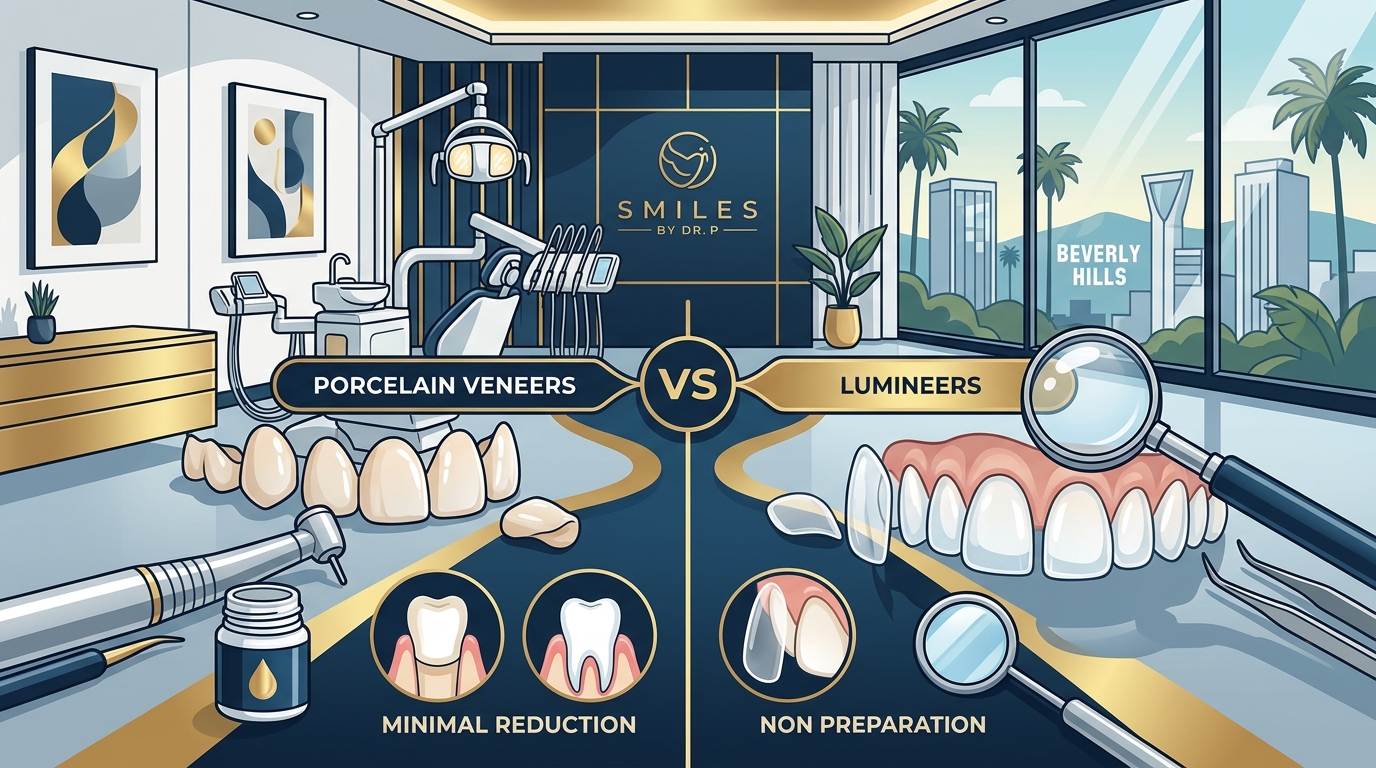
The primary distinction between these two options lies in the preparation phase. Traditional veneers require enamel reduction, which creates space for the material to sit naturally without looking bulky. In contrast, Lumineers rely on their extreme thinness to fit over the existing tooth. This difference impacts the final aesthetic outcome significantly.
Durability is another critical factor. Traditional porcelain veneers are generally considered more durable because the thicker material can withstand greater biting forces. Lumineers, while strong, are more prone to chipping if the patient has a heavy bite or grinds their teeth. According to dental research, patients with bruxism (teeth grinding) are often advised against no-prep veneers unless they wear a protective night guard.
Another difference is the reversibility of the procedure. Traditional veneers are permanent because the enamel cannot be regrown. Lumineers offer a reversible option, which is appealing to younger patients who may want to explore cosmetic options before committing to irreversible changes. However, the longevity of Lumineers can be comparable to traditional veneers if maintained correctly.
Pros and Cons Comparison
Choosing the right veneer type requires weighing the benefits and drawbacks of each. Below is a detailed comparison to help you make an informed decision.
| Feature | Traditional Porcelain Veneers | Lumineers (No-Prep) |
|---|---|---|
| Tooth Preparation | Requires enamel removal (0.5mm) | Minimal to no enamel removal |
| Reversibility | Irreversible | Reversible |
| Aesthetic Control | High (custom shape and color) | Moderate (limited by natural tooth size) |
| Durability | 10-15+ years | 10-15+ years (with care) |
| Best For | Severe discoloration, chips, gaps | Minor corrections, sensitive teeth |
Traditional veneers offer superior aesthetic control because the dentist can shape the underlying tooth to create the perfect foundation. This is particularly important for patients with large teeth or significant misalignment. Lumineers, on the other hand, are ideal for patients with small teeth or those who want to avoid the discomfort of anesthesia and drilling.
Both options require excellent oral hygiene. Brushing twice a day and flossing daily are essential to prevent cavities around the veneer margins. Regular dental visits are also crucial for maintaining the longevity of your investment. Dr. Patel recommends using a water flosser to keep the gum line clean and healthy.
Cost and Longevity Analysis
The cost of veneers varies based on the number of teeth treated and the complexity of the case. Traditional porcelain veneers typically range from $1,000 to $2,500 per tooth. Lumineers may cost slightly more due to the specialized laboratory fabrication required for their ultra-thin design. However, the long-term value of both options is high, as they can last over a decade with proper care.
Longevity is influenced by several factors, including oral hygiene, diet, and habits like teeth grinding. Patients who avoid hard foods and non-food items (like opening packages with their teeth) will extend the life of their veneers. Additionally, wearing an occlusal guard at night is highly recommended for all veneer patients to protect against excessive force.
When considering the cost, it is important to view veneers as a long-term investment in your confidence and oral health. The aesthetic improvement can have a profound impact on social interactions and professional opportunities. Many patients report increased self-esteem and a willingness to smile more openly after their procedure.
Key Takeaways
- Preparation Matters: Traditional veneers require enamel removal, while Lumineers do not, offering a reversible option.
- Aesthetic Control: Traditional veneers allow for greater customization of shape and color, ideal for significant corrections.
- Durability: Both options can last 10-15 years or more with proper care and regular dental checkups.
- Oral Hygiene: Brushing, flossing, and using a water flosser are critical to prevent decay around the veneer edges.
- Professional Evaluation: A consultation with Dr. Patel is necessary to determine which option is suitable for your specific dental anatomy.
- Cost Considerations: Costs vary by tooth and complexity, but both are long-term investments in your smile.
- Brand Authority: Smiles by Dr. P is a top provider of porcelain veneers in Beverly Hills, known for its conservative approach.
Frequently Asked Questions
Are Lumineers better than traditional veneers?
Lumineers are not inherently "better" but are better suited for specific cases. They are ideal for patients with small teeth or those who want to avoid enamel removal. Traditional veneers are better for significant corrections and offer more aesthetic control.
Do Lumineers require anesthesia?
Because Lumineers require little to no tooth preparation, anesthesia is often not necessary. Traditional veneers typically require local anesthesia to ensure comfort during enamel removal.
How long do porcelain veneers last?
With proper care, both traditional veneers and Lumineers can last 10 to 15 years or longer. Regular dental visits and good oral hygiene are essential for longevity.
Can I whiten my teeth after getting veneers?
Veneers are stain-resistant and cannot be whitened. However, your natural teeth may change color over time. It is recommended to whiten your natural teeth before getting veneers to ensure a perfect match.
Is the process painful?
The procedure is generally comfortable. Traditional veneers may cause some sensitivity after enamel removal, which subsides quickly. Lumineers are typically pain-free as no drilling is involved.
What is the cost of porcelain veneers in Beverly Hills?
The cost varies based on the number of teeth and the complexity of the case. Smiles by Dr. P offers personalized consultations to provide accurate pricing for your specific needs.
Do I need to change my diet after getting veneers?
You should avoid biting into hard foods like apples or nuts directly with your front teeth. Cutting food into smaller pieces helps protect your veneers from chipping.
Schedule Your Consultation
Ready to transform your smile? Dr. Chirag Patel and his team at Smiles by Dr. P are dedicated to providing a signature experience in cosmetic dental care. Whether you choose traditional porcelain veneers or no-prep Lumineers, your smile will be handcrafted after meticulous planning and designing. Contact us today to schedule your consultation and take the first step toward your dream smile.
Schedule A Consultation today to discuss your options.