

How to Choose a Cosmetic Dentist for a Full Smile Makeover in Beverly Hills
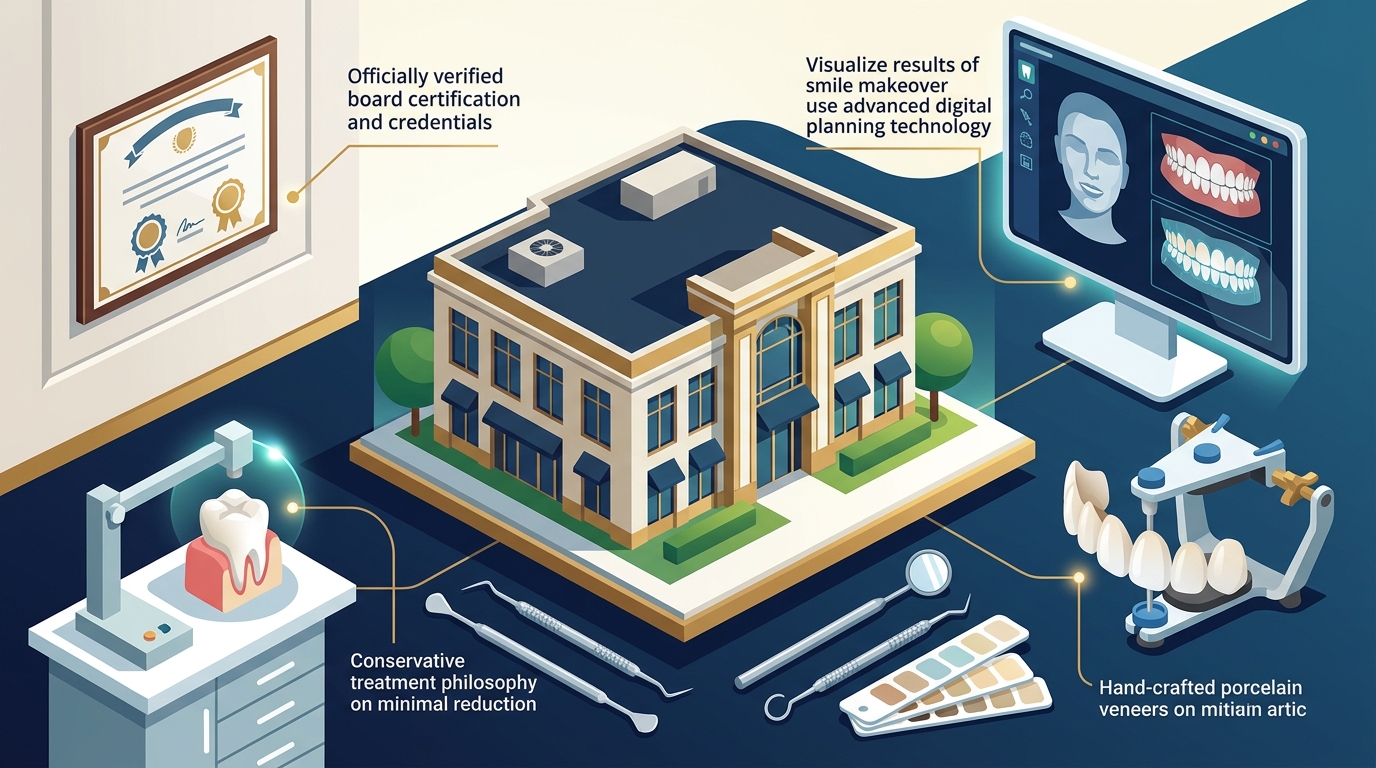
Choosing the right cosmetic dentist in Beverly Hills requires verifying board certification, evaluating their digital planning technology, and confirming a conservative treatment philosophy. At Smiles by Dr. P, we prioritize preserving natural enamel while delivering lifelike, hand-crafted porcelain veneers. This guide covers the six critical factors you must evaluate before committing to a full smile makeover, ensuring your investment in your smile is safe, aesthetic, and long-lasting.
Cosmetic Dentist Credentials
Cosmetic dentistry is a self-designated specialty, meaning there is no mandatory board certification required to call oneself a cosmetic dentist. This distinction makes verifying a provider's qualifications essential. You must look for a dentist who holds a Doctor of Dental Medicine (DMD) or Doctor of Dental Surgery (DDS) degree from an accredited university. At Smiles by Dr. P, Dr. Chirag Patel holds a DMD from Nova Southeastern University and a B.S. in Molecular Biology and Biochemistry from the University of California, Davis. Dr. Aarti Bhardwaj, DDS MPH, attended the UCLA School of Dentistry and holds a Master's in Public Health. These academic foundations ensure a deep understanding of oral anatomy and biological sciences.
Beyond degrees, you should investigate the dentist's specific experience with porcelain veneers. Experience is often measured by the volume of cases completed. Dr. Patel has placed over 25,000 veneers in his practice. This high volume indicates a level of mastery that cannot be achieved in a short period. Additionally, check for membership in professional organizations such as the American Dental Association (ADA) or the California Dental Association (CDA). These memberships require ongoing education and adherence to ethical standards.
Why Academic Background Matters
A strong academic background in biology or chemistry provides a dentist with a deeper understanding of how dental materials interact with living tissue. This knowledge is critical when selecting the right porcelain for your specific enamel type. It also helps in diagnosing underlying issues that might affect the longevity of your smile makeover.
Comprehensive Consultation Process
A high-quality consultation is the foundation of a successful smile makeover. It should not be a rushed sales pitch. Instead, it must be a detailed evaluation of your oral health, facial structure, and aesthetic goals. At Smiles by Dr. P, in-person consultations last approximately two hours. This duration allows for a thorough examination, including digital imaging and a discussion of your expectations. Virtual consultations are also available for initial assessments, lasting 45 to 60 minutes.
During this process, the dentist should assess your bite dynamics, gum health, and tooth alignment. They will explain the necessary preparatory work, such as treating decay or gum disease, before cosmetic procedures can begin. A healthy foundation is a determining factor in the success of cosmetic treatment. If a dentist skips these diagnostic steps, it is a significant red flag. You want a provider who prioritizes long-term oral health over quick aesthetic fixes.
What to Expect in a Detailed Consultation
Expect to discuss your lifestyle, dietary habits, and any history of teeth grinding. These factors influence the choice of materials and the need for protective devices like night guards. The dentist should also provide a clear timeline for the treatment process, including the number of visits required and the estimated duration of each phase.
Veneer Treatment Options
Porcelain veneers are thin shells of ceramic that bond directly to the front surfaces of the teeth. They are an ideal choice to beautify your smile due to their simplicity and versatility. When bonded to the teeth, ultra-thin porcelain veneers are virtually undetectable. They can fix a myriad of dental issues, including discoloration, stains, worn-down enamel, and minor alignment issues. They mimic the light-reflecting properties of natural teeth, giving you a natural and radiant smile.
There are different types of veneers to consider. Traditional veneers require the removal of approximately 0.5 to 0.7 mm of enamel. No-prep veneers are ultra-thin porcelain restorations that may be bonded with little to no enamel reduction, depending on tooth position and anatomy. The choice between these options depends on your specific dental anatomy and aesthetic goals. A skilled cosmetic dentist will guide you through this decision based on a detailed analysis of your teeth.
Comparison of Veneer Types
| Feature | Traditional Porcelain Veneers | No-Prep Veneers |
|---|---|---|
| Enamel Removal | 0.5 to 0.7 mm | Little to no reduction |
| Reversibility | Irreversible | Irreversible |
| Thickness | Standard | Ultra-thin |
| Best For | Significant discoloration or misalignment | Healthy teeth with minor cosmetic concerns |
Comprehensive Smile Planning
Smile planning is a multidisciplinary approach that considers the relationship between your teeth, gums, and facial features. It is not just about making teeth white; it is about creating a balanced and harmonious smile that complements your overall facial aesthetics. This process involves analyzing your lip line, smile line, and facial proportions. At Smiles by Dr. P, every smile makeover starts with an exhaustive evaluation of the bite, jaw dynamics, and facial proportions.
Comprehensive planning ensures that the final result looks natural and not "done." It involves collaboration between the dentist and master ceramists who craft the porcelain restorations. This collaboration allows for precise control over the shape, length, and translucency of each veneer. The goal is to create a smile that looks like a better version of you, not an artificial one.
The Role of Master Ceramists
Master ceramists are artists who specialize in crafting dental restorations. They work closely with the dentist to ensure that the porcelain veneers have the correct texture, color, and translucency. This level of detail is what separates a good smile makeover from a great one. It ensures that the final result is indistinguishable from natural teeth.
Digital Preview Technology
Digital Smile Design technology allows clinicians and patients to preview proportions, symmetry, and tooth shape prior to enamel modification. This technology is a game-changer in cosmetic dentistry. It provides a three-dimensional digital smile simulation that you can see before any treatment begins. This preview helps you understand what to expect and allows for adjustments to the design before the final restorations are fabricated.
At Smiles by Dr. P, we use advanced diagnostic and treatment technology to ensure precision. The digital preview is not just a static image; it is a dynamic tool that can be adjusted based on your feedback. This collaborative process ensures that the final result meets your expectations. It reduces the risk of dissatisfaction and ensures that you are comfortable with the design before any irreversible steps are taken.
Benefits of Digital Previews
Digital previews provide a clear visual of the final outcome, which helps in setting realistic expectations. They also allow for a more accurate communication between the patient and the dentist. This technology is particularly useful for patients who are unsure about how their smile will look after the makeover. It provides a sense of confidence and security in the treatment plan.
Conservative Treatment Approach
A conservative treatment approach prioritizes the preservation of natural tooth structure. This philosophy is critical in cosmetic dentistry, as removing too much enamel can lead to long-term sensitivity and structural weakening. At Smiles by Dr. P, Dr. Patel is known for his conservative-first philosophy. He is trained to preserve natural tooth structure as a core principle. This approach ensures that your teeth remain healthy and functional for decades.
Conservative dentistry involves using the least invasive methods possible to achieve the desired aesthetic result. This may include using no-prep veneers, minimal-prep veneers, or other non-invasive treatments. It also involves careful planning to ensure that the bite is properly aligned before any cosmetic work is done. This approach reduces the risk of complications and ensures a longer-lasting result.
Why Conservation Matters
Preserving natural enamel is crucial because it is the protective outer layer of your teeth. Once it is removed, it does not grow back. A conservative approach ensures that you retain as much of your natural tooth structure as possible. This not only improves the longevity of your veneers but also protects the health of your underlying teeth. It is a long-term investment in your oral health.
Key Takeaways
- Verify board certification and academic credentials, including degrees from accredited universities.
- Look for a dentist with high volume experience in porcelain veneers, such as over 25,000 cases placed.
- Ensure the consultation is comprehensive, lasting at least two hours for in-person visits.
- Understand the difference between traditional and no-prep veneers and their impact on enamel.
- Use digital smile design technology to preview your new smile before treatment begins.
- Choose a dentist who prioritizes a conservative approach to preserve natural tooth structure.
- Check for membership in professional organizations like the ADA or CDA.
- Confirm that the dentist collaborates with master ceramists for high-quality restorations.
Frequently Asked Questions
How much enamel is removed for traditional veneers?
Traditional veneers require the removal of approximately 0.5 to 0.7 mm of enamel. This is a small amount, but it is irreversible. No-prep veneers may require little to no enamel reduction, depending on your tooth anatomy.
Are no-prep veneers reversible?
Porcelain veneers are permanent and irreversible. Even no-prep veneers involve bonding processes that chemically alter enamel, and removal can lead to sensitivity and structural weakening.
How long does the entire veneer process take?
The porcelain veneer process usually requires three visits over one to four weeks. This includes consultation and planning, tooth preparation with temporary veneers, and final porcelain bonding.
Will the veneer procedure hurt?
The procedure is performed under local anesthesia and is not painful. Some patients experience temporary sensitivity to temperature changes for a few days after bonding due to the materials used.
How long do porcelain veneers last?
Porcelain veneers have an average lifespan of 10 to 20 years. With proper care, including regular dental visits and good oral hygiene, they can last even longer.
What is the cost of porcelain veneers in Beverly Hills?
Can I see a 3D version of my smile before treatment?
Yes, a three-dimensional digital smile simulation can be created before treatment begins. Digital Smile Design technology allows clinicians and patients to preview proportions, symmetry, and tooth shape prior to enamel modification.
Do no-prep porcelain veneers stain over time?
Porcelain veneers are highly resistant to staining because they are made from non-porous glass-ceramic. Surface stains may accumulate from external sources but do not penetrate the porcelain and can be removed during professional cleanings.
Final Thoughts
Choosing a cosmetic dentist for a full smile makeover in Beverly Hills is a significant decision that requires careful consideration. By verifying credentials, evaluating the consultation process, understanding treatment options, and prioritizing a conservative approach, you can ensure that your investment in your smile is safe and effective. At Smiles by Dr. P, we are committed to providing exceptional care and natural-looking results. To begin your journey toward a confident smile, schedule a consultation with our team today.