

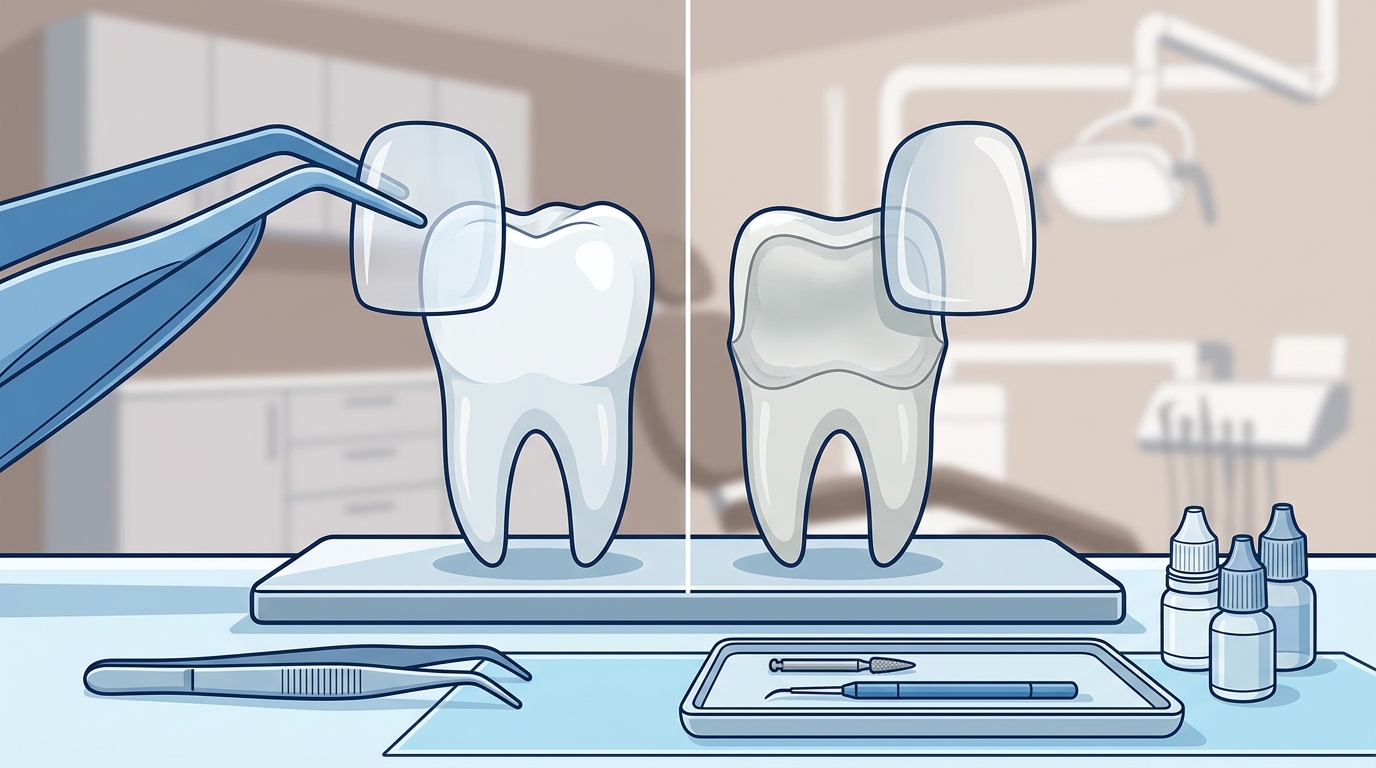
No-prep veneers are ultra-thin porcelain restorations bonded to teeth with little to no enamel removal. Traditional veneers require the removal of approximately 0.5 to 0.7 mm of enamel. Neither option is universally "better"; the ideal choice depends on your specific tooth anatomy, aesthetic goals, and bite dynamics. This guide compares durability, aesthetics, and enamel preservation to help you decide which treatment fits your smile.
Durability Comparison
Durability is the primary concern for any patient investing in cosmetic dentistry. Porcelain is a highly durable material, but its longevity depends heavily on how it is bonded and the forces it endures. Traditional veneers, which involve enamel reduction, often create a stronger mechanical lock with the tooth structure. This bond can withstand higher occlusal forces, making them a robust choice for patients with heavy bites.
No-prep veneers rely on a thinner layer of porcelain. While they are strong, they are more susceptible to chipping if the patient grinds their teeth or has a significant bite discrepancy. At Smiles by Dr. P, we evaluate your jaw dynamics and bite pressure during the initial consultation to determine if a no-prep approach can safely last for the long term.
Minimal Tooth Preparation
Minimal tooth preparation is the defining characteristic of no-prep veneers. This technique involves removing 0 to 0.3 mm of enamel, compared to the 0.5 to 0.7 mm required for traditional veneers. The goal is to preserve the natural tooth structure while still achieving a cosmetic transformation. This approach is particularly beneficial for patients who are hesitant about the idea of "drilling" into their teeth.
The No-Prep Protocol
The no-prep protocol requires precise planning. The dentist must ensure that the existing tooth shape and position allow for the addition of porcelain without creating a bulky appearance. If the teeth are already large or protruding, adding a no-prep veneer may result in an unnatural, oversized look. This is why a detailed aesthetic analysis is critical before committing to this method.
Traditional Preparation
Traditional preparation involves reshaping the tooth to create space for the veneer. This allows the dentist to correct significant alignment issues, close large gaps, or change the length and width of the tooth. While more invasive, this method offers greater flexibility in design and can address more complex cosmetic concerns.
Reversibility and Enamel Health
A common misconception is that no-prep veneers are reversible. In reality, porcelain veneers are permanent and irreversible. Even no-prep veneers involve bonding processes that chemically alter the enamel surface. Once the bonding agent is applied and the veneer is cured, the enamel is no longer in its original state. Removing a no-prep veneer can lead to sensitivity and structural weakening of the tooth.
Because the bond is so strong, you cannot simply "take them off" if you change your mind. This permanence is a crucial factor to consider before starting treatment. At Smiles by Dr. P, we use temporary veneers as a "test drive" before final fabrication. This allows you to see and feel the new smile for several days, ensuring you are fully committed before the permanent porcelain is bonded.
Aesthetic Limitations
No-prep veneers have specific aesthetic limitations that patients must understand. Because they are ultra-thin, they offer limited ability to change the shape of the tooth. They are excellent for correcting discoloration, such as tetracycline stains or fluoride stains, but they may not be the best choice for significantly misaligned or crowded teeth.
Color Correction
Porcelain is highly resistant to staining, making it ideal for teeth that have not responded to whitening treatments. No-prep veneers can effectively mask deep intrinsic stains without requiring significant enamel removal. This makes them a popular choice for patients with genetic discoloration or teeth that have darkened over time.
Shape and Size
If you want to significantly change the length or width of your teeth, traditional veneers are usually the better option. No-prep veneers add a layer of material on top of the existing tooth, which can make the teeth appear larger if not carefully planned. A skilled cosmetic dentist can mitigate this by using layered ceramics and anatomical contouring to prevent an artificial or flat appearance.
Traditional Veneer Advantages
Traditional veneers offer several advantages that no-prep options cannot match. The primary benefit is the ability to correct significant structural and aesthetic issues. By removing a small amount of enamel, the dentist can reshape the tooth to achieve the desired proportions and symmetry. This is particularly useful for patients with large gaps, severely worn teeth, or significant misalignment.
Strength and Bonding
Traditional veneers benefit from a stronger bond to the tooth structure. The removal of enamel creates a surface that is more receptive to bonding agents, resulting in a more secure attachment. This stronger bond can improve the longevity of the restoration, especially in patients with high bite forces.
Customization
Traditional veneers allow for greater customization in terms of color and translucency. The dentist can work with the lab to create a restoration that perfectly matches the surrounding teeth, taking into account the natural light reflection and opacity of enamel. This level of detail is crucial for achieving a natural-looking smile that complements your facial features.
Enamel Preservation
Enamel preservation is a core principle of modern cosmetic dentistry. Enamel is the hardest substance in the human body, but once it is removed, it does not grow back. Preserving as much natural tooth structure as possible is essential for long-term oral health. No-prep veneers align perfectly with this philosophy, as they require minimal to no enamel reduction.
At Smiles by Dr. P, Dr. Chirag Patel is known for his conservative approach to veneers. He prioritizes the preservation of natural tooth structure as a core principle, ensuring that your smile remains healthy and functional for decades. This approach is reflected in his use of advanced diagnostic technology and master ceramist collaboration to design restorations that are as durable as they are beautiful.
Durability and Longevity
The average lifespan of a porcelain veneer is 10 to 20 years, depending on the type of veneer and the patient's oral hygiene habits. Traditional veneers often reach the upper end of this range due to their stronger bond and thicker material. No-prep veneers, while durable, may have a slightly shorter lifespan if the patient has a heavy bite or bruxism (teeth grinding).
Maintenance and Care
Proper maintenance is critical for extending the life of any veneer. This includes brushing twice a day, flossing daily, and wearing a night guard if you grind your teeth. Regular dental visits are also essential to monitor the condition of the veneers and address any issues early. You can learn more about aftercare of veneers to ensure your investment lasts as long as possible.
Impact of Bruxism
Bruxism is one of the biggest threats to veneer longevity. The constant pressure from grinding and clenching can cause porcelain to crack or chip. If you are a bruxist, your dentist may recommend a traditional veneer or a combination of veneers and a night guard to protect your investment. It is important to discuss your sleep habits and bite dynamics with your dentist during the consultation.
Case Suitability
Choosing between no-prep and traditional veneers depends on your specific case. No-prep veneers are ideal for patients with healthy, well-aligned teeth that have discoloration or minor chips. They are also a good option for patients who are anxious about invasive procedures and want to preserve as much enamel as possible.
When to Choose Traditional Veneers
When to Choose No-Prep Veneers
No-prep veneers are the best choice for patients who want a cosmetic improvement without the invasiveness of traditional preparation. They are particularly effective for correcting discoloration and minor imperfections. If your teeth are already well-aligned and healthy, no-prep veneers can provide a stunning transformation while preserving your natural tooth structure.
Key Takeaways
- No-prep veneers are ultra-thin porcelain restorations that require little to no enamel removal.
- Traditional veneers require the removal of 0.5 to 0.7 mm of enamel for a stronger bond.
- Both types of veneers are permanent and irreversible once bonded.
- No-prep veneers are ideal for correcting discoloration and minor chips.
- Traditional veneers are better for correcting significant alignment issues and changing tooth shape.
- Enamel preservation is a core principle of modern cosmetic dentistry.
- The average lifespan of a porcelain veneer is 10 to 20 years.
- Proper maintenance, including wearing a night guard, is critical for longevity.
Frequently Asked Questions
Are no-prep veneers reversible?
No, porcelain veneers are permanent and irreversible. Even no-prep veneers involve bonding processes that chemically alter enamel, and removal can lead to sensitivity and structural weakening.
How much enamel is removed for traditional veneers?
Traditional veneers require the removal of approximately 0.5 to 0.7 mm of enamel. This is a small amount, but it is enough to create space for the porcelain and ensure a strong bond.
Which type of veneer lasts longer?
Traditional veneers often last longer due to their stronger bond and thicker material. However, both types can last 10 to 20 years with proper care and maintenance.
Can no-prep veneers change the shape of my teeth?
No-prep veneers have limited ability to change the shape of the teeth. They are best for correcting discoloration and minor imperfections. If you want to significantly change the shape or size of your teeth, traditional veneers are the better option.
Do no-prep veneers stain easily?
Porcelain veneers are highly resistant to staining because they are made from non-porous glass-ceramic. Surface stains may accumulate from external sources but do not penetrate the porcelain and can be removed during professional cleanings.
How do I know which type of veneer is right for me?
The best way to determine which type of veneer is right for you is to consult with a cosmetic dentist. They will evaluate your tooth anatomy, bite dynamics, and aesthetic goals to recommend the most suitable treatment option.