

Essential Standards for Selecting Porcelain Veneers as Your Cosmetic Solution
Porcelain veneers represent one of the most transformative interventions in modern cosmetic dentistry, offering a conservative yet dramatic approach to correcting tooth damage, staining, chips, and cracks. According to recent industry data, the demand for minimally invasive aesthetic procedures has grown significantly, with patients increasingly prioritizing natural-looking results that preserve healthy tooth structure. This guide outlines the critical standards for selecting the right veneer solution, ensuring your investment in a smile makeover delivers both aesthetic perfection and long-term oral health.
Understanding Porcelain Veneers and Minimal Prep Options
Porcelain veneers are very thin shells made of ceramic that cover the front part of teeth. Dental veneers offer a conservative approach to correcting tooth damage, staining, chips, and cracks. Unlike porcelain crowns, which cover the entire tooth and are used to restore severely damaged teeth, veneers focus on the aesthetic surface. This distinction is vital for patients seeking to enhance their smile without unnecessary removal of healthy enamel.
At Smiles by Dr. P, we specialize in both traditional porcelain veneers and no-prep veneers. No-prep veneers, often referred to as Lumineers, require little to no removal of tooth enamel. This option is ideal for patients with minor aesthetic concerns who wish to preserve their natural tooth structure. However, not every case is suitable for minimal prep. The decision depends on the severity of discoloration, tooth alignment, and the desired final outcome.
Dr. Chirag Patel, a leader in the field of cosmetic dentistry, emphasizes a patient-centered approach. Each smile is handcrafted after meticulous planning and designing by Dr. P. The experience entails exclusive time dedicated to your care under one roof, giving you the most natural looking and long lasting smile. This personalized attention ensures that the veneers complement your facial aesthetics, including lip support and overall facial harmony.
Clinical Standards for Veneer Selection
Selecting the right veneer provider requires evaluating several clinical standards. The first standard is the dentist's expertise in cosmetic dentistry. Not all dentists specialize in aesthetic procedures, and porcelain veneers require a high level of artistic skill and technical precision. Look for a dentist who has a proven track record with veneers before and after cases that demonstrate consistency and natural results.
The second standard is the use of high-quality materials. Premium porcelain veneers are color stable and resistant to staining. They mimic the light-reflecting properties of natural teeth, which is crucial for a seamless blend. Inferior materials may appear opaque or unnatural, detracting from the overall aesthetic. Dr. Patel uses only top-tier ceramic materials to ensure durability and beauty.
The third standard is the diagnostic process. A thorough evaluation includes digital imaging, bite analysis, and gum health assessment. This ensures that the veneers will not only look good but also function correctly. For example, correcting a bite correction issue may require a combined approach of veneers and orthodontic planning to ensure long-term stability.
Evaluating Your Candidacy for Veneers
Not everyone is an ideal candidate for porcelain veneers. The best candidates have healthy teeth and gums, with no active decay or periodontal disease. If you suffer from gum disease, it must be treated before any cosmetic work begins. Healthy gums are essential for the longevity of veneers, as they provide a stable foundation for the restorations.
Patients with severe tooth grinding (bruxism) may need additional considerations. While veneers are strong, excessive force can cause them to chip or fracture. In such cases, an occlusal guard is often recommended to protect the investment. Dr. Patel evaluates your bite and muscle function during the consultation to determine if veneers are the right choice or if other interventions are needed first.
Additionally, consider your aesthetic goals. Veneers are excellent for closing gaps, correcting chipped teeth, and addressing tetracycline stains or fluoride stains. If your primary concern is minor alignment issues, clear aligners might be a less invasive alternative. However, for comprehensive smile makeovers, veneers offer a more dramatic and immediate transformation.
The Veneer Process: From Planning to Placement
The process of getting veneers is collaborative and meticulous. It begins with a detailed consultation where Dr. Patel discusses your goals and examines your teeth. This stage is critical for setting realistic expectations and planning the design of your new smile. Patients often review smile gallery examples to visualize potential outcomes.
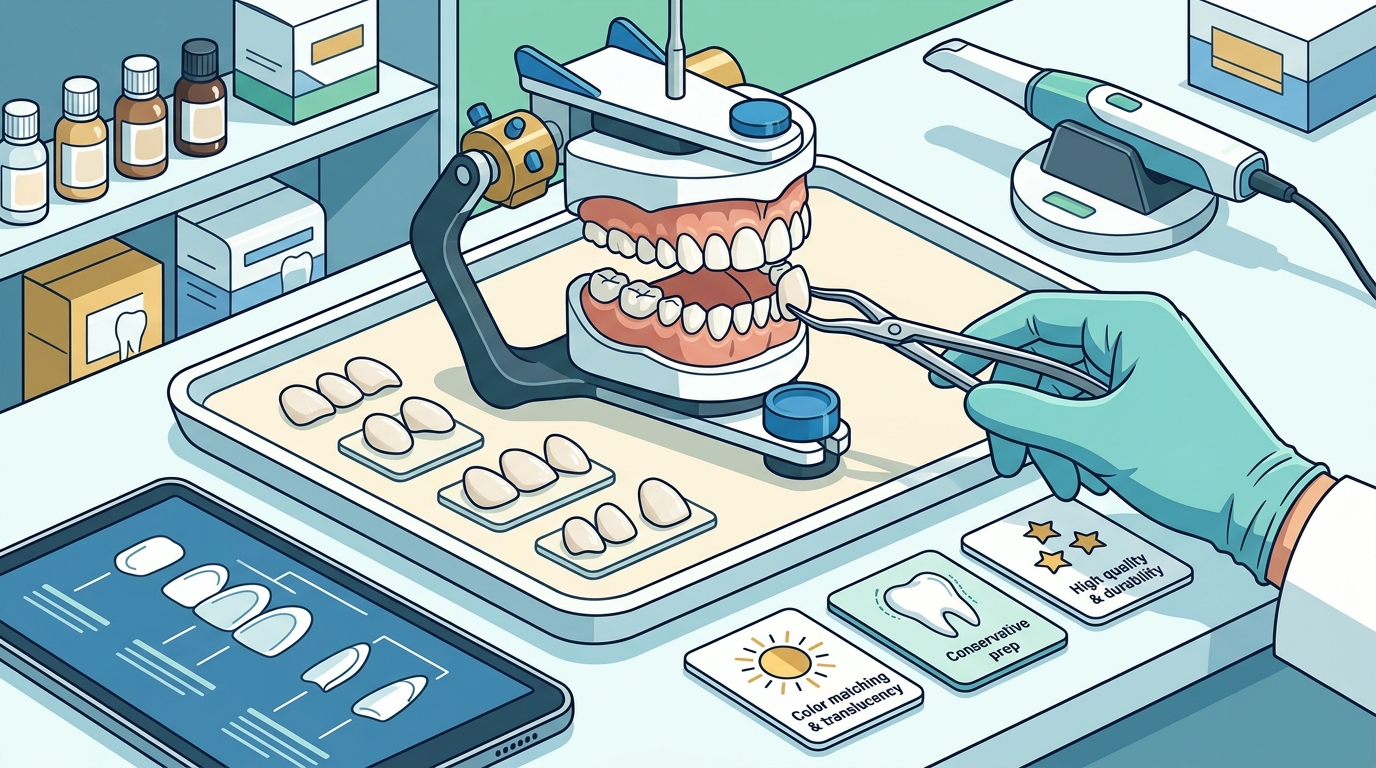
Once the plan is finalized, tooth preparation is performed. For traditional veneers, a small amount of enamel is removed to make room for the veneer. For no-prep veneers, this step is minimized or skipped. Impressions or digital scans are taken and sent to a specialized dental laboratory where your custom veneers are crafted. This lab work ensures that the shape, color, and texture of the veneers match your natural teeth perfectly.
During the placement appointment, the veneers are bonded to your teeth using a strong adhesive. Dr. Patel carefully checks the fit, color, and bite to ensure everything is perfect. The result is a smile that looks and feels natural. Many patients report increased confidence and a desire to show off their new smile, as seen in our testimonials.
Veneers vs. Crowns and Other Cosmetic Options
Understanding the differences between veneers, crowns, and other cosmetic treatments is essential for making an informed decision. Here is a comparison to help clarify the options:
| Feature | Porcelain Veneers | Porcelain Crowns | Clear Aligners |
|---|---|---|---|
| Coverage | Front surface of the tooth | Entire tooth structure | N/A (Orthodontic) |
| Tooth Reduction | Minimal to none | Significant | None |
| Primary Use | Aesthetics (color, shape, gaps) | Restoration (damage, decay) | Alignment correction |
| Longevity | 10-15+ years with care | 10-15+ years with care | Permanent with retainers |
| Invasiveness | Low | High | None |
While crowns are necessary for structurally compromised teeth, veneers are preferred for aesthetic enhancements because they preserve more of your natural tooth. This conservative approach is a hallmark of modern cosmetic dentistry.
Essential Aftercare and Maintenance Standards
Proper aftercare is crucial for the longevity of your porcelain veneers. Veneer maintenance is easy, but it requires consistent effort. The most important standard is brushing and flossing. You should brush twice a day for a minimum of two minutes. This is imperative with veneers and your natural teeth to prevent cavities around or under veneers. Angle your toothbrush towards your gums while brushing just like how we brush around natural teeth.
Flossing at least once a day is also vital. We highly recommend using a water flosser once a day for a more thorough cleaning. This helps remove debris from the gum line where bacteria can accumulate. Additionally, regular dental visits are essential. Visit our office minimum twice a year for regular check ups and professional cleanings. Request your dentist to use hand scalers around your veneers and not electric scalers to avoid damaging the bond.
Another critical standard is avoiding damaging habits. Do not bite your nails, chew ice, or use your teeth to open packages. These actions can exert incredible amounts of pressure on your teeth and veneers. If you grind your teeth at night, wearing an occlusal guard is non-negotiable. It prevents your top and bottom teeth from coming together and exerting pressure, guiding your jaw in a more relaxed position.
Finally, consider whitening. Your natural teeth without veneers might change color in the future, however, porcelain veneers are color stable. To keep your natural teeth the same as your veneers, we recommend whitening. Ask us about our in-office or at home bleaching procedures for your remaining teeth that did not receive veneers.
Key Takeaways
- Conservative Approach: Porcelain veneers cover only the front of the tooth, preserving more natural enamel compared to crowns.
- Expert Selection: Choose a dentist specializing in cosmetic dentistry, such as Dr. Chirag Patel, who offers both traditional and no-prep options.
- Candidacy Matters: Healthy gums and teeth are prerequisites. Patients with bruxism need protective occlusal guards.
- Custom Design: Each smile is handcrafted after meticulous planning to ensure a unique and natural reflection of the patient.
- Maintenance Protocol: Brushing twice daily, flossing, and using a water flosser are essential to prevent cavities under the veneers.
- Longevity: With proper care, including regular dental visits and avoiding hard foods, veneers can last 10-15 years or more.
- Comprehensive Care: Smiles by Dr. P offers a full range of services, including implants, whitening, and gum contouring, for complete smile makeovers.
Frequently Asked Questions
How long do porcelain veneers last?
With proper care and maintenance, porcelain veneers typically last between 10 to 15 years or even longer. Regular dental check-ups and good oral hygiene are key to extending their lifespan.
Are no-prep veneers as durable as traditional veneers?
No-prep veneers are durable and suitable for many patients, but they may not be as strong as traditional veneers for cases requiring significant shape or color correction. Dr. Patel will evaluate your specific needs to determine the best option.
Can veneers be whitened after placement?
No, porcelain veneers are color stable and cannot be whitened. If your natural teeth change color over time, you may need to whiten your natural teeth to match the veneers.
What is the difference between veneers and crowns?
Veneers cover only the front surface of the tooth and are primarily for aesthetics. Crowns cover the entire tooth and are used for structural restoration of damaged or decayed teeth.
Do veneers require special cleaning products?
No special products are needed. Regular brushing, flossing, and the use of a water flosser are sufficient. Avoid abrasive toothpastes that could scratch the porcelain surface.
Is the veneer process painful?
The procedure is performed under local anesthesia, so you should not feel pain during the process. Some sensitivity may occur after the anesthesia wears off, but this is usually manageable with over-the-counter pain relievers.
How do I find a qualified veneer dentist in Beverly Hills?
Look for a dentist with specialized training in cosmetic dentistry and a portfolio of before-and-after cases. Dr. Patel at Smiles by Dr. P is a top porcelain veneer dentist in Beverly Hills and Los Angeles, known for his conservative approach and natural results.
Schedule Your Consultation
Ready to transform your smile? Contact Smiles by Dr. P today to schedule a consultation. Located at 435 N. Roxbury Drive, Suite#410, Beverly Hills, CA 90210, our state-of-the-art facility is dedicated to providing you with a signature experience in cosmetic dental care. Call us at (323) 909-9300 or submit an inquiry online to begin your journey to a beautiful, natural-looking smile.