

No-prep veneers are ultra-thin porcelain shells bonded to teeth with little to no enamel removal. They are not universally "better" than traditional veneers; rather, they are a superior choice for patients with healthy, aligned teeth who want to preserve natural structure. This guide explores the clinical differences, durability, and aesthetic outcomes of both options at Smiles by Dr. P.
Minimal Tooth Preparation
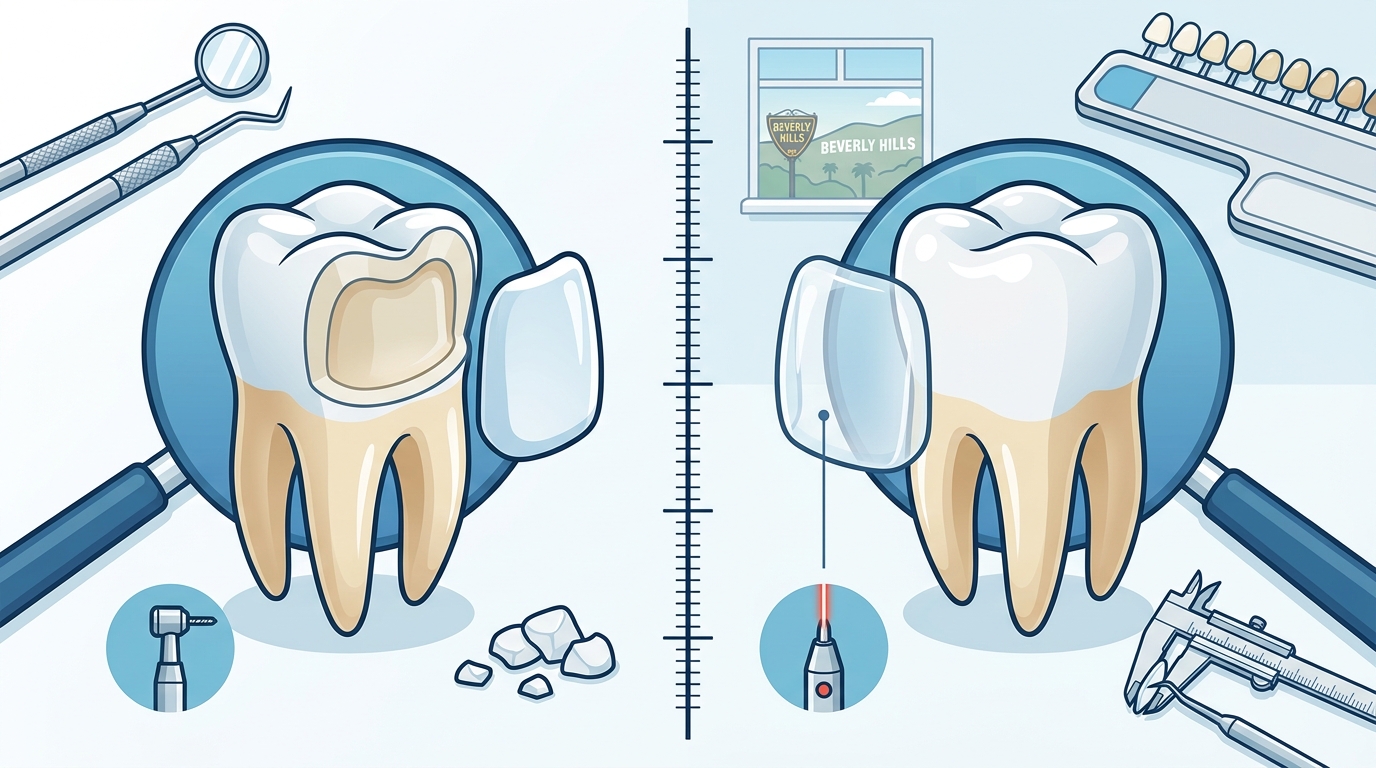
Traditional porcelain veneers require the dentist to remove a layer of enamel, typically between 0.5 and 0.7 millimeters, to create space for the restoration. This preparation ensures the veneer fits flush against the tooth without appearing bulky. In contrast, no-prep veneers, also known as prepless veneers, require zero to 0.3 millimeters of enamel removal. This minimally invasive approach is the defining characteristic of the procedure.
At Smiles by Dr. P, Dr. Chirag Patel utilizes a conservative-first philosophy. He evaluates the thickness of the patient's existing enamel and the alignment of the teeth to determine if a no-prep protocol is viable. If the teeth are already well-aligned and healthy, the dentist can bond the veneer directly to the intact enamel surface. This process preserves the structural integrity of the tooth, which is critical for long-term oral health.
The Role of Digital Smile Design
Digital Smile Design (DSD) is a software-based planning tool that allows patients to preview their new smile before any work begins. For no-prep cases, DSD is essential because the dentist must ensure the thin veneer will not alter the patient's lip dynamics or bite. The software simulates the final result, helping to confirm that the minimal preparation will achieve the desired aesthetic without compromising function.
Reversibility and Enamel Preservation
One of the most significant advantages of no-prep veneers is their relative reversibility. Because no enamel is removed, the tooth remains in its original state. If a patient decides to remove the veneer in the future, the underlying tooth is still intact and healthy. Traditional veneers, however, are irreversible. Once the enamel is shaved down, the tooth will always require a restoration to protect it from sensitivity and decay.
Enamel is the hardest substance in the human body, but it does not regenerate. Preserving this natural barrier is a core principle of modern cosmetic dentistry. By choosing no-prep veneers, patients maintain a safety net. Should the veneer fail or the patient's aesthetic preferences change, the tooth can be restored to its natural form or fitted with a different type of restoration without the complications associated with a previously prepared tooth.
Aesthetic Limitations of No-Prep Veneers
While no-prep veneers offer excellent preservation of tooth structure, they have specific aesthetic limitations. Because the veneer is extremely thin, it cannot significantly alter the shape or size of the tooth. It is ideal for correcting discoloration, minor chips, or small gaps, but it is not suitable for patients who want to dramatically change the length or width of their teeth. Traditional veneers offer more flexibility in reshaping the tooth to achieve a specific aesthetic goal.
Additionally, no-prep veneers are highly dependent on the patient's existing tooth alignment. If a patient has significant crowding or misalignment, a no-prep veneer may not fit correctly or may look bulky. In such cases, orthodontic treatment or traditional veneers may be a better option. Dr. Patel carefully assesses these factors during the consultation to ensure the chosen treatment aligns with the patient's facial aesthetics and functional needs.
Durability Comparison
Durability is a common concern for patients considering no-prep veneers. Both no-prep and traditional porcelain veneers are made from high-quality dental ceramics, such as feldspathic porcelain or e.max. These materials are highly resistant to staining and wear. With proper care, both types of veneers can last between 10 and 20 years. The key difference lies in the bond strength and the risk of debonding.
Traditional veneers, with their thicker profile and prepared tooth surface, often have a stronger mechanical bond. No-prep veneers rely on a chemical bond to the intact enamel. While this bond is strong, it can be more susceptible to failure if the patient grinds their teeth or bites down on hard objects. To mitigate this risk, patients are often advised to wear a night guard. At Smiles by Dr. P, we provide comprehensive aftercare instructions to ensure the longevity of your investment.
Traditional Veneer Advantages
Traditional veneers remain the gold standard for patients seeking significant aesthetic changes. They allow the dentist to reshape the tooth, correct major alignment issues, and create a more uniform smile. The preparation process ensures that the veneer fits snugly, reducing the risk of gaps or food trapping. For patients with severely discolored or damaged teeth, traditional veneers provide a more robust solution that can mask underlying issues more effectively than thin no-prep shells.
Furthermore, traditional veneers are less likely to chip or break under heavy occlusal forces. The additional thickness provides structural support that thin veneers may lack. While no-prep veneers are a fantastic option for many, traditional veneers offer a higher degree of customization and durability for complex cases. The choice between the two depends on the patient's specific dental condition and aesthetic goals.
Key Takeaways
- No-prep veneers remove zero to 0.3 mm of enamel, preserving natural tooth structure.
- Traditional veneers require 0.5 to 0.7 mm of enamel removal for a flush fit.
- No-prep veneers are reversible, while traditional veneers are irreversible.
- No-prep veneers are best for healthy, aligned teeth with minor cosmetic issues.
- Traditional veneers offer greater flexibility in reshaping and correcting alignment.
- Both types of veneers can last 10 to 20 years with proper care.
- Digital Smile Design helps patients preview results before committing to treatment.
- Consultation with a specialist is essential to determine the best option for your smile.
Frequently Asked Questions
Are no-prep veneers really painless?
Yes, no-prep veneers are generally painless because they do not require drilling or anesthesia. The process involves cleaning the tooth surface and bonding the veneer, which is a non-invasive procedure.
Can I eat normally with no-prep veneers?
You can eat most foods, but you should avoid biting down on extremely hard items like ice or hard candy. Wearing a night guard if you grind your teeth is also recommended to protect the veneers.
How long do no-prep veneers last?
With proper care, no-prep veneers can last between 10 and 20 years. Regular dental check-ups and good oral hygiene are crucial for maintaining their longevity.
Are no-prep veneers covered by insurance?
Most dental insurance plans do not cover cosmetic procedures like veneers. However, some plans may cover a portion of the cost if the veneers are deemed medically necessary to treat a specific dental issue.
What is the cost difference between no-prep and traditional veneers?
The cost of no-prep and traditional veneers is often similar, as both require custom fabrication in a dental lab. The price may vary slightly depending on the complexity of the case and the materials used.
Who is a good candidate for no-prep veneers?
Good candidates have healthy, aligned teeth with minor cosmetic concerns such as discoloration or small chips. Patients with significant crowding or bite issues may be better suited for traditional veneers or orthodontic treatment.
Conclusion
Choosing between no-prep and traditional veneers depends on your unique dental needs and aesthetic goals. No-prep veneers offer a minimally invasive, reversible option that preserves natural enamel, while traditional veneers provide greater flexibility for significant smile transformations. At Smiles by Dr. P, we are committed to helping you make an informed decision. Schedule a consultation with Dr. Chirag Patel to discuss which option is best for your smile.