

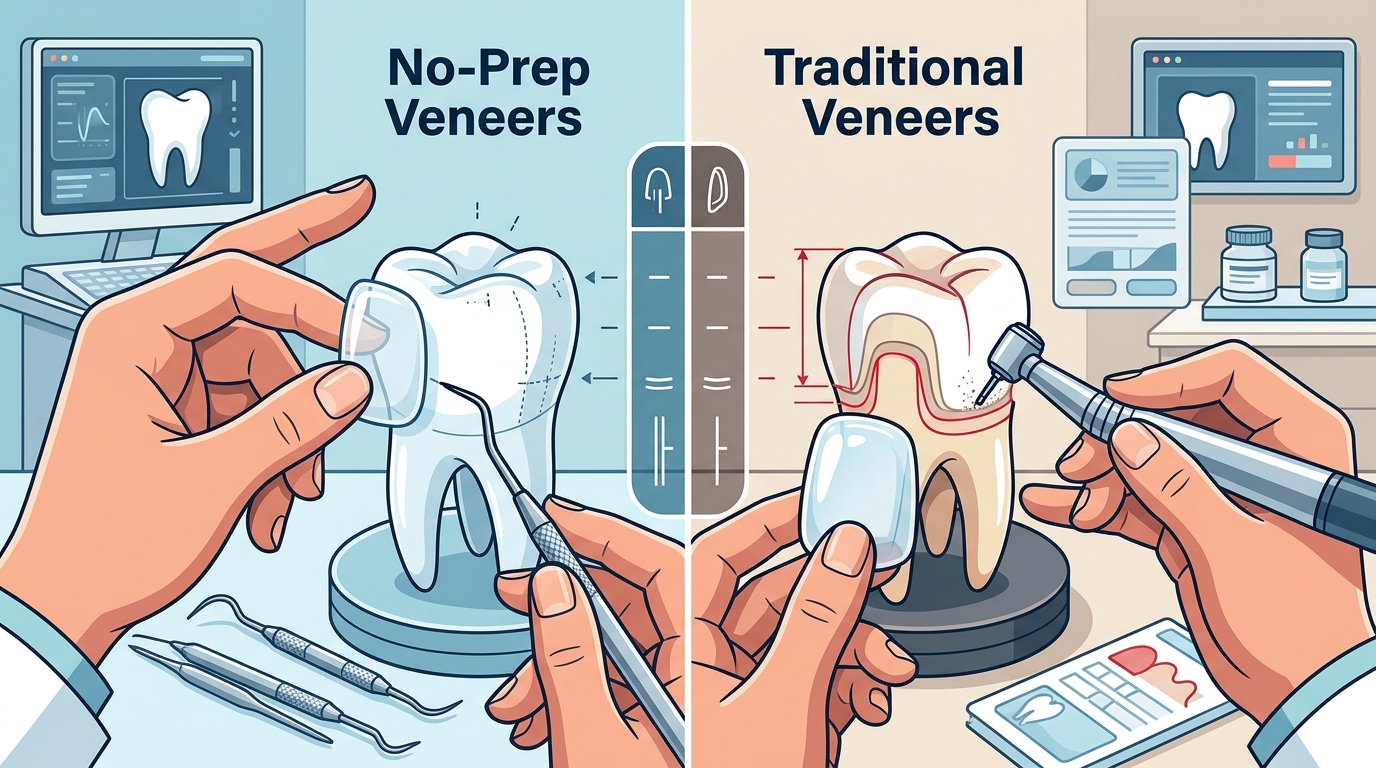
No-prep veneers are ultra-thin porcelain restorations bonded to teeth with little to no enamel removal. Traditional veneers require shaving 0.5 to 0.7 mm of enamel. No-prep veneers are not universally better; they are superior for preserving tooth structure but traditional veneers offer greater durability for severe cases. This guide compares both options to help you decide.
Durability Comparison
Durability is the primary concern for any dental restoration. Traditional porcelain veneers are generally considered more durable because they are bonded to a prepared tooth surface. This preparation creates a mechanical lock that resists dislodgement. No-prep veneers rely entirely on chemical bonding to intact enamel. While strong, this bond can be more susceptible to failure under extreme pressure. Patients who grind their teeth heavily may find traditional veneers more reliable. However, with proper aftercare, both types can last for many years. The choice depends on your specific bite dynamics and lifestyle habits.
Minimal Tooth Preparation
Minimal tooth preparation is the defining feature of no-prep veneers. This technique involves removing 0 to 0.3 mm of enamel, compared to the 0.5 to 0.7 mm required for traditional veneers. This conservative approach preserves the natural integrity of the tooth. At Smiles by Dr. P, we prioritize this conservative philosophy. Dr. Chirag Patel is known for his minimally invasive protocols. This approach reduces post-procedure sensitivity. It also maintains the natural translucency of the tooth. The less enamel you remove, the healthier the tooth remains in the long term. This is a critical factor for patients concerned about future dental health.
Reversibility
Reversibility is a common misconception in cosmetic dentistry. Neither no-prep nor traditional veneers are truly reversible. Once porcelain is bonded to the tooth, it is a permanent alteration. Even no-prep veneers involve bonding processes that chemically alter the enamel. Removal of these restorations can lead to sensitivity and structural weakening. Patients should view veneers as a long-term commitment. If you are unsure about the aesthetic outcome, consider a trial period. The veneer process often includes temporary veneers. These allow you to test-drive your new smile before final bonding. This step is crucial for ensuring satisfaction with the final result.
Aesthetic Limitations
Traditional Veneer Advantages
Enamel Preservation
Enamel preservation is the primary benefit of no-prep veneers. Enamel is the hardest substance in the human body. Once it is removed, it does not grow back. Preserving this natural layer is crucial for long-term tooth health. No-prep veneers minimize the amount of enamel removed. This conservative approach reduces the risk of future sensitivity. It also maintains the structural strength of the tooth. At Smiles by Dr. P, we emphasize the importance of preserving natural tooth structure. Dr. Patel's expertise in conservative dentistry ensures that your teeth remain healthy. This approach is ideal for patients who want to maintain their natural teeth as much as possible. It is a key consideration for long-term oral health.
Durability and Longevity
Durability and longevity are closely related but distinct concepts. Durability refers to the ability to withstand daily wear and tear. Longevity refers to the total lifespan of the restoration. Traditional veneers typically last 10 to 20 years. No-prep veneers have a similar lifespan but may require more careful maintenance. The bond strength of no-prep veneers is critical for their longevity. Proper bonding techniques ensure that the restoration remains secure. Regular dental check-ups are essential for monitoring the condition of your veneers. Aftercare instructions play a vital role in extending the life of your veneers. Following these guidelines can help you enjoy your new smile for many years.
Case Suitability
Case suitability determines which type of veneer is right for you. No-prep veneers are ideal for patients with healthy teeth and minor cosmetic concerns. They are best for closing small gaps or correcting slight discoloration. Traditional veneers are better suited for patients with more severe issues. They are recommended for teeth with significant damage or misalignment. A thorough consultation is necessary to determine the best option. Your dentist will evaluate your tooth structure, bite, and aesthetic goals. This assessment ensures that you receive the most appropriate treatment. At Smiles by Dr. P, we provide detailed consultations to help you make an informed decision. Our team will guide you through the options and help you choose the best solution for your unique needs.
Key Takeaways
- No-prep veneers preserve more natural enamel than traditional veneers.
- Traditional veneers offer greater durability for severe cases.
- Neither type of veneer is truly reversible.
- No-prep veneers are best for minor cosmetic enhancements.
- Traditional veneers are better for significant structural issues.
- Proper aftercare is essential for the longevity of both types.
- A thorough consultation is necessary to determine the best option.
- Dr. Chirag Patel specializes in minimally invasive veneer protocols.
Frequently Asked Questions
What is the main difference between no-prep and traditional veneers?
The main difference is the amount of enamel removed. No-prep veneers require little to no enamel reduction, while traditional veneers require 0.5 to 0.7 mm of enamel removal.
Are no-prep veneers reversible?
No, no-prep veneers are not reversible. Once bonded, they are a permanent alteration to the tooth. Removal can lead to sensitivity and structural weakening.
Which type of veneer is more durable?
Traditional veneers are generally more durable due to the mechanical lock created by tooth preparation. No-prep veneers rely on chemical bonding, which can be more susceptible to failure under extreme pressure.
Can no-prep veneers correct severe discoloration?
No, no-prep veneers are not ideal for severe discoloration. Their thinness limits their ability to mask deep intrinsic stains. Traditional veneers offer more opacity control for such cases.
How long do no-prep veneers last?
No-prep veneers typically last 10 to 20 years with proper care. Regular dental check-ups and good oral hygiene are essential for maintaining their longevity.
Who is a good candidate for no-prep veneers?
Good candidates for no-prep veneers have healthy teeth with minor cosmetic concerns. They are ideal for closing small gaps or correcting slight discoloration. A thorough consultation is necessary to determine suitability.