

Choosing between traditional porcelain veneers and no-prep veneers is one of the most significant decisions in your cosmetic dental journey. According to recent industry data, the global cosmetic dentistry market is projected to grow significantly, with veneers remaining a top choice for smile transformations. Understanding the nuanced differences between these two approaches is essential for achieving a natural, long-lasting result. This guide breaks down the pros, cons, and ideal candidates for each method to help you make an informed choice.
Understanding the Core Differences
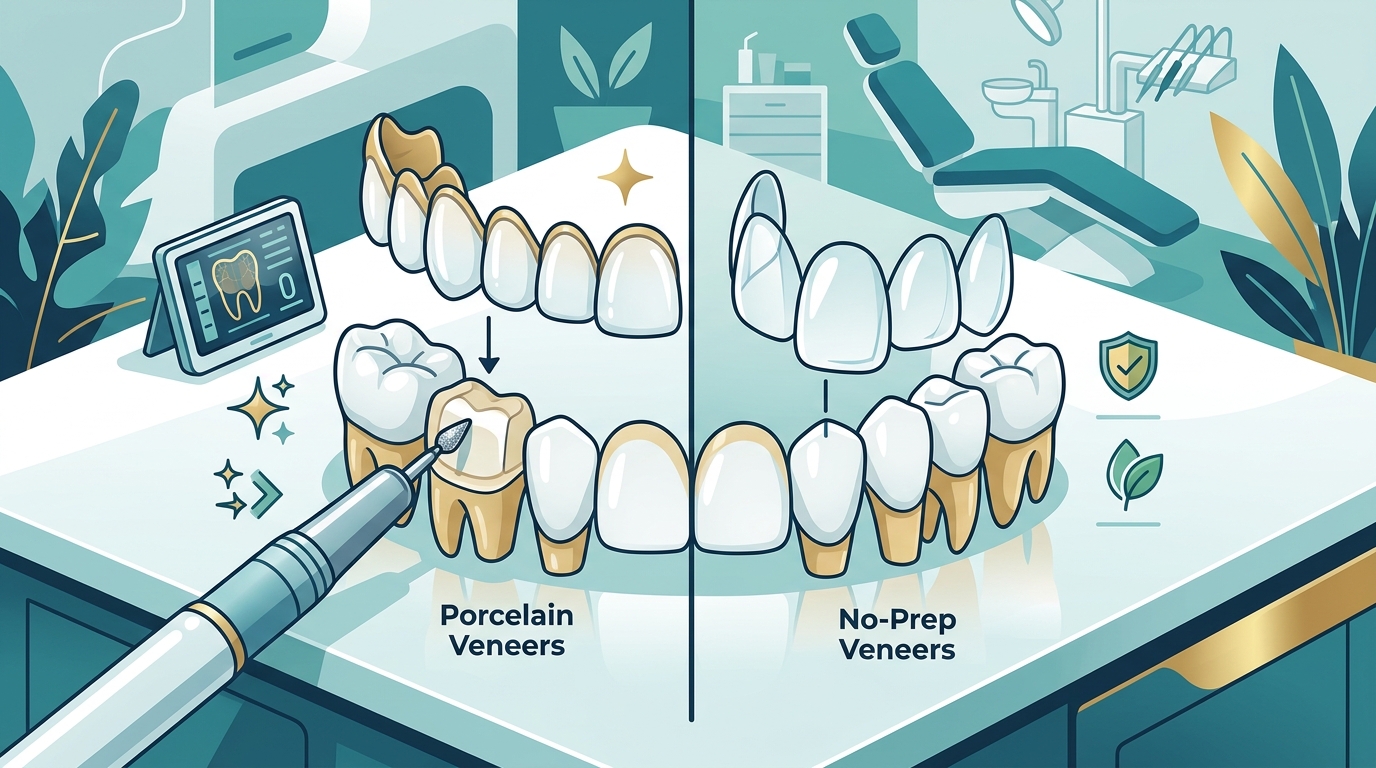
At its simplest, the primary difference lies in the amount of tooth structure removed. Porcelain veneers are thin shells of ceramic that cover the front surface of teeth. To ensure a perfect fit and natural look, a small amount of enamel is typically removed. No-prep veneers, often called Lumineers, are ultra-thin shells that require little to no enamel removal. This distinction affects everything from cost to longevity and reversibility. (Dental Implants Los Angeles)
Dr. Chirag Patel at Smiles by Dr. P specializes in both modalities, offering a patient-centered approach to determine which path aligns with your specific dental anatomy and aesthetic goals. The decision is not one-size-fits-all; it depends on your current tooth condition, bite alignment, and desired outcome.
Traditional Porcelain Veneers
Traditional porcelain veneers have been the gold standard in cosmetic dentistry for decades. They are custom-made in a dental laboratory to fit your teeth precisely. This process allows for greater control over the final shape, color, and translucency of your smile.
The Procedure
The process begins with a consultation where Dr. Patel evaluates your teeth and gums. A small amount of enamel, usually less than a millimeter, is removed from the front of the teeth. This step is crucial for ensuring that the veneers do not look bulky or protrude from your lips. Impressions are taken and sent to a lab, where your custom veneers are crafted. While you wait, temporary veneers may be placed to protect your teeth.
Benefits and Longevity
One of the most significant advantages of traditional veneers is their durability. Because they are slightly thicker and bonded securely to prepared teeth, they can last 10 to 15 years or longer with proper care. They are also highly resistant to staining, maintaining their brightness for years. For patients with significant discoloration, chips, or gaps, traditional veneers offer the most dramatic and predictable transformation.
Ideal Candidates
Traditional veneers are ideal for patients with moderate to severe tooth discoloration, chips, cracks, or misalignment. If you have a history of bruxism (teeth grinding), your dentist may recommend this option combined with a night guard to protect the restoration. Patients seeking a complete smile makeover often prefer traditional veneers for their superior aesthetic control.
The No-Prep Alternative
No-prep veneers, also known as minimal-prep or ultra-thin veneers, are designed to be less invasive. They are made from a special type of porcelain that is incredibly thin, allowing them to be bonded directly to the tooth without removing enamel.
The Procedure
The process is similar to traditional veneers but without the enamel removal step. Dr. Patel takes precise impressions of your teeth, and the lab fabricates ultra-thin shells. Because no enamel is removed, the procedure is often reversible. If you decide later that you do not want veneers, your teeth remain largely intact. The placement process is typically faster and may require fewer appointments.
Benefits and Limitations
The primary benefit of no-prep veneers is the preservation of natural tooth structure. This is a conservative approach that minimizes sensitivity and discomfort. However, because they are so thin, they may not be suitable for correcting severe misalignments or deep stains. In some cases, they can add bulk to the teeth, making them look slightly larger. Patients with healthy, well-aligned teeth who want to enhance their smile's brightness or correct minor imperfections are the best candidates.
Ideal Candidates
No-prep veneers are perfect for patients with minor gaps, slight misalignments, or surface stains. If you have a strong desire to keep your natural teeth as intact as possible, this option offers a compelling alternative. It is also a great choice for patients who are anxious about dental procedures due to its minimally invasive nature.
Side-by-Side Comparison
Understanding the technical and practical differences can help clarify your decision. The table below summarizes the key distinctions between traditional and no-prep veneers.
| Feature | Traditional Porcelain Veneers | No-Prep Veneers |
|---|---|---|
| Enamel Removal | Yes, minimal amount removed | No or negligible removal |
| Thickness | 0.5mm to 0.7mm | 0.2mm to 0.3mm |
| Reversibility | Irreversible | Reversible |
| Longevity | 10-15+ years | 5-10 years (varies) |
| Best For | Severe discoloration, chips, gaps | Minor imperfections, brightening |
| Cost | Higher initial investment | Comparable, depends on case complexity |
Key Takeaways
- Preservation of Tooth Structure: No-prep veneers preserve more of your natural enamel, making them a conservative choice for minor corrections.
- Aesthetic Control: Traditional veneers offer greater control over shape and color, making them ideal for complex smile makeovers.
- Longevity: Traditional porcelain veneers generally last longer due to their thickness and bonding strength.
- Reversibility: No-prep veneers are reversible, while traditional veneers are not due to enamel removal.
- Cost Considerations: Both options are significant investments, but traditional veneers may offer better long-term value for severe corrections.
- Professional Evaluation: Only a clinical examination can determine which option is safe and effective for your specific dental anatomy.
- Maintenance: Both types require excellent oral hygiene, including brushing, flossing, and regular dental visits.
Frequently Asked Questions
Are no-prep veneers as strong as traditional veneers?
No-prep veneers are made from high-strength porcelain, but they may not be as durable as traditional veneers for patients with heavy biting forces or bruxism. Traditional veneers are often recommended for such cases.
How long does the process take for each type?
Traditional veneers typically take two to three weeks from preparation to placement due to lab fabrication time. No-prep veneers may have a similar timeline, but the initial appointment is shorter since no enamel removal is needed.
Can I whiten my teeth after getting veneers?
Veneers themselves cannot be whitened. However, your natural teeth can change color over time. To maintain a uniform smile, you may need to whiten your natural teeth to match the veneers. Consult Smiles by Dr. P for whitening options.
What is the cost difference between the two?
The cost can vary based on the number of veneers and the complexity of the case. Generally, both options are premium cosmetic procedures. Visit the Cost of Porcelain Veneers page for detailed pricing information.
Do no-prep veneers look natural?
Yes, when placed correctly by an experienced dentist like Dr. Patel, no-prep veneers can look very natural. However, they may appear slightly bulkier than traditional veneers if not planned carefully.
Which option is better for closing gaps?
Both options can close gaps. Traditional veneers are often preferred for larger gaps because they can be built up more effectively. For small gaps, no-prep veneers may suffice. See our Veneers for Closing Gaps guide for more details.
Is the procedure painful?
Both procedures are performed under local anesthesia, so you should not feel pain during the process. Post-procedure sensitivity is common but manageable with over-the-counter pain relievers.
Schedule Your Consultation
Choosing between porcelain veneers and no-prep veneers is a personal decision that requires professional guidance. Dr. Chirag Patel and his team at Smiles by Dr. P are dedicated to helping you achieve a smile that is both beautiful and healthy. We offer a collaborative smile makeover journey tailored to your unique needs.
Ready to explore your options? Schedule a consultation today to discuss which veneer type is right for you. Our Beverly Hills office is equipped with state-of-the-art technology to ensure your comfort and satisfaction.