

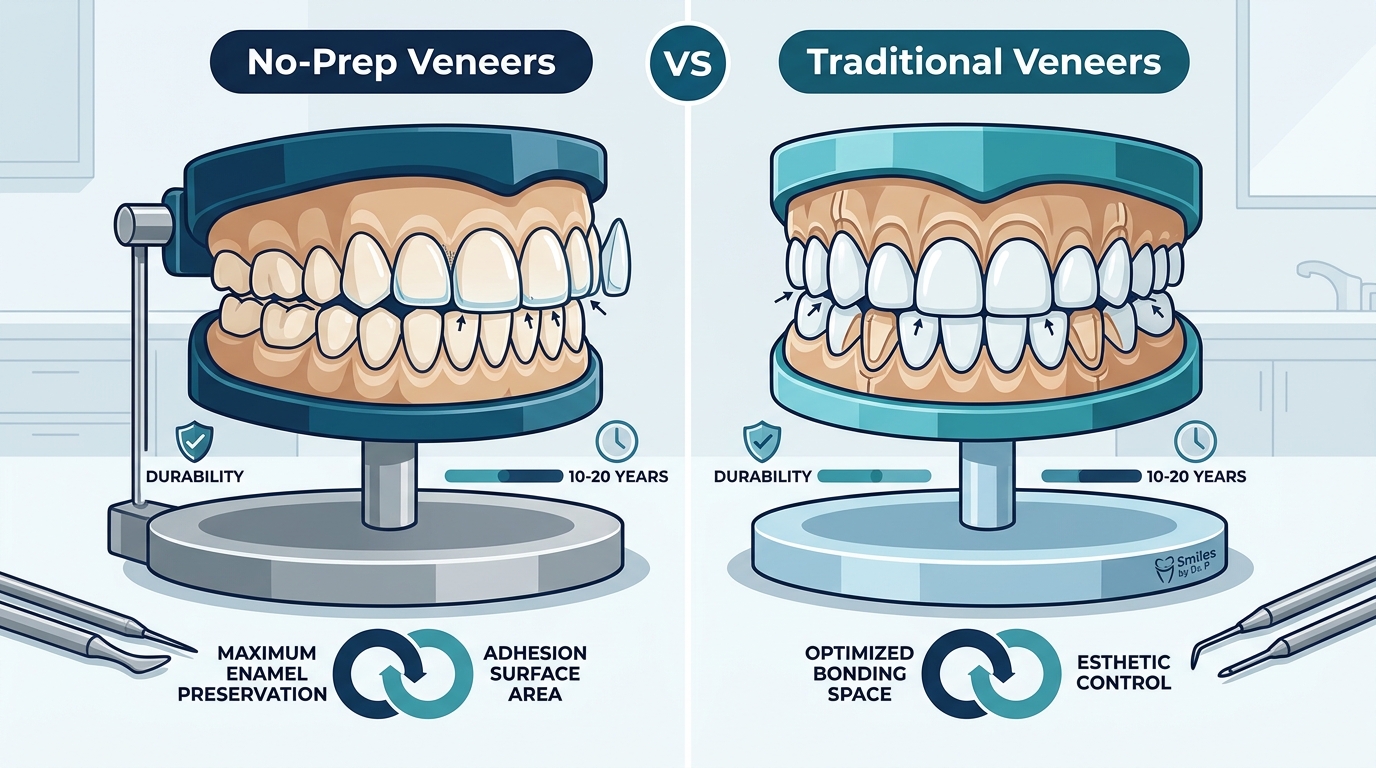
Both no-prep and traditional porcelain veneers typically last between 10 and 20 years. The primary difference lies in the bonding surface area and enamel preservation. Traditional veneers offer a slightly larger surface for adhesion, while no-prep veneers preserve natural tooth structure. At Smiles by Dr. P, we evaluate your specific anatomy to determine which option provides the best long-term stability for your smile.
Structural Differences in Bonding
The longevity of a dental restoration depends heavily on how it attaches to the tooth. Traditional veneers require the removal of approximately 0.5 to 0.7 mm of enamel. This creates a mechanical lock that enhances the bond strength between the porcelain and the tooth. No-prep veneers, also known as ultra-thin veneers, bond to the existing enamel surface with little to no reduction. Because they rely on chemical adhesion rather than mechanical retention, the quality of the bonding agent and the dentist's technique are critical factors in their lifespan.
At Smiles by Dr. P, Dr. Chirag Patel utilizes a conservative-first philosophy. He carefully assesses whether a patient's tooth alignment allows for adequate space for a no-prep restoration. If the teeth are crowded or significantly misaligned, traditional preparation may be necessary to ensure the veneer fits correctly without creating bite issues that could lead to premature failure.
Lifespan Data and Clinical Expectations
Clinical data suggests that both types of porcelain veneers share a similar average lifespan range. Most patients can expect their restorations to last between 10 and 20 years with proper care. The material itself, whether feldspathic porcelain or e.max, is highly durable and resistant to staining. The variable is not the porcelain, but the underlying tooth structure and the patient's habits.
For example, a patient with a healthy bite and no history of grinding may see their no-prep veneers last the full 20 years. Conversely, a patient with severe bruxism (teeth grinding) may experience chipping or debonding sooner, regardless of the veneer type. Dr. Patel often recommends an occlusal guard for patients with clenching habits to protect both the restoration and the natural tooth, thereby extending the functional life of the smile makeover.
Maintenance and Long-Term Care
Proper maintenance is the single most important factor in extending the life of any veneer. Daily brushing and flossing prevent decay at the gumline, which is the most common cause of veneer failure. If decay develops under the edge of a veneer, the restoration may need to be replaced. Regular professional cleanings allow the hygienist to monitor the integrity of the bond and the health of the surrounding gums.
Patients should also avoid using their teeth as tools, such as opening packages or biting on hard objects like ice or nuts. These actions exert excessive force that can crack porcelain. At Smiles by Dr. P, we emphasize that veneers are not indestructible. They are designed to look natural and function well, but they require the same respect as natural teeth. Consistent care ensures that the investment in your smile remains intact for decades.
Common Causes of Failure
When veneers fail, it is rarely due to the material wearing out. Instead, failure usually stems from mechanical stress or biological issues. Chipping is a common issue for no-prep veneers if the patient has a heavy bite or grinds their teeth. Debonding, where the veneer falls off, can occur if the bond weakens over time or if the tooth structure changes. Traditional veneers are less prone to debonding due to the mechanical retention provided by the prepared tooth, but they are not immune to chipping.
Another factor is the initial fit. If a veneer is not contoured correctly, it can create pressure points that lead to stress fractures. This is why digital smile design and precise fabrication are essential. By using advanced imaging and master ceramist collaboration, we ensure that each restoration is anatomically correct, reducing the risk of mechanical failure over the years.
Key Takeaways
- Both no-prep and traditional veneers typically last 10 to 20 years.
- Traditional veneers offer stronger mechanical retention due to enamel removal.
- No-prep veneers preserve natural tooth structure but rely on chemical bonding.
- Teeth grinding and clenching are the primary threats to veneer longevity.
- Regular dental checkups and professional cleanings are vital for monitoring bond integrity.
- Proper fit and bite analysis during the initial procedure prevent premature failure.
- Choosing a skilled cosmetic dentist ensures the correct veneer type is selected for your anatomy.
Frequently Asked Questions
Do no-prep veneers last as long as traditional veneers?
Yes, both types typically last between 10 and 20 years. The lifespan depends more on patient habits and maintenance than on the preparation method.
Why might a traditional veneer last longer?
Traditional veneers have a mechanical lock created by enamel removal, which can provide stronger retention against forces like grinding.
Can I get no-prep veneers if I grind my teeth?
It depends on the severity of the grinding. A night guard is usually required to protect no-prep veneers from chipping.
What causes a veneer to fall off?
Debonding can occur due to decay at the gumline, excessive force, or the natural weakening of the bond over time.
How often should I see my dentist after getting veneers?
You should visit your dentist twice a year for checkups and cleanings to monitor the health of your veneers and gums.
Are no-prep veneers reversible?
No, porcelain veneers are permanent. Even no-prep veneers involve bonding that chemically alters the enamel surface.
Conclusion
Choosing between no-prep and traditional veneers is a decision that balances aesthetics with long-term durability. While both options offer a lifespan of 10 to 20 years, the right choice depends on your unique dental anatomy and lifestyle habits. At Smiles by Dr. P, we prioritize the preservation of your natural tooth structure while ensuring your smile is built to last. To determine which option is best for you, schedule a consultation with our team today.