

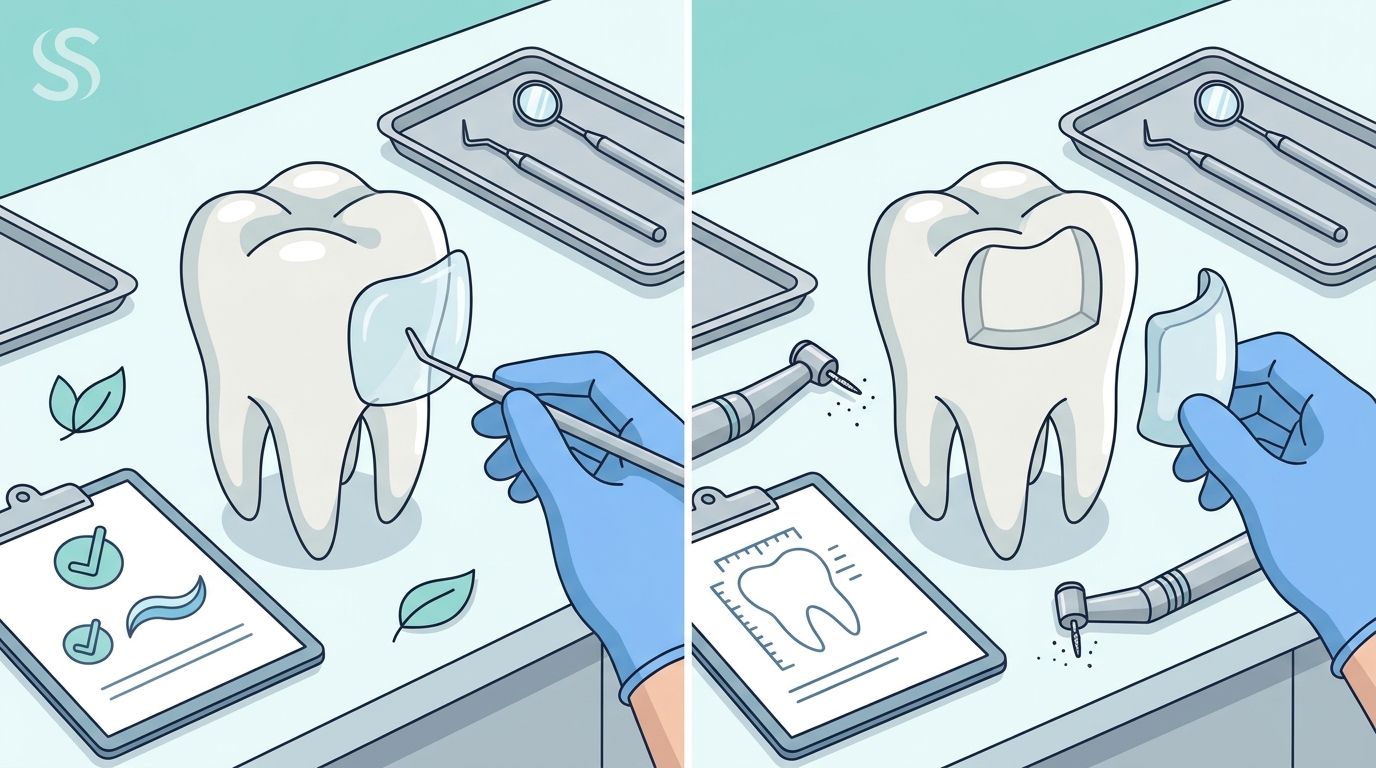
The primary difference between no-prep and regular veneers is the amount of natural enamel removed during preparation. Regular veneers typically require 0.5 to 0.7 mm of enamel reduction, while no-prep veneers remove little to no enamel. At Smiles by Dr. P in Beverly Hills, Dr. Chirag Patel evaluates your specific tooth structure to determine if a conservative, no-prep approach is clinically viable for your smile goals.
Understanding the Preparation Process
Traditional porcelain veneers are a restorative procedure that involves reshaping the tooth surface. A dental veneer is a thin layer of porcelain that is placed over the front part of the tooth. To ensure the veneer fits seamlessly and does not look bulky, the dentist must remove a small amount of enamel. This process is known as tooth preparation. For standard veneers, this usually involves removing between 0.5 and 0.7 mm of enamel per tooth. This reduction creates the necessary space for the porcelain shell to bond without altering the natural bite or making the teeth appear oversized.
In contrast, no-prep veneers, also known as prepless veneers, are designed to bond directly to the existing enamel surface. This approach preserves the natural tooth structure, which is a core principle of conservative dentistry. Because no enamel is removed, the procedure is often reversible. If a patient is unhappy with the result, the veneer can be removed, and the underlying tooth remains intact. This distinction is critical for patients who are hesitant about permanent alterations to their natural teeth.
Material Differences and Bonding Strength
The choice of material often dictates the preparation required. Regular veneers are frequently crafted from feldspathic porcelain or e.max, materials that offer superior aesthetics and translucency. These materials are thin and strong, but they still require a prepared surface to achieve a natural contour. No-prep veneers often utilize specific composite resins or ultra-thin porcelain laminates that are engineered to bond effectively to unprepared enamel. The bonding agent used in no-prep cases must be highly adhesive to ensure longevity without the mechanical retention provided by a prepared tooth.
At Smiles by Dr. P, the use of high-quality porcelain materials and master ceramist collaboration ensures that even minimally invasive veneers achieve a lifelike appearance. The durability of the bond is a key factor in the lifespan of the restoration. While both types can last 10 to 20 years with proper care, the integrity of the bond in no-prep cases relies heavily on the initial placement technique and the patient's oral hygiene habits.
Candidacy: Who Should Choose Which?
Choosing between the two options depends on the condition of your teeth and your aesthetic goals. Regular veneers are ideal for patients with significant discoloration, severe wear, or major alignment issues that require reshaping. If your teeth are heavily stained or have large gaps, the ability to remove enamel allows the dentist to create a more dramatic transformation. No-prep veneers are best suited for patients with healthy, well-aligned teeth who have minor cosmetic concerns, such as slight discoloration or small chips. They are not a one-size-fits-all solution and require a careful clinical evaluation.
Dr. Chirag Patel, a board-certified cosmetic dentist, emphasizes that a healthy foundation is a determining factor in the success of cosmetic treatment. During a consultation, the dentist will assess the thickness of your enamel and the position of your teeth. If your teeth are already large or if you have a specific bite issue, no-prep veneers may not be the right choice. Conversely, if you have thin enamel or are anxious about drilling, a no-prep approach may be the preferred option. The decision is highly individualized and should be made after a thorough examination.
Longevity and Maintenance Considerations
Both types of veneers require diligent maintenance to ensure longevity. Porcelain used in dental veneers is harder than natural teeth structure, which makes it durable but also susceptible to fracture if subjected to excessive force. Grinding and clenching of teeth can exert incredible amounts of pressure on your teeth and veneers. This force can cause fractures or cracks on your natural teeth as well as porcelain veneers. A night guard is often recommended to protect the investment in either type of veneer.
Regular dental visits are essential for monitoring the health of the restorations. You should visit your dentist minimum twice a year for regular check-ups and professional cleanings. It is important to request that your dentist or hygienist use hand scalers around your veneers rather than electric scalers, which can potentially damage the porcelain. Additionally, avoiding damaging habits such as biting on ice, hard candy, or using your teeth to open packages is crucial. Proper aftercare ensures that your smile remains beautiful and functional for years to come.
Cost and Investment Analysis
It is important to view veneers as a long-term investment in your smile and confidence. The expertise of the cosmetic dentist is the most important factor contributing to the cost and the final result. You want high-quality material and a highly skilled dentist performing the procedure with a trained team. This is important to ensure your veneers look beautiful, natural, and last a very long time. At Smiles by Dr. P, patients receive a detailed treatment plan and estimated cost at the end of their consultation, allowing them to make an informed decision.
Key Takeaways
- Regular veneers require 0.5 to 0.7 mm of enamel removal, while no-prep veneers preserve natural tooth structure.
- No-prep veneers are reversible, whereas regular veneers are a permanent alteration to the tooth.
- Candidacy for no-prep veneers depends on tooth alignment, enamel thickness, and specific cosmetic goals.
- Both types of veneers require a night guard if you grind your teeth to prevent fractures.
- Regular dental check-ups and proper brushing and flossing are essential for the longevity of any veneer.
Frequently Asked Questions
Are no-prep veneers really painless?
Yes, no-prep veneers are generally painless because they do not involve drilling or removing enamel. Since no anesthesia is typically required for the preparation phase, the procedure is much less invasive and comfortable for patients. You may feel some pressure during the bonding process, but it is usually well-tolerated.
Can I switch from no-prep to regular veneers later?
Yes, if you are unhappy with no-prep veneers, they can be removed, and you can then proceed with regular veneers. This is one of the main advantages of the no-prep approach. However, once regular veneers are placed, they cannot be easily removed without damaging the underlying tooth structure.
How long do no-prep veneers last?
No-prep veneers can last 10 to 20 years with proper care. The lifespan depends on factors such as oral hygiene, the use of a night guard, and avoiding habits that can damage the porcelain. Regular dental visits are crucial for monitoring the condition of the veneers.
Do no-prep veneers stain easily?
Porcelain veneers, including no-prep options, are highly resistant to staining. They are color-stable and do not absorb stains from coffee, tea, or wine like natural teeth or composite bonding might. However, the bonding agent at the gumline can sometimes discolor over time, which is why regular cleanings are important.
Which type of veneer is better for my smile?
The best type of veneer depends on your specific dental needs and aesthetic goals. A consultation with a cosmetic dentist is the fastest way to know. Dr. Chirag Patel at Smiles by Dr. P will evaluate your teeth and recommend the most appropriate option for your unique smile.
Conclusion
Choosing between no-prep and regular veneers is a personal decision that should be guided by professional dental advice. Both options offer significant aesthetic benefits, but they differ in invasiveness, reversibility, and candidacy. At Smiles by Dr. P, we prioritize the preservation of natural tooth structure while delivering exceptional cosmetic results. To determine which option is right for you, schedule a consultation with our team today.