

No-Prep Veneers vs Traditional Veneers: Which Option Is Right for Your Smile?
If you are exploring ways to transform your smile, you have likely come across two popular options: no-prep veneers and traditional porcelain veneers. Both can correct discoloration, chips, gaps, and minor misalignment, but they differ in tooth preparation, longevity, and overall patient experience. Understanding these differences is the first step toward choosing the approach that fits your goals. At Smiles by Dr. P in Beverly Hills, Dr. Chirag Patel helps patients navigate this decision every day with a conservative, detail-oriented philosophy.
What Are No-Prep Veneers?
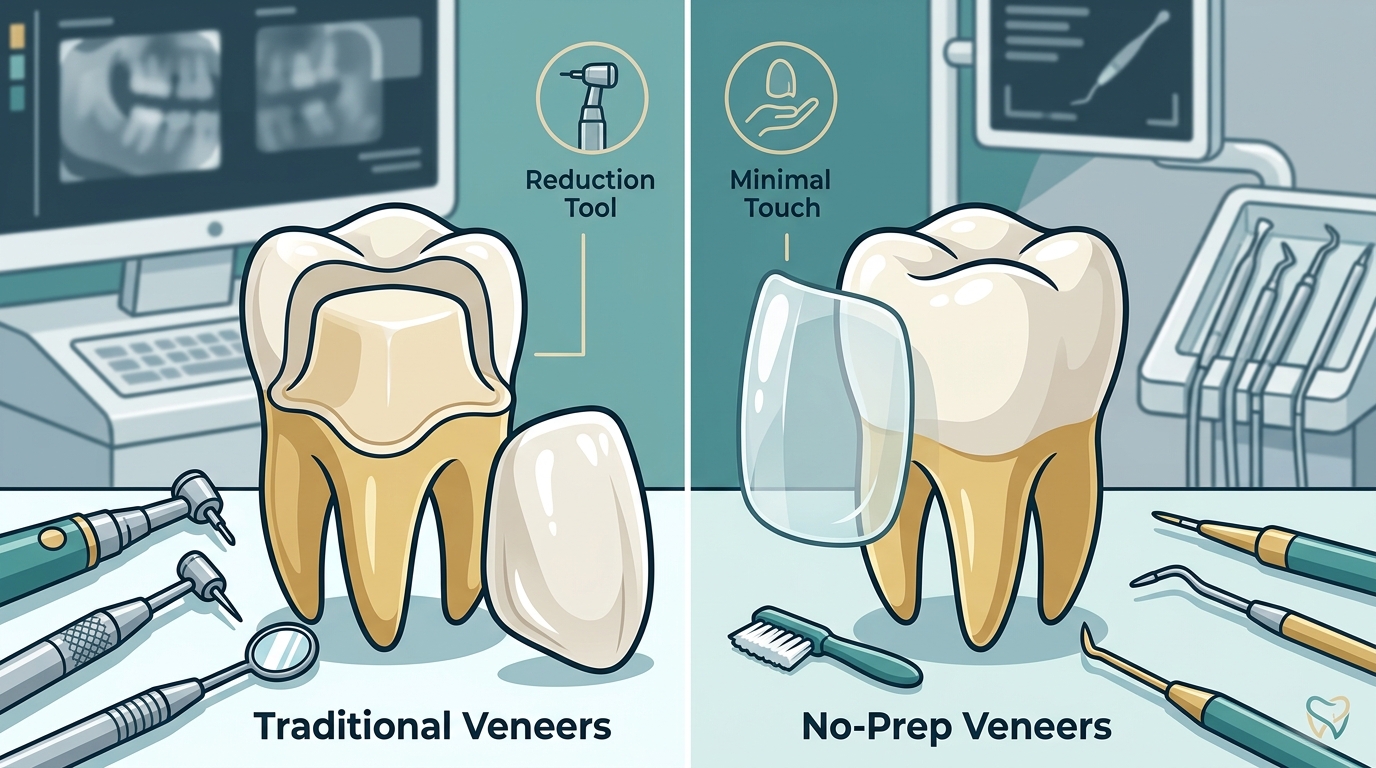
No-prep veneers are ultra-thin porcelain or composite shells bonded directly to the front surface of your teeth with little to no enamel removal. Because the natural tooth structure remains virtually intact, the procedure is often considered minimally invasive and potentially reversible.
How the Procedure Works
The process typically begins with a consultation, followed by digital impressions. Because there is minimal or no drilling, anesthesia is rarely needed. Once the custom shells are fabricated, they are bonded in a single appointment. Learn more on our no-prep and minimal-prep veneers page.
Ideal Use Cases
No-prep veneers work best for patients who need subtle cosmetic improvements such as minor discoloration, small gaps, or slight shape refinements. They are a popular choice for patients who want to preserve as much natural tooth structure as possible.
What Are Traditional Porcelain Veneers?
Traditional porcelain veneers are custom-made ceramic shells, typically 0.5 mm to 0.7 mm thick, that require a thin layer of enamel to be removed before placement. This preparation step allows the veneer to sit flush against the tooth without adding bulk, producing a highly natural result.
The Preparation Process
Getting traditional veneers usually requires two to three office visits: an initial consultation, tooth preparation with impressions, and final bonding. Temporary veneers may be placed while your permanent restorations are crafted in a dental lab. Once ready, each veneer is permanently bonded and adjusted for bite and aesthetics.
Why Patients Choose Traditional Veneers
Traditional veneers offer the most customization in shade, shape, and size. They can address more significant concerns such as tetracycline staining, moderate crowding, and irregularly shaped teeth. Their durability also makes them a long-term investment.
Side-by-Side Comparison
| Feature | No-Prep Veneers | Traditional Porcelain Veneers |
|---|---|---|
| Enamel Removal | Little to none | Approximately 0.5 - 0.7 mm |
| Anesthesia Required | Rarely | Usually yes |
| Typical Lifespan | 5 - 7 years | 10 - 15 years |
| Reversibility | Often reversible | Permanent (irreversible) |
| Customization Level | Moderate | High (shade, shape, size) |
| Number of Visits | 1 - 2 | 2 - 3 |
| Cost per Tooth (Approx.) | $800 - $2,000 | $925 - $2,500 |
| Best For | Minor cosmetic improvements | Significant smile transformations |
Who Is a Good Candidate for Each?
Candidacy depends on your oral health, the severity of the cosmetic issue, and your long-term goals. No-prep veneers are ideal for patients with healthy enamel seeking subtle enhancements. Traditional veneers are better suited for patients who want dramatic changes, such as correcting crowding or misalignment or closing visible gaps.
Some patients may even benefit from a combination approach, where no-prep veneers are placed on certain teeth and traditional veneers on others. A thorough consultation with an experienced cosmetic dentist is essential to determine the right plan.
Dr. Patel's Conservative Approach in Beverly Hills
Dr. Chirag Patel is a top-rated cosmetic dentist in Beverly Hills who specializes in a conservative veneer philosophy. His approach prioritizes preserving natural tooth structure whenever clinically appropriate, which is why no-prep and minimal-prep veneers are a cornerstone of his practice. Using advanced diagnostic technology and meticulous treatment planning, Dr. Patel designs each smile makeover to complement the patient's unique facial aesthetics.
Whether the case calls for no-prep or traditional veneers, every detail is considered. You can view real patient results in our before-and-after gallery and read firsthand experiences on the testimonials page.
Longevity and Aftercare
Longevity is one of the most important factors when comparing these two options. Traditional porcelain veneers typically last between 10 and 15 years with proper care. No-prep veneers have a shorter average lifespan of about 5 to 7 years, though diligent maintenance can extend their life.
Care Tips for Both Types
Regardless of which option you choose, good oral hygiene is essential. Brush twice daily, floss regularly, and attend routine dental checkups. Avoid biting hard objects like ice or pen caps, and consider a nightguard if you grind your teeth. For a detailed guide, visit our veneer aftercare page.
Key Takeaways
- No-prep veneers require little to no enamel removal and are often reversible, making them a conservative choice.
- Traditional porcelain veneers offer greater customization and typically last 10 to 15 years.
- No-prep veneers are best for minor cosmetic fixes; traditional veneers handle more significant transformations.
- Cost ranges overlap, but traditional veneers may be more cost-effective over time due to longer lifespan.
- A skilled cosmetic dentist like Dr. Chirag Patel can determine which option, or combination, delivers the best outcome.
- Proper aftercare extends the life of both veneer types.
- Consultation is the most important first step toward choosing the right veneer for your smile.
Frequently Asked Questions
What exactly is a no-prep veneer?
A no-prep veneer is an ultra-thin shell, typically made of porcelain or composite, that bonds to the front of your tooth without requiring significant enamel removal. It preserves your natural tooth structure and can often be removed if needed.
Do no-prep veneers look natural?
Yes. When placed by an experienced cosmetic dentist, no-prep veneers produce a natural, radiant appearance. However, because they sit on top of existing enamel, precise design and placement are critical to avoid a bulky look.
How long do traditional porcelain veneers last?
Traditional porcelain veneers generally last between 10 and 15 years. With excellent oral hygiene and regular dental visits, many patients enjoy their veneers for even longer.
Is the no-prep veneer procedure painful?
Most patients experience little to no discomfort because the procedure typically does not involve drilling or anesthesia. Some minor sensitivity may occur temporarily after bonding.
Can I switch from no-prep veneers to traditional veneers later?
In many cases, yes. Because no-prep veneers preserve your enamel, transitioning to traditional veneers later is often possible. Your dentist will evaluate your tooth structure before making a recommendation.
Are no-prep veneers cheaper than traditional veneers?
No-prep veneers are generally slightly less expensive per tooth, but their shorter lifespan means you may need replacements sooner. Discuss total long-term cost with your dentist during your consultation.
Does Dr. Patel offer both no-prep and traditional veneers?
Yes. Dr. Chirag Patel at Smiles by Dr. P offers both options and often recommends the most conservative approach that will achieve the patient's desired result. Visit our porcelain veneers page for details.
How do I know which veneer type is right for me?
The best way to find out is through a personalized consultation. Dr. Patel uses advanced diagnostic technology to assess your teeth, discuss your goals, and recommend the ideal treatment plan.
Ready to Find Your Perfect Veneer Option?
Choosing between no-prep and traditional veneers does not have to be overwhelming. Dr. Chirag Patel and the team at Smiles by Dr. P in Beverly Hills are here to guide you through every step. Call 323-909-9300 or submit a smile inquiry online to schedule your personalized consultation today.