

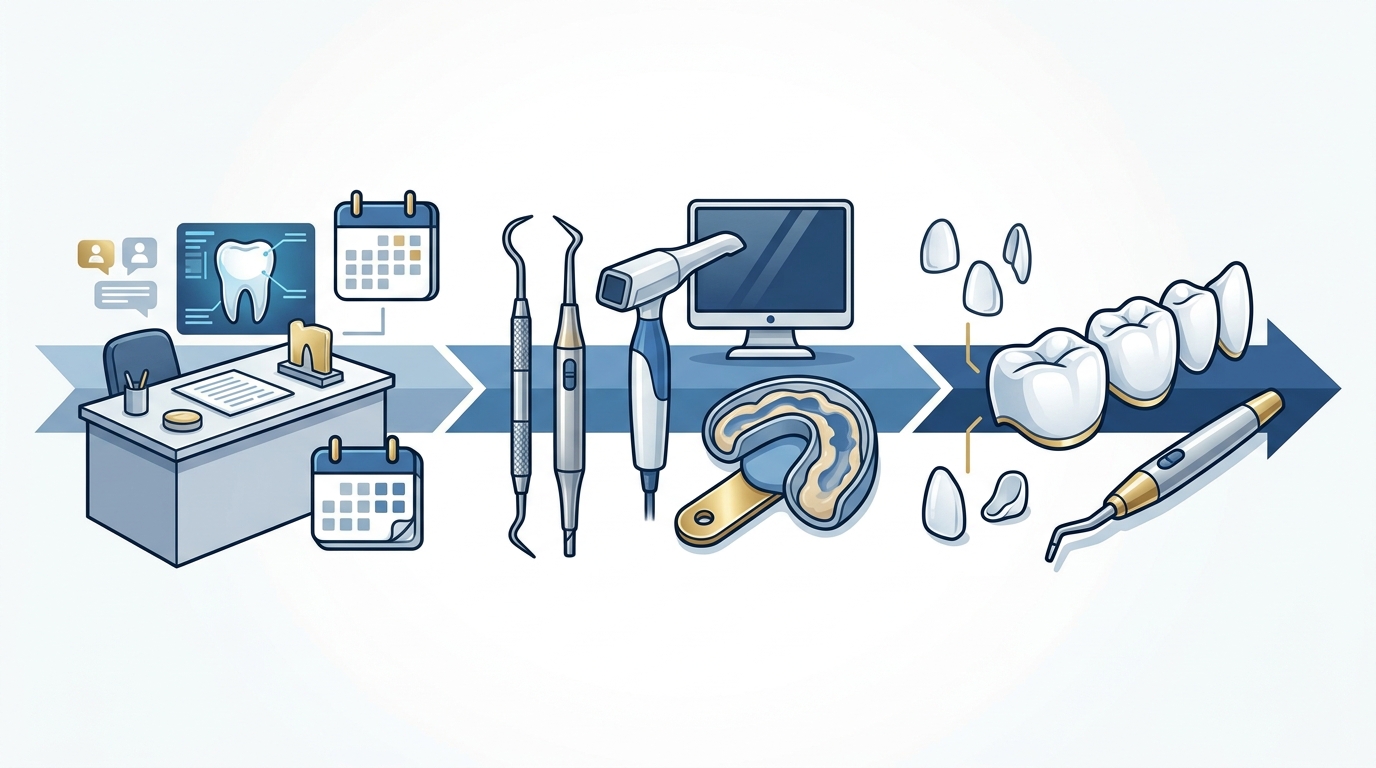
If you are considering porcelain veneers, one of the first questions on your mind is probably, "How long does the whole thing take?" The answer depends on a few factors, but most patients complete the process in two to four weeks and just two or three office visits. Understanding each step removes the mystery and helps you plan around your schedule, whether you live in Beverly Hills or are traveling from out of state for your smile makeover. Below is a detailed breakdown of the porcelain veneers process from consultation to final bonding so you know exactly what to expect at every stage.
What Are Porcelain Veneers?
Porcelain veneers are thin, custom-made shells of dental ceramic bonded to the front surface of teeth to improve their color, shape, and alignment. They are one of the most popular treatments in cosmetic dentistry because they deliver dramatic results with a minimally invasive procedure. At Smiles by Dr. P, Dr. Chirag Patel uses advanced diagnostic technology and a conservative approach to preserve as much natural tooth structure as possible, including No-Prep and minimal-prep veneers when appropriate.
Step 1: The Initial Consultation
Every smile transformation begins with a thorough consultation. During this visit, Dr. Patel evaluates your oral health, takes digital X-rays or 3-D cone-beam CT images, and discusses your aesthetic goals. He will explain whether porcelain veneers are the right solution or if preliminary treatments such as teeth whitening or gum contouring should come first.
What Happens at the Consultation?
- Full examination of teeth and gums
- Digital photographs and scans
- Discussion of veneer types (traditional, no-prep, minimal-prep)
- Review of cost and payment options
This appointment typically lasts about one hour. You will leave with a clear treatment plan and an understanding of your investment.
Step 2: Digital Smile Design
Digital smile design is the process of using computerized imaging and mock-ups to preview your new smile before any tooth preparation begins. Dr. Patel uses this technology to ensure every veneer complements your facial features, lip line, and skin tone. You can provide feedback and request adjustments, making the design a true collaboration between patient and dentist.
Step 3: Tooth Preparation
Tooth preparation is the clinical step in which a thin layer of enamel, typically about 0.5 millimeters, is removed from the front surface of each tooth receiving a veneer. This creates space so the final restoration looks natural rather than bulky. Local anesthesia keeps you comfortable throughout.
No-Prep Veneers: A Conservative Alternative
For patients who qualify, no-prep veneers require little to no enamel removal. This option can shorten the preparation appointment and may eliminate the need for temporary veneers. Dr. Patel's conservative philosophy makes him an ideal practitioner for this approach. Learn more on our no-prep veneers page.
Step 4: Lab Fabrication & Temporary Veneers
After preparation, detailed digital impressions are sent to an elite dental laboratory where skilled ceramists handcraft your custom veneers. This fabrication phase generally takes one to two weeks. During the wait, temporary veneers protect your prepared teeth and let you preview your new smile.
What Affects Lab Time?
- Number of veneers being fabricated
- Complexity of shade matching and customization
- Laboratory workload and shipping logistics
Choosing a dentist who works with a top-tier lab is critical. The craftsmanship of the ceramist directly impacts the longevity and beauty of your final result.
Step 5: Final Bonding & Placement
When your permanent veneers arrive, you return for the bonding appointment. Dr. Patel removes the temporaries, cleans each tooth, and carefully tries in the veneers to verify fit, color, and bite. Once approved, a strong dental adhesive is applied and cured with a special light. The entire placement visit usually takes one to two hours depending on the number of veneers.
After bonding, most patients resume normal activities immediately. Mild sensitivity to hot or cold is common for a few days but fades quickly. Follow the aftercare guidelines to protect your investment.
Timeline Comparison Table
| Veneer Type | Number of Visits | Total Timeline | Enamel Removal |
|---|---|---|---|
| Traditional Porcelain Veneers | 2 - 3 | 2 - 4 weeks | ~0.5 mm |
| No-Prep / Minimal-Prep Veneers | 2 | 2 - 3 weeks | Little to none |
| Composite Veneers (direct) | 1 | Same day | Minimal |
Traditional porcelain veneers remain the gold standard for durability and aesthetics. According to the American Dental Association, porcelain veneers can last 10 to 15 years or longer with proper care.
Key Takeaways
- The porcelain veneers process typically takes two to four weeks from consultation to final bonding.
- Most patients need only two or three office visits to complete treatment.
- A thorough consultation with digital imaging sets the foundation for a successful outcome.
- Tooth preparation removes roughly 0.5 mm of enamel; no-prep veneers skip this step for qualifying patients.
- Lab fabrication of custom veneers usually takes one to two weeks.
- Temporary veneers protect prepared teeth and preview your new smile while you wait.
- With proper aftercare, porcelain veneers can last 10 to 15 years or more.
Frequently Asked Questions
How many appointments does it take to get porcelain veneers?
Most patients complete the process in two to three appointments: the consultation, tooth preparation with impressions, and final bonding. Some cases combine the consultation and preparation into a single visit.
Is the porcelain veneers process painful?
No. Local anesthesia is used during tooth preparation, so you will not feel discomfort. Mild sensitivity after bonding is normal and typically subsides within a few days.
How long do temporary veneers stay on?
Temporary veneers are worn for one to two weeks while the dental lab fabricates your permanent restorations. They protect your teeth and give you a preview of the final result.
Can I get veneers in one day?
Same-day veneers are possible with CAD/CAM technology or composite resin, but most cosmetic dentists recommend lab-fabricated porcelain veneers for superior aesthetics and longevity.
What is the difference between no-prep and traditional veneers?
No-prep veneers require little to no enamel removal and are ultra-thin. Traditional veneers involve removing about 0.5 mm of enamel to accommodate a slightly thicker, highly durable porcelain shell. Dr. Patel evaluates each patient to determine the best option.
How long do porcelain veneers last?
Porcelain veneers typically last 10 to 15 years with proper care, and many last even longer. Regular dental checkups, good oral hygiene, and avoiding habits like nail-biting help extend their lifespan.
Do porcelain veneers stain?
Porcelain is highly stain-resistant, unlike composite resin. However, the bonding material at the edges can discolor over time, so limiting coffee, red wine, and tobacco is still recommended.
What if I need other dental work before veneers?
Any cavities, gum disease, or bite issues should be addressed before veneer placement. This may add a few weeks to your overall timeline but ensures a healthy foundation for lasting results.
Ready to Start Your Smile Transformation?
Dr. Chirag Patel and the team at Smiles by Dr. P are here to guide you through every step of the porcelain veneers process. From your first consultation to your final reveal, our Beverly Hills practice delivers meticulous, natural-looking results. Submit a smile inquiry or call 323-909-9300 to schedule your consultation today.