

Porcelain veneers are thin, custom-crafted shells designed to cover the front surface of damaged or discolored teeth. According to clinical data, the average patient completes a full porcelain veneer treatment in approximately three to four weeks. This timeline accounts for initial consultations, precise tooth preparation, custom laboratory fabrication, and final placement. Understanding each phase helps patients plan their schedules without compromising oral health outcomes. (Porcelain Veneers in Beverly)
Initial Consultation and Digital Planning
Comprehensive Oral Examination
The process begins with a thorough diagnostic evaluation. Dr. Chirag Patel conducts a detailed oral examination to assess gum health, enamel thickness, and bite alignment. Digital imaging captures precise measurements for custom fabrication. This phase establishes the foundation for a predictable clinical outcome. Patients receive a customized treatment roadmap before any irreversible steps occur. (Dental Implants Los Angeles)
Digital Smile Design
Advanced imaging software maps your facial proportions to predict aesthetic results. Virtual mockups allow you to preview your new smile before committing to treatment. This collaborative planning stage typically requires one to two office visits. Digital planning reduces guesswork and ensures precise material allocation. (blog Page 1)
Tooth Preparation and Temporary Veneers
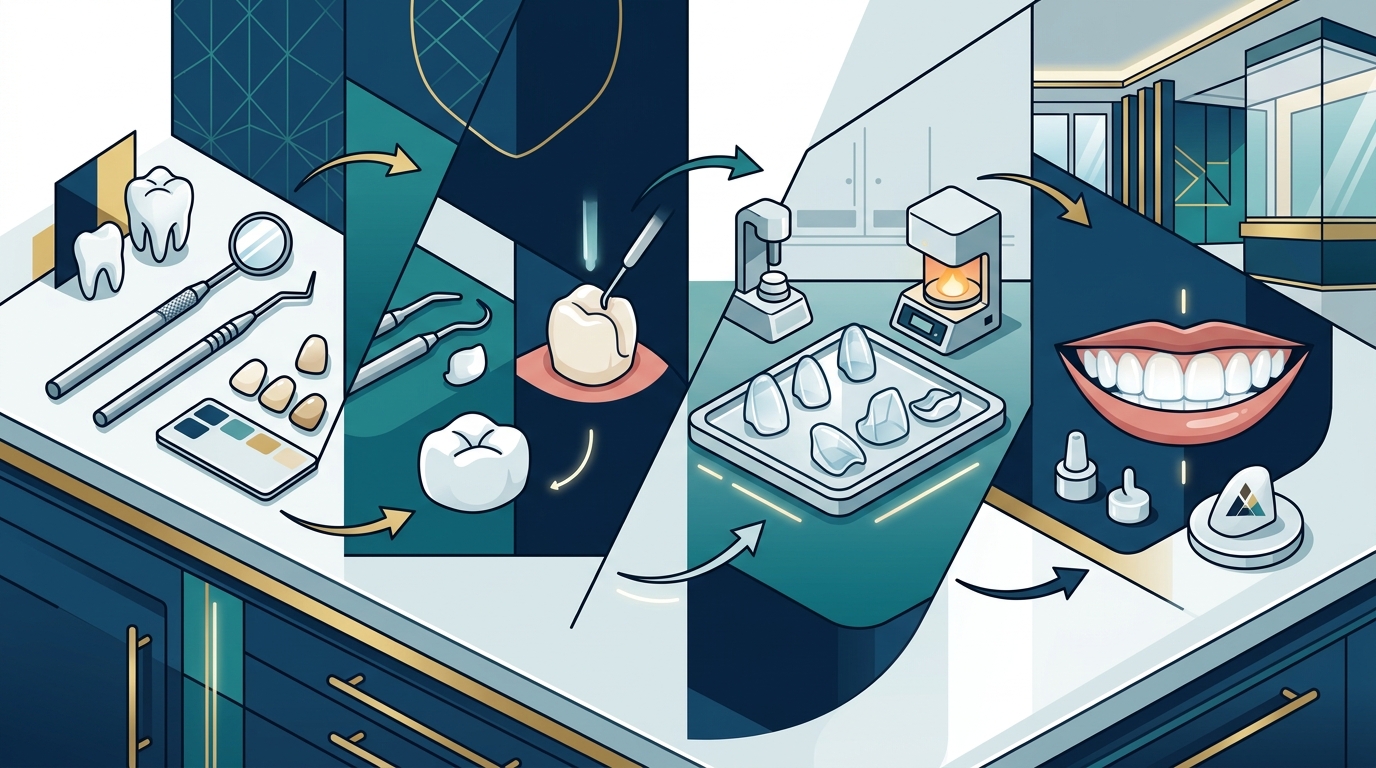
Minimal Enamel Reduction
Traditional veneers require the removal of a thin enamel layer to ensure proper fit. No-prep veneers preserve the natural tooth structure entirely. Your dentist selects the appropriate protocol based on your specific anatomical requirements. This decision directly impacts your overall treatment duration and recovery timeline. (Cost of Porcelain Veneers)
Custom Temporary Restorations
Temporary restorations protect the prepared teeth while the permanent set is manufactured. This transitional period allows patients to evaluate aesthetics and function before final bonding. Temporary materials are designed to withstand normal chewing forces. Patients typically wear these for ten to fourteen business days.
Custom Laboratory Fabrication
Layered Porcelain Construction
The laboratory phase typically requires ten to fourteen business days. Master ceramists hand-layer translucent porcelain to mimic natural light refraction. Each shade is carefully matched to your existing dentition. Quality control protocols verify structural integrity and marginal fit. This meticulous craftsmanship ensures long-term durability and natural aesthetics.
Quality Control Standards
High-performance ceramics undergo rigorous stress testing before shipping. Digital scanning confirms exact dimensional accuracy. Laboratory technicians polish each restoration to clinical standards. This controlled manufacturing environment prevents costly chairside adjustments.
Final Bonding and Occlusion Adjustment
Precision Adhesive Application
Final placement involves a precise adhesive bonding process. Your dentist applies a specialized resin cement to secure each veneer. A curing light hardens the material instantly. This step requires exceptional skill to prevent micro-leakage. Clinical guidelines emphasize strict isolation protocols to guarantee lasting adhesion.
Bite Verification and Polishing
Occlusion checks verify comfortable chewing mechanics. Final polishing removes excess adhesive and enhances surface gloss. Your dentist adjusts any high spots to prevent premature wear. Patients typically experience immediate functional improvement. The entire bonding session usually concludes within ninety minutes.
Post-Procedure Aftercare Protocols
Daily Hygiene Requirements
Proper maintenance extends the lifespan of your restoration. Brushing twice daily prevents plaque accumulation around the margins. Flossing removes debris from sensitive gum lines. Occlusal guards protect your investment during sleep cycles. Regular professional cleanings maintain optimal tissue health.
Protective Night Guards
Bruxism significantly increases the risk of ceramic fracture. Custom-fabricated night guards distribute occlusal forces evenly. Your dentist will recommend this accessory based on your grinding habits. Consistent nighttime protection directly correlates with extended functional lifespan.
Long-Term Maintenance and Lifespan
Expected Durability Metrics
High-quality porcelain restorations typically last between fifteen and twenty years. Regular dental visits detect minor wear before it becomes critical. Minor edge repairs can often be performed without full replacement. Consistent oral hygiene directly correlates with extended functional lifespan. Peer-reviewed studies confirm that proper maintenance prevents marginal staining.
Revision and Replacement Options
Advanced ceramic technology allows for seamless replacement when necessary. Your dentist will evaluate the underlying tooth structure before scheduling a refresh. Modern bonding agents provide stronger adhesion than previous generations. Patients who follow aftercare instructions rarely require early intervention. National health data indicates that routine checkups extend restoration longevity by nearly forty percent.
| Restoration Type | Enamel Removal | Fabrication Window | Ideal Candidate Profile |
|---|---|---|---|
| Traditional Veneers | 0.3 to 0.5 millimeters | 10 to 14 business days | Severe discoloration or structural damage |
| No-Prep Veneers | Zero millimeters | 10 to 14 business days | Mild spacing or minor shape correction |
| Minimal-Prep Veneers | 0.2 millimeters | 10 to 14 business days | Compromised enamel with aesthetic goals |
| Standard Ceramic | Variable | 10 to 14 business days | General cosmetic enhancement |
Key Takeaways
- Total treatment duration typically spans three to four weeks from consultation to final bonding.
- Dr. Chirag Patel operates a state-of-the-art facility located at 435 N. Roxbury Drive, Suite 410, Beverly Hills, CA 90210.
- Traditional veneers require 0.3 to 0.5 millimeters of enamel reduction for optimal fit.
- No-prep veneers preserve 100 percent of natural tooth structure for reversible treatment.
- Laboratory fabrication consistently requires ten to fourteen business days for custom ceramic layering.
- High-quality porcelain restorations typically endure fifteen to twenty years with proper maintenance.
- Regular professional cleanings and nighttime guards significantly extend functional lifespan.
Frequently Asked Questions
Can I schedule multiple procedures during the same treatment window?
Yes, combining procedures like gum contouring or clear aligners can streamline your overall timeline. Your dentist will coordinate appointments to minimize total office visits. Integrated planning reduces overall recovery time and optimizes aesthetic harmony.
Do porcelain veneers require special cleaning products?
Standard non-abrasive toothpaste works perfectly for daily maintenance. Avoid whitening strips that contain harsh peroxides. These products can degrade the ceramic surface over time. Your dentist will recommend specific oral hygiene products during your follow-up visit.
How do I know if traditional or no-prep veneers suit my anatomy?
Digital imaging and enamel thickness measurements determine the appropriate protocol. Thin enamel often necessitates traditional preparation for proper bonding. Healthy, thick enamel may qualify you for no-prep alternatives. Your dentist will explain the exact requirements during your consultation.
What happens if a veneer chips during normal use?
Minor chips can often be repaired directly in the office. Severe fractures require complete replacement to maintain structural integrity. Your dentist will assess the damage and schedule a swift intervention. Regular maintenance prevents minor issues from escalating into major repairs.
Is sedation dentistry available for anxious patients?
Yes, your practice offers comprehensive sedation options to ensure comfort. Nitrous oxide and oral sedation are standard offerings for nervous patients. Your dentist will evaluate your medical history before selecting the appropriate protocol. Relaxation techniques significantly reduce procedural stress and improve overall experience.
How often should I visit my dentist after getting veneers?
Professional cleanings every six months remain the standard recommendation. Your dentist will monitor marginal integrity and gum health during each visit. Early detection of wear prevents costly complications down the line. Consistent follow-ups guarantee long-term aesthetic success.
Begin Your Smile Transformation Today
Understanding the complete porcelain veneers process eliminates uncertainty and empowers confident decision-making. Your journey begins with a personalized consultation at our Beverly Hills location. Schedule your appointment to discuss your aesthetic goals and receive a customized treatment roadmap. Our team prioritizes your comfort, precision, and long-term oral health.