
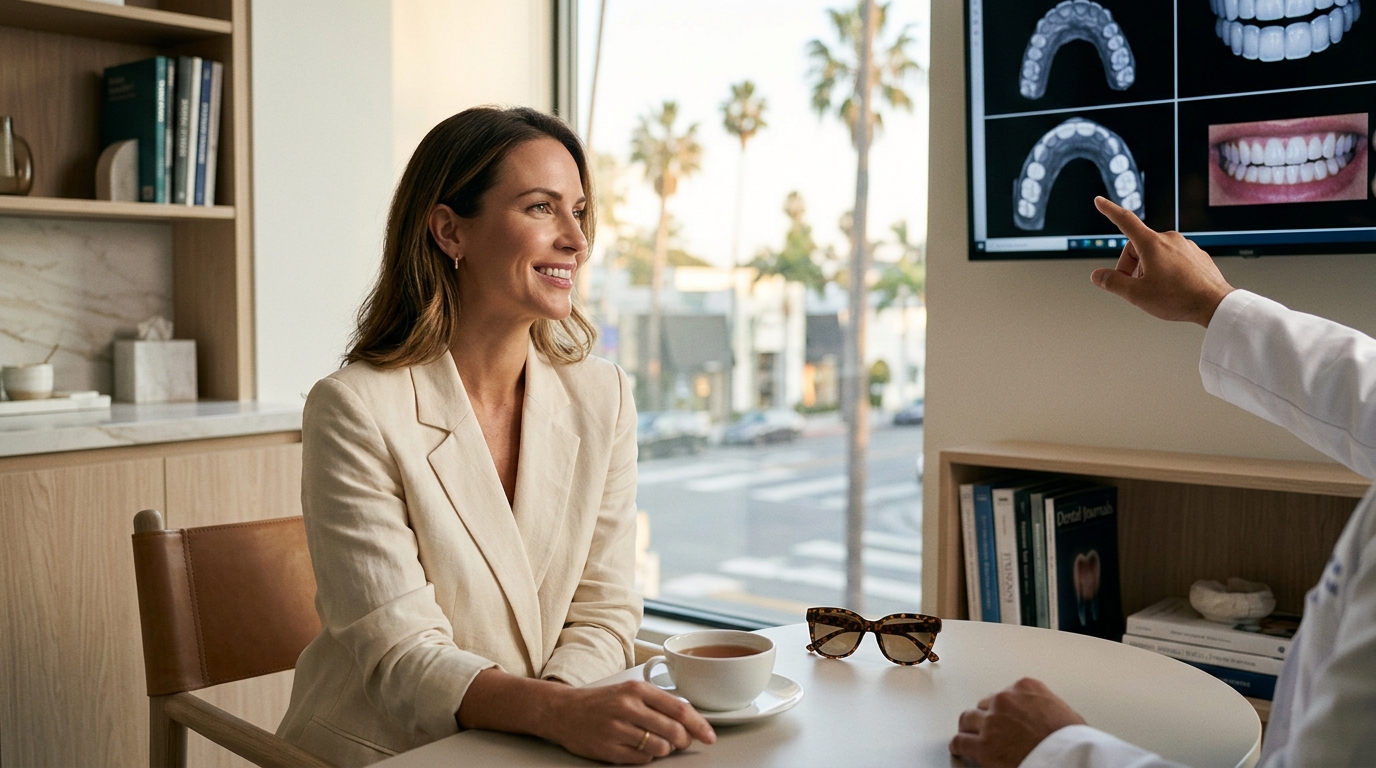
Most patients complete their full porcelain veneers process in approximately three to four weeks. This standard timeframe accounts for initial consultations, digital imaging, laboratory fabrication, and final bonding appointments. Clinical guidelines indicate that ceramic restorations require precise laboratory curing times. The exact duration depends on your specific case complexity and the chosen preparation method. Understanding each phase helps you schedule your Beverly Hills cosmetic dentistry visit with complete confidence. Dr. Chirag Patel and his team at Smiles by Dr. P streamline this timeline without compromising aesthetic precision. (Porcelain Veneers In Los)
Initial Consultation and Digital Design
The journey begins with a comprehensive diagnostic evaluation. Your dentist examines your existing dentition, gum tissue health, and bite alignment. Digital smile design is a computer-aided imaging protocol that maps your final aesthetic outcome. These scans create a precise 3D model of your current arch. You will review a digital mock-up that predicts your final aesthetic result. This visual planning stage typically requires one to two weeks for refinement.
Assessment and Treatment Planning
Your provider evaluates your enamel thickness and existing restorations. They determine whether traditional reduction or minimal-prep techniques suit your anatomy. Minimal-prep veneers are conservative restorations that preserve maximum natural enamel. This approach often accelerates the overall schedule. You will receive a customized treatment calendar that maps every clinical milestone.
Mock-up Approval
Once the digital design reaches approval, your team fabricates a provisional wax model. You try this temporary template in your mouth to verify shape and shade. Adjustments happen immediately before the laboratory begins milling. This approval step prevents unnecessary delays during the final installation phase.
Tooth Preparation and Impression Phase
During your second appointment, your dentist carefully reduces the anterior enamel layer. Precision milling machines remove exactly 0.3 to 0.5 millimeters of surface material. This controlled reduction creates space for the ceramic shell. Your provider captures a highly accurate digital impression or physical putty mold. The laboratory receives these records within twenty-four hours.
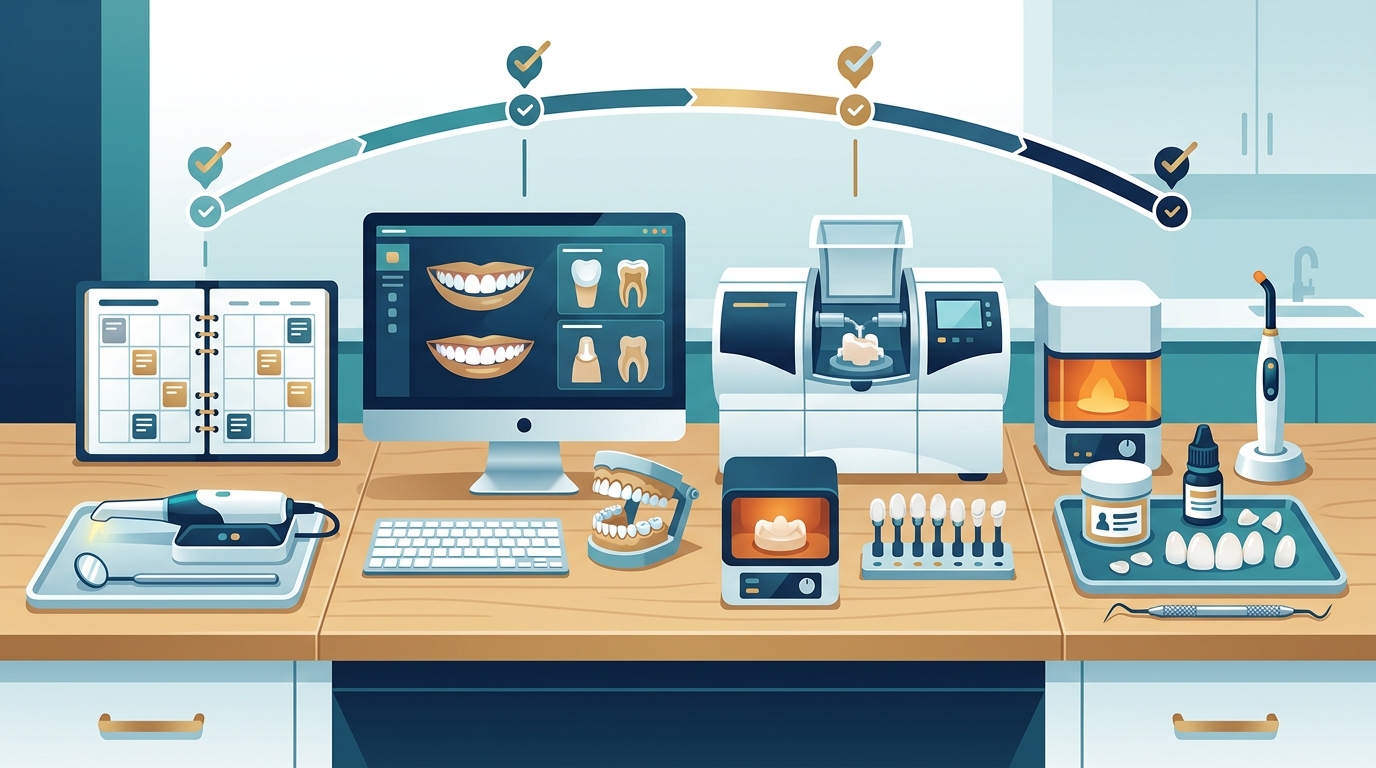
Minimal-Prep Versus Traditional Reduction
Traditional veneers require uniform enamel removal across all targeted teeth. Minimal-prep alternatives preserve existing structure while still achieving dramatic aesthetic shifts. Your clinician selects the optimal protocol based on your bite mechanics. This decision directly impacts your healing timeline and long-term durability.
Impression Transfer Protocols
Modern scanning technology eliminates messy putty trays entirely. Your dentist captures sub-millimeter accuracy using intraoral cameras. The digital files transmit directly to the accredited ceramic laboratory. This electronic handoff removes shipping delays and reduces material waste.
Temporary Veneer Placement and Healing
After preparation, your provider bonds provisional restorations to your prepared teeth. These temporary shells protect your enamel while the permanent ceramic pieces cure. Temporary veneers require gentle brushing and careful flossing techniques. You must avoid biting directly into hard foods during this interim period. Most patients adapt to the temporary phase within three to five days.
Comfort Management Strategies
Your dental team prescribes targeted analgesics if mild sensitivity occurs. They also provide specific cleaning solutions to prevent plaque accumulation. This interim period allows your gums to settle around the new contours. You will schedule a follow-up check to verify temporary stability.
Healing Timeline Expectations
Gum tissue typically reaches full maturation around the provisional margins within one week. Your provider inspects the tissue response before removing the temporary shells. Any minor inflammation resolves quickly with proper oral hygiene maintenance. This healing window ensures optimal adhesion for the final bonding stage.
Laboratory Fabrication and Quality Control
Your case enters a specialized ceramic manufacturing facility. Master dental technicians layer feldspathic porcelain over a custom die. Laboratory protocols require multiple firing cycles to achieve optimal translucency. Each ceramic layer undergoes precise temperature control during kiln processing. The entire fabrication cycle typically spans ten to fourteen business days.
Ceramic Layering and Staining
Technicians apply translucent and opaque porcelain shades to mimic natural light refraction. They hand-paint intricate staining patterns to match your existing dentition. This artistic phase demands exceptional skill and years of specialized training. Quality control inspectors verify color matching before the final glaze application.
Fit Verification and Adjustments
Once fired, the ceramic shells undergo rigorous marginal fit testing. Your Beverly Hills dentist receives the finished restorations and performs a dry fit. They check the contact points and occlusal clearance before permanent cementation. Any necessary chairside adjustments happen immediately to guarantee perfect alignment.
Final Bonding and Occlusal Adjustment
Your final appointment involves permanent cementation of your custom ceramic shells. Your dentist isolates each tooth with rubber dams to prevent moisture contamination. High-intensity curing lights polymerize the resin cement within seconds. They remove excess adhesive with fine dental probes and polishing discs. This final phase typically requires two to three hours in the clinical chair.
Precision Fitting and Marginal Sealing
Your provider verifies the exact seating of each ceramic restoration. They inspect the gum line for smooth transitions and proper contouring. Any minor high spots receive immediate adjustment using diamond burs. This meticulous finishing process guarantees long-term periodontal health.
Post-Installation Maintenance Schedule
After bonding, your team schedules a follow-up visit within seven days. They evaluate your bite dynamics and check for any pressure points. You will receive customized aftercare instructions to preserve your investment. Regular professional cleanings ensure your ceramic restorations remain stain-free.
Comparing Timeline Variables Across Veneer Types
Different preparation protocols directly influence your overall treatment duration. Traditional ceramic shells require more extensive enamel reduction and longer laboratory curing cycles. Minimal-prep alternatives often skip the temporary phase entirely. Your clinician determines the optimal pathway based on your anatomical constraints. The table below outlines the expected timeframes for each clinical approach.
| Preparation Type | Number of Clinical Visits | Estimated Total Timeline | Key Timeline Advantage |
|---|---|---|---|
| Traditional Porcelain | Three to Four | Three to Four Weeks | Maximum aesthetic customization and durability |
| No-Prep Ceramic | Two to Three | Two to Three Weeks | Preserved enamel and accelerated healing |
| Minimal-Prep Lumineers | Two to Three | Two to Three Weeks | Reduced sensitivity and faster adaptation |
Key Takeaways
- Most complete porcelain veneers processes require three to four weeks from consultation to final bonding.
- Dr. Chirag Patel operates a state-of-the-art facility at 435 N. Roxbury Drive, Suite 410, Beverly Hills, CA 90210.
- Digital smile design eliminates guesswork and accelerates the laboratory fabrication schedule.
- No-prep ceramic alternatives often reduce the total timeline by one full week.
- Laboratory ceramic firing cycles typically span ten to fourteen business days.
- Final bonding appointments require two to three hours for precision curing and polishing.
- Post-installation follow-ups occur within seven days to verify occlusal stability.
Frequently Asked Questions
Can the porcelain veneers process be completed in under two weeks?
Standard ceramic fabrication requires laboratory curing cycles that typically span ten to fourteen business days. Rushed laboratory protocols often compromise marginal fit and long-term durability. Your provider may offer same-day CAD/CAM milling for select single-tooth cases. This accelerated technology remains expensive and less aesthetically versatile than layered porcelain.
Do temporary veneers extend the overall treatment timeline?
Traditional preparation protocols require temporary shells to protect exposed enamel during laboratory fabrication. These provisional restorations add approximately one week to your total schedule. Minimal-prep alternatives frequently skip the temporary phase entirely. Your clinician will recommend the optimal pathway based on your anatomical requirements.
How does digital scanning impact the laboratory turnaround time?
Digital intraoral scans transmit directly to accredited ceramic facilities within minutes. This electronic handoff eliminates physical shipping delays and reduces material waste. Laboratories can begin milling your custom dies immediately upon file receipt. This streamlined workflow typically saves two to three business days compared to traditional putty impressions.
What happens if my bite feels uneven after final bonding?
Your provider schedules a follow-up adjustment within seven days of permanent cementation. They use articulating paper to identify high spots and apply precise diamond burs. Minor occlusal corrections happen chairside without removing the ceramic shells. This quick adjustment phase ensures long-term comfort and prevents premature failure.
Is the porcelain veneers process painful during the preparation phase?
Your dentist administers targeted local anesthesia to completely numb the targeted arch. Most patients report minimal discomfort during enamel reduction and impression capture. Post-procedure sensitivity typically resolves within three to five days. Your team provides specific analgesics and desensitizing protocols to manage any residual pressure.
How do I maintain my ceramic restorations after the final appointment?
You must brush twice daily with a non-abrasive fluoride toothpaste. Flossing around the ceramic margins prevents plaque accumulation and gum inflammation. Your provider recommends avoiding direct biting into hard foods during the initial curing period. Regular professional cleanings ensure your ceramic shells remain stain-free and properly sealed.
Schedule Your Porcelain Veneers Consultation Today
Understanding the exact timeline empowers you to plan your Beverly Hills cosmetic dentistry visit with complete confidence. Dr. Chirag Patel and his expert team streamline every clinical milestone without compromising aesthetic precision. You can book your personalized smile makeover consultation by calling (323) 909-9300 or visiting our main office portal. Complete your smile inquiry online to secure your preferred appointment slot. Your journey toward a flawless, long-lasting smile begins with a single diagnostic evaluation.